
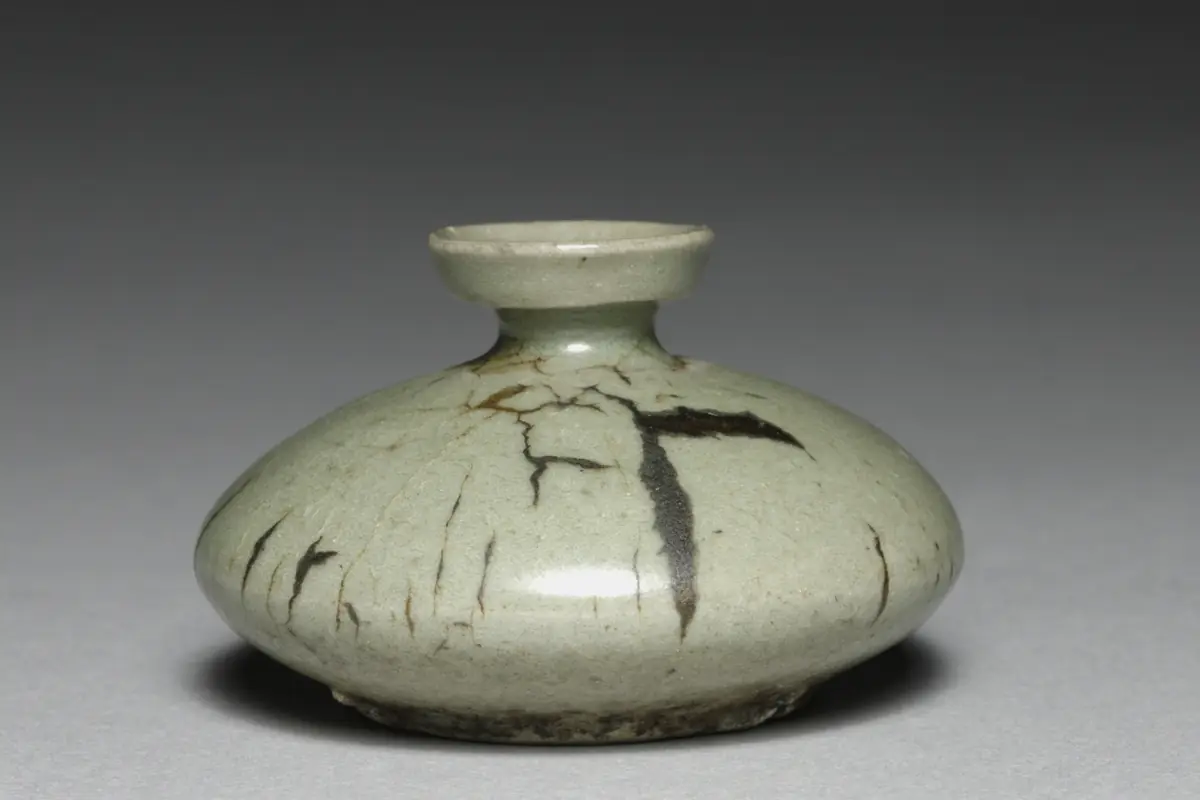
 Cleveland Museum of Art · CC0 1.0
Pages in this section
 Asia-Pacific member countriesThe thirteen Member States of the region, with their year of accession and how to reach their national focal point.›
 Singapore officeOIMAP's regional office for Asia-Pacific: missions, team, services to Member States and opening hours.›
 Programmes in Asia-PacificThe training, customs cooperation and restitution programmes conducted with the thirteen Member States of the region.›
Thirteen States, a major market region
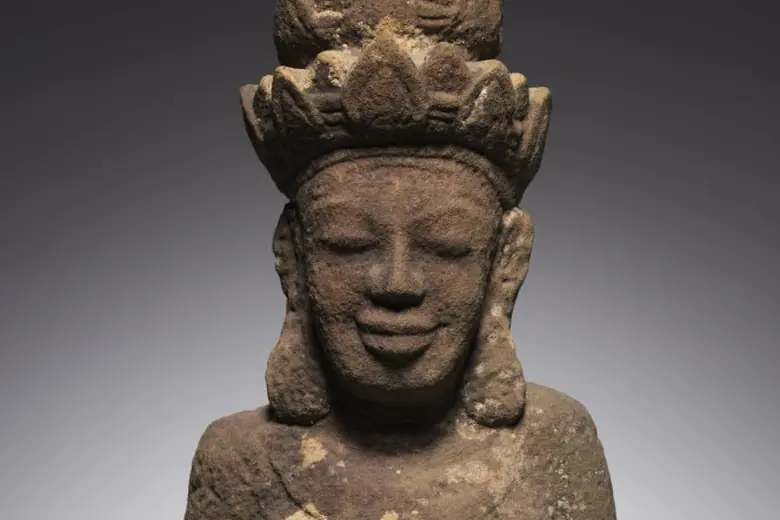
Asia-Pacific has thirteen of the 67 OIMAP Member States. Two of them, Japan and Australia, are among the 23 founding States of 2007. The eleven others joined the Organization between 2016 and 2020.
The region accounts for 22% of the global art market, according to the Organization's reference figures. It concentrates major sales centres and many public and private collections.
This section presents the member countries, the Singapore office and the regional programmes.
Asia-Pacific in figures
Source: Member States Relations Directorate.
Accession in three waves
After Japan and Australia in 2007, the region long had few members. The movement accelerated from 2016 with South Korea, then China and Singapore in 2017, three States in 2018 and three more in 2019.
New Zealand and Kazakhstan, in 2020, close the series. Each accession followed the standard procedure: technical review, General Assembly vote and probationary period.
Very different markets
The region brings together mature sales centres, fast-growing markets and States whose heritage is mainly exposed to illicit export. Needs therefore vary widely from one member to another.
The Organization responds with modular programmes: each State chooses the actions suited to its situation, rather than applying a single model.
The role of the Singapore office
The Singapore office is the Organization's relay for the thirteen States. It receives cooperation requests, organizes regional meetings and maintains the link with national focal points.
It is also preparing the logistics of the 19th General Assembly, to be held in Singapore from 10 to 12 June 2026.
Languages and time zones
Exchanges with the region are conducted in French, English and Spanish, with a marked preference for English in the working groups. Essential documents are translated for the focal points.
Online meetings are scheduled to cover the region's time zones as well as possible, from Central Asia to the South Pacific.
The thirteen Member States
| State | Membership |
|---|---|
| Japan | 2007 (founder) |
| Australia | 2007 (founder) |
| South Korea | 2016 |
| China | 2017 |
| Singapore | 2017 |
| India | 2018 |
| Thailand | 2018 |
| Vietnam | 2018 |
| Indonesia | 2019 |
| Malaysia | 2019 |
| Philippines | 2019 |
| New Zealand | 2020 |
| Kazakhstan | 2020 |
Milestones
- Foundation
Japan and Australia are among the 23 founding States.
- South Korea
First accession from the region since the foundation.
- Three accessions
India, Thailand and Vietnam.
- New Zealand and Kazakhstan
Most recent accessions in the region.
An office at your disposal
Two ways to follow the region
By country
State details- Years of accession
- Focal points
- Country Profiles
To learn about a specific State.
By programme
Regional actions- Training
- Customs cooperation
- Workshops
To act at regional level.
Explore the section
- Consult
The list of member countries.
- Identify
The competent office.
- Choose
A regional programme.
- Contact
The State's focal point.
- Follow up
The region's meetings.
To prepare an exchange with the region
A delegate from the region
« The Singapore office saves us from going through Paris for every practical question. Answers arrive in our own time zone. »
Regional vocabulary
- Founder
- Member State since 2007.
- Focal point
- National department designated to liaise with OIMAP.
- Probationary period
- Twelve months after the accession vote (indicative).
- Regional office
- Branch of the Organization outside Headquarters.
Relationship with Headquarters
The regional office does not replace Headquarters: it reviews, supports and relays. Substantive decisions, such as accessions, sanctions or the scale of contributions, rest with the Organization's bodies in Paris.
This arrangement ensures that the thirteen States are treated in the same way as the other members, regardless of their distance from Headquarters.
Frequently Asked Questions
How many Member States does the region have?
Thirteen, including two founders.
Where is the regional office located?
In Singapore.
Where can I find the full list?
See Member countries.
Whom should I contact?
The Singapore office or the Member States Relations Directorate.
Useful Documents
Contacts
Related pages
 Member States67 Member States on five continents: list, regions, membership, focal points, finances, expert network, technical cooperation and member area.›
 Asia-Pacific member countriesThe thirteen Member States of the region, with their year of accession and how to reach their national focal point.›
 Singapore officeOIMAP's regional office for Asia-Pacific: missions, team, services to Member States and opening hours.›
 Programmes in Asia-PacificThe training, customs cooperation and restitution programmes conducted with the thirteen Member States of the region.›
See the member countries
Image credits (20)
- Oil Bottle (1100s–1200s) — Cleveland Museum of Art, CC0 1.0
- Seated Buddha (1000s) — Cleveland Museum of Art, CC0 1.0
- Zulaykha in her palace and as an old woman with Joseph, from a Panj Ganj (Five Treasures) of Abd al-Rahman Jami (Persian, 1414–1492); verso , Mushfiq (Text copied by Sultan-Ali Mashhadi (Pers) — Cleveland Museum of Art, CC0 1.0
- Seated Buddha (lotus pedestal) (1100s) — Cleveland Museum of Art, CC0 1.0
- Apsara Bracket (900s) — Cleveland Museum of Art, CC0 1.0
- Wine Ewer with Incised Scroll Design (1100s) — Cleveland Museum of Art, CC0 1.0
- Pendant (Hei-tiki) (1800s) — Cleveland Museum of Art, CC0 1.0
- Akshobhya: the Buddha of the East (late 800s) — Cleveland Museum of Art, CC0 1.0
- Alpine Landscape: The Handegg, Switzerland, Jean-Léon Gérôme (1850s) — Cleveland Museum of Art, CC0 1.0
- Bowl (1300s) — Cleveland Museum of Art, CC0 1.0
- Twelve-sided Ewer with Sphinxes and Human-Headed Inscriptions (1300–1350) — Cleveland Museum of Art, CC0 1.0
- Otani Tokuji I as the Retainer Sodesuke in "Flowering Irises: A Soga Vendetta of the Bunroku Era", Tōshūsai Sharaku (1794) — Cleveland Museum of Art, CC0 1.0
- Door Lintel (Pare) (1800s) — Cleveland Museum of Art, CC0 1.0
- Bowl with Flowering Vines Design in Relief (1100s–1200s) — Cleveland Museum of Art, CC0 1.0
- A Palace with an Arched Bridge (A Roman Villa), Hubert Robert (1760) — Cleveland Museum of Art, CC0 1.0
- View of Venice, Jacopo de' Barbari (1500) — Cleveland Museum of Art, CC0 1.0
- Persian Quatrains (Rubayi) and Calligraphic Exercises (recto), Sultan Muhammad Khandan (c. 1509–59) — Cleveland Museum of Art, CC0 1.0
- Kubjika–Navatman (1300s) — Cleveland Museum of Art, CC0 1.0
- Prunus Vase with Inlaid Lotus and Reed Design (1300s) — Cleveland Museum of Art, CC0 1.0
- River Landscape with Boats, Annibale Carracci (c. 1590) — Cleveland Museum of Art, CC0 1.0