
 Cleveland Museum of Art · CC0 1.0
Pages in this section
 Principle of mediationThe rules, phases and ethical principles of mediation before the TAO: voluntariness, neutrality, confidentiality and agreement.›
 Request mediationHow to start a mediation before the TAO: form, inviting the other party, time limits and first steps.›
 TAO mediators36 mediators of 22 nationalities: training, ethics, selection criteria and fields of competence.›
Talking before pleading
Mediation is a voluntary process in which a neutral third party helps the parties find a solution themselves. In art, where relationships last — between gallery and artist, between collector and auction house — it preserves what a trial destroys.
The TAO has offered a mediation service since 2016. It has 36 mediators, trained in conducting negotiations and in the specifics of the art market. Nearly two mediations in three end in agreement, in seven weeks on average.
This section presents the principle, the mediators and the request for mediation.
Mediation in figures
Source: Registry of the OIMAP Arbitral Tribunal.
Three pages

Why choose mediation
Mediation is fast, discreet and inexpensive. It leaves the parties in control of the result: they can devise solutions a judge could not impose, such as an exchange of works, a sharing of the price, a joint exhibition or a corrective to a catalogue.
It is particularly suited to disputes where the parties wish to continue their relationship, to emotionally charged cases — inheritances, restitutions — and to those where legal uncertainty makes the outcome of a trial a gamble.
A confidential and voluntary process
Nothing said in mediation may afterwards be used before the arbitral tribunal or before a judge, unless agreed. Each party remains free to stop the process at any time. The mediator has no power of decision.
The agreement reached may be recorded in a consent award made by an arbitrator, which gives it enforceable force internationally.
Mediation and arbitration together
A mediation-arbitration clause provides first for mediation, then for arbitration if it fails. The TAO offers a variant in which the mediator may not afterwards sit as arbitrator, in order to preserve the parties' freedom of speech.
Mediation may also be decided during arbitration, with suspension of the proceedings if the parties so request. Time limits are then extended accordingly.
Solutions a judge cannot deliver
Mediation agreements reached at the TAO frequently contain creative clauses: joint exhibition of the work, long-term loan to a museum, sharing of any capital gain, publication of an erratum, founding of a prize. These solutions meet the parties' real interest more surely than a judgment.
They must, however, be drafted precisely. The mediator and the Registry help to formulate the undertakings and, if the parties wish, to record them in a consent award.
Mediation and arbitration in brief
| Criterion | Mediation | Arbitration |
|---|---|---|
| Decision | Parties | Arbitrators |
| Average duration | 7 weeks | 11 months |
| Cost | Low | According to scale |
| Binding nature | After agreement | Award |
Milestones
- Creation
List of mediators.
- Rules
Rules of ethics.
- Online mediation
Videoconference sessions.
- Passing the 64% mark
Record agreement rate.
Mediation and arbitration are not mutually exclusive
Mediation or direct negotiation
Mediation
With a neutral third party- Structured dialogue
- Guaranteed confidentiality
- Enforceable agreement possible
When dialogue is blocked.
Direct negotiation
Between the parties- Free of charge
- Flexible
- Risk of stalemate
When the relationship is good.
Entering mediation
- Propose
Invite the other party.
- Choose
Appoint the mediator.
- Prepare
Draft a note.
- Negotiate
Joint and separate sessions.
- Conclude
Sign the agreement.
What to prepare
A gallery owner
« Mediation allowed us to save a fifteen-year relationship with a collector. A trial would have destroyed it all. »
Vocabulary of mediation
- Mediator
- Neutral third party who facilitates discussion.
- Settle
- Reach an agreement through mutual concessions.
- Separate session
- Confidential meeting with one party only.
- Mediation agreement
- Document signed by the parties.
Frequently asked questions
Is mediation compulsory?
No, unless a clause so provides.
How much does it cost?
Less than ten percent of an arbitration.
Is the agreement enforceable?
Yes, through a consent award.
Where do I apply?
See Request mediation.
Useful documents
Contacts
Related pages
 Principle of mediationThe rules, phases and ethical principles of mediation before the TAO: voluntariness, neutrality, confidentiality and agreement.›
 TAO mediators36 mediators of 22 nationalities: training, ethics, selection criteria and fields of competence.›
 Request mediationHow to start a mediation before the TAO: form, inviting the other party, time limits and first steps.›
Request mediation
Image credits (22)
- Coronation of the Virgin, Christoffel Jegher (1632–36) — Cleveland Museum of Art, CC0 1.0
- The Victory Banquet: from Battle Scenes of the Quelling of Rebellions in the Western Regions, with Imperial Poems (c. 1765–74; poem dated 1760) — Cleveland Museum of Art, CC0 1.0
- Portrait of a Woman, Giovanni Domenico Tiepolo (1762–70) — Cleveland Museum of Art, CC0 1.0
- Portraits of the Qianlong Emperor and His Twelve Consorts, Giuseppe Castiglione (1736–70s) — Cleveland Museum of Art, CC0 1.0
- Portrait of Sandford Peacocke, William Wood (1801) — Cleveland Museum of Art, CC0 1.0
- The Dance at the Court of Herod, Israhel van Meckenem (c. 1500) — Cleveland Museum of Art, CC0 1.0
- The Calumny of Apelles, Giorgio Ghisi (1560) — Cleveland Museum of Art, CC0 1.0
- Portrait of John VIII Palaoelogus, Emperor of Constantinople, 1424-1428 (reverse), Pisanello (c. 1438–1439) — Cleveland Museum of Art, CC0 1.0
- Portrait of a Man, Nicholas Freese (c. 1795–1800) — Cleveland Museum of Art, CC0 1.0
- Dr. James Stuart; Mary Campbell Stuart, Gilbert Stuart (c. 1815) — Cleveland Museum of Art, CC0 1.0
- Portrait Head of a Noble or Official (175–200 CE) — Cleveland Museum of Art, CC0 1.0
- Portrait of Georges Arnold Fitzwilliam, Charles Balthazar Julien Fevret de Saint-Mémin (c. 1790–1852) — Cleveland Museum of Art, CC0 1.0
- Portrait of a Man, Italian Painter — The Metropolitan Museum of Art, CC0 1.0
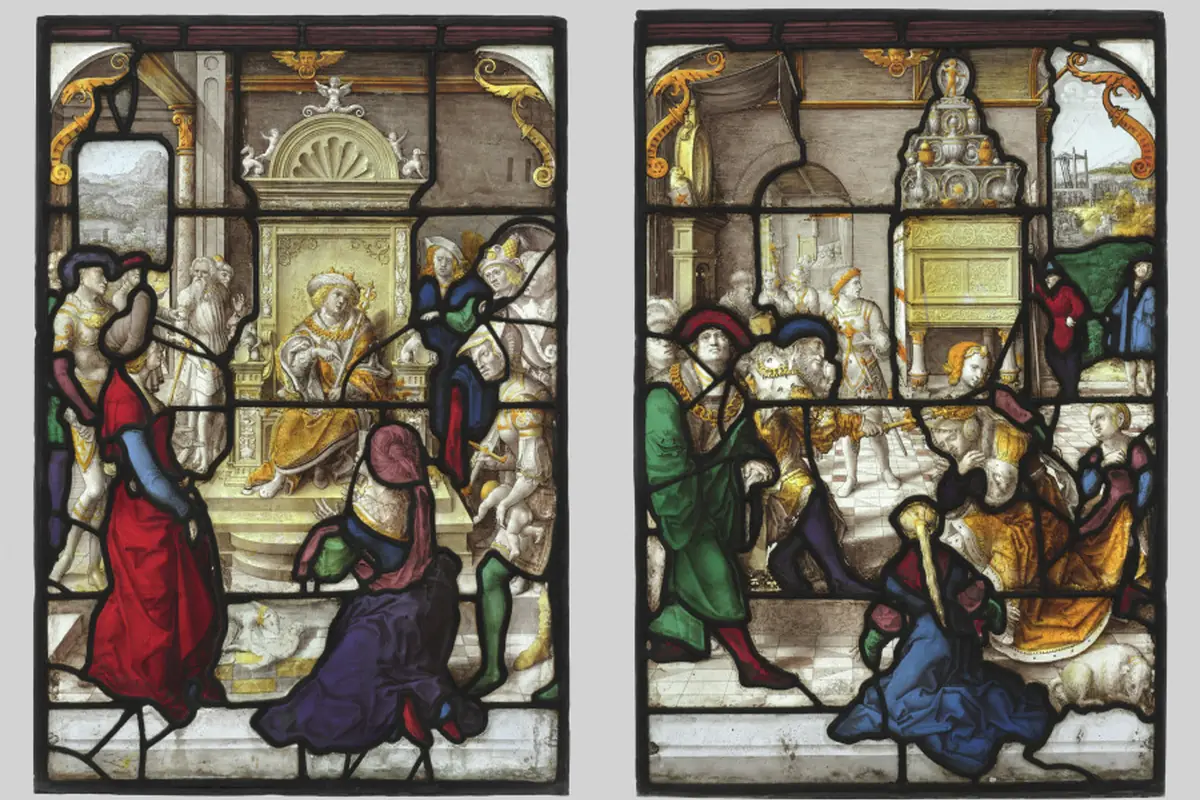
- The Judgment of Solomon and Esther before Ahasuerus (pair), Dirk Vellert (c. 1530) — Cleveland Museum of Art, CC0 1.0
- Portrait Bust of a Man (27 BCE–14 CE) — Cleveland Museum of Art, CC0 1.0
- Self-Portrait, John I Smart (1802) — Cleveland Museum of Art, CC0 1.0
- Portrait of a Woman, Corneille de Lyon (c. 1540) — Cleveland Museum of Art, CC0 1.0
- Small Mosque in the Kaiserbagh, Felice A. Beato (1858) — Cleveland Museum of Art, CC0 1.0
- The Antechamber of the Palace of Justice, Paris, Charles Meryon (1855) — Cleveland Museum of Art, CC0 1.0
- Portrait of a Woman, Gerard ter Borch (c. 1665) — Cleveland Museum of Art, CC0 1.0
- Portrait of a Woman, John I Smart (c. 1772) — Cleveland Museum of Art, CC0 1.0
- Portrait of a Man, Louis Lafitte (1793) — The Metropolitan Museum of Art, CC0 1.0