
 Cleveland Museum of Art · CC0 1.0
Pages in this section
 Customs codes and cultural propertyHow to classify cultural property in the customs nomenclature, spot misleading descriptions and apply the appropriate checks.›
 Identification sheets142 illustrated sheets to recognise cultural property: content, use, categories, updates and access.›
 Customs guide trainingLearning to use the guide: modules, exercises, trainer pathways and online resources for customs administrations.›
A tool for front-line officers
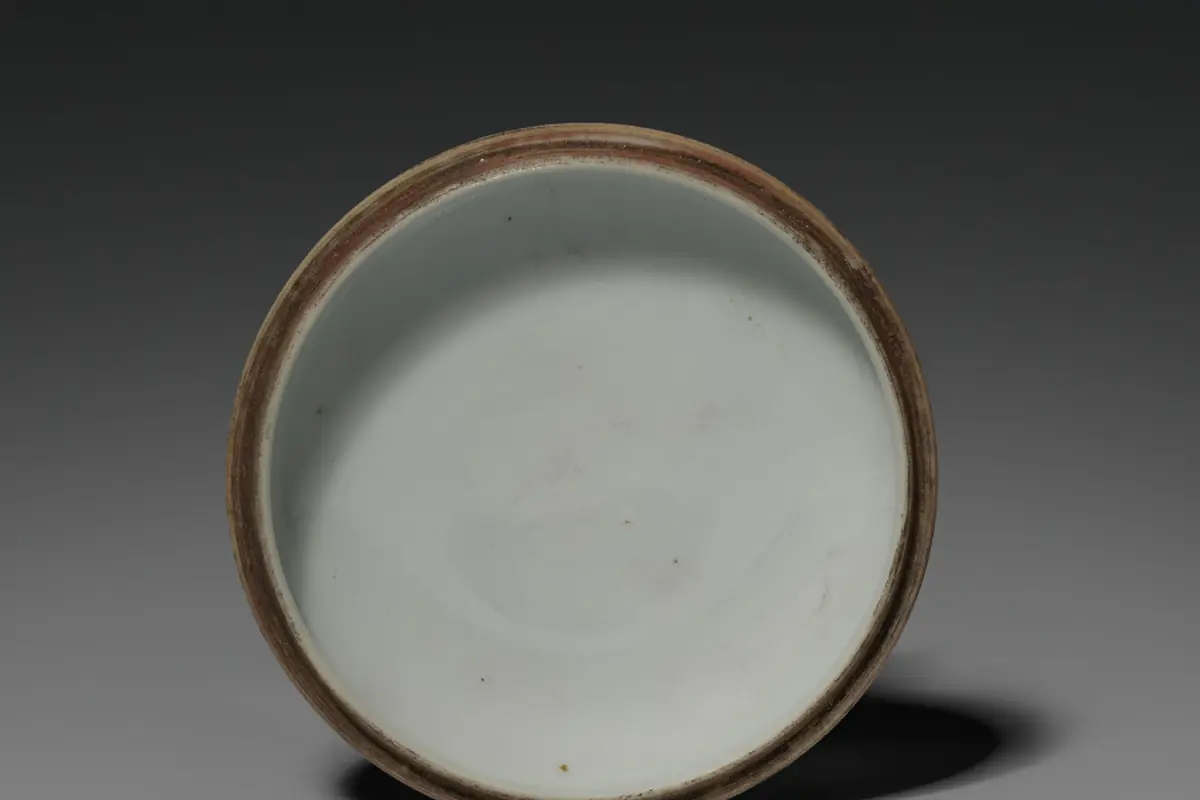
The customs officer sees thousands of consignments pass each day. Among them, a few illicit cultural objects hide behind ordinary descriptions. OIMAP's customs guide, produced with the WCO, gives them the benchmarks to recognise them.
It has three parts: the customs codes that make it possible to classify cultural property, the identification sheets that help to recognise it, and the training that teaches how to check it.
It is updated every year and available in three languages, in paper and digital versions.
Customs guide in figures
Source: OIMAP Heritage Protection Department.
Why a dedicated guide
General customs codes do not always distinguish cultural property from a decorative object. An ancient statue may be declared as "garden decoration", a manuscript as "printed paper", an old ceramic as "tableware". The guide helps to decode these misleading descriptions.
It also provides benchmarks on prices, expected documents, high-risk countries and transit routes. This information feeds the risk analysis that officers apply to each consignment.
A guide tested in the field
The sheets were drafted with curators, experts and customs officers, and tested in exercises at six airports and three ports. Their format, a double-sided page with photographs, was chosen for ease of use. Officers' feedback led to several revisions.
A mobile application makes it possible to consult the sheets offline, to compare a photograph with the examples and to contact the emergency line in one gesture. It is reserved for authorised officers.
Continuous development
Each edition adds sheets for new types of property and updates the codes, prices and indicators. States may propose additions, notably for property typical of their heritage. In 2024, twenty-four sheets were created or revised.
Customs also contribute to improving the guide by passing on their seizures and observations. This feedback feeds training and alerts.
Support for administrations
OIMAP helps administrations to build the guide into their procedures: adapting the sheets to the national context, training referents, installing the application, putting them in touch with BIOP unit analysts.
A network of customs referents from forty-one States meets each year. It exchanges cases, shares tools and proposes developments to the guide. Its recommendations feed the WCO's work.
Content of the guide
| Part | Content | Use |
|---|---|---|
| Customs codes | Useful Harmonised System codes | Classify, spot |
| Identification sheets | 142 illustrated sheets | Recognise property |
| Training | Four levels | Learn the actions |
Landmarks
- First guide
OIMAP – WCO agreement.
- 142 sheets
Complete series.
- Application
Mobile version.
- Update
24 sheets revised.
An ordinary description can hide a treasure
Paper guide or application
Paper
Printed sheets- No connection needed
- Robust
- Annual update
For isolated posts.
Application
Mobile version- Image search
- Continuous updates
- Requires a device
For equipped officers.
Using the guide
- Spot
Detect the suspect consignment.
- Identify
Consult the sheet.
- Check
Query the BIOP.
- Decide
Hold or release.
- Report back
Inform the unit.
Customs officer's reflexes
A head of post
« We put the guide in every office. It has changed the way the teams look at goods. »
Vocabulary of customs
- Harmonised System
- International customs nomenclature.
- Risk analysis
- Selection of consignments to check.
- Border post
- Controlled crossing point.
- Manifest
- List of the goods in a shipment.
Frequently asked questions
Is the guide free?
Yes for the administrations of Member States.
Does it exist in several languages?
Three.
Who writes the sheets?
Experts and customs officers.
How do I get it?
Through the State's customs correspondent.
Useful documents
Contacts
Related pages
 Customs codes and cultural propertyHow to classify cultural property in the customs nomenclature, spot misleading descriptions and apply the appropriate checks.›
 Identification sheets142 illustrated sheets to recognise cultural property: content, use, categories, updates and access.›
 Customs guide trainingLearning to use the guide: modules, exercises, trainer pathways and online resources for customs administrations.›
See the customs codes
Image credits (19)
- S. Giorgio Maggiore, Michele Marieschi (1741) — Cleveland Museum of Art, CC0 1.0
- Return of the Fishing Boats at Collioure, near the Spanish Border, Adolphe Appian (1878) — Cleveland Museum of Art, CC0 1.0
- Landscape with Saint John the Baptist, Herri met de Bles (c. 1540) — Cleveland Museum of Art, CC0 1.0
- A Rocky Cove with Fishing Boats, Allart van Everdingen (late 1650s) — Cleveland Museum of Art, CC0 1.0
- Seal Color Box (1662–1722) — Cleveland Museum of Art, CC0 1.0
- Whitby Harbor, Frank Meadow Sutcliffe (c. 1885) — Cleveland Museum of Art, CC0 1.0
- Dune Scene with Peasant Figures, Willem van de Velde (mid-1650s) — Cleveland Museum of Art, CC0 1.0
- Ships near the Trieux River, Paul Signac (1925) — Cleveland Museum of Art, CC0 1.0
- Plaque (1500s–1600s) — Cleveland Museum of Art, CC0 1.0
- Boating in Moonlight (1600s) — Cleveland Museum of Art, CC0 1.0
- Nuova pianta di Roma data in luce da Giambattista Nolli l’anno MDCCXLVII, known as La Pianta Grande di Roma, Giovanni Battista Nolli (1748) — Cleveland Museum of Art, CC0 1.0
- Sailing Vessels: Armed Four-Master Putting Out to Sea, Pieter Bruegel (1561–65) — Cleveland Museum of Art, CC0 1.0
- Mercury (Budha), from a Mandi Astrology Series, Sanju (c. 1810) — Cleveland Museum of Art, CC0 1.0
- Sketchbook, The Dells, N° 127, page 090 & 91: Harbor with a Road, Maurice Prendergast (c. 1919–1921) — Cleveland Museum of Art, CC0 1.0
- Roman Ruins, Villa Pamfili, Hubert Robert (1774) — Cleveland Museum of Art, CC0 1.0
- Seal Color Box (1662–1722) — Cleveland Museum of Art, CC0 1.0
- Arrival of the "Southern Barbarians" (c. 1600) — Cleveland Museum of Art, CC0 1.0
- Carved Lacquer Scroll Box (1736–95) — Cleveland Museum of Art, CC0 1.0
- Seven Jeweled Mountain (late 1800s) — Cleveland Museum of Art, CC0 1.0