
 Cleveland Museum of Art · CC0 1.0
A more limited membership
About fifty States are parties to the UNIDROIT Convention. Of the 67 OIMAP Member States, 29 have ratified it. The figure is rising slowly but steadily.
Ratification means accepting long claim periods and broader jurisdiction for the courts. For the large importing States, this choice is politically sensitive.
This page presents the situation, the reasons for some States' caution and OIMAP's work to encourage accession.
States parties to the UNIDROIT Convention 1995 in figures
Source: OIMAP Legal Affairs Department.
Why some States hesitate
Importing States fear the uncertainty hanging over transactions: a buyer could see their property claimed decades after the purchase. Exporting States, for their part, see in the Convention a valuable protection, but dread the cost of litigation and the complexity of the procedures.
OIMAP proposes a middle path: apply the principles of the Convention in operators' practices, without waiting for ratification. Directives 2019-03 and 2019-06 go in this direction.
What ratification changes
For a State, ratifying opens to its nationals the restitution action before the courts of other States parties, and gives its courts jurisdiction to rule on foreign claims. For an operator, it makes the Convention's time limits and compensation applicable.
OIMAP provides transposition notes and training to support States in this process. It also publishes an analysis of the impact of ratifications on the market, prepared with economists from the Observatory.
Towards wider accession
OIMAP estimates that a third of the Member States that are not parties could ratify within five years, provided that impact studies reassure them about the effects on the market. In 2024 it launched a support programme for States wishing to ratify.
This programme includes an assessment of national law, a legal workshop with market professionals, drafting support and post-ratification follow-up.
Situation by region
| Region | Member States | Parties to UNIDROIT | Rate |
|---|---|---|---|
| Europe | 27 | 12 | 44% |
| Americas | 11 | 7 | 64% |
| Africa | 8 | 5 | 63% |
| Asia-Pacific | 14 | 3 | 21% |
| Middle East | 7 | 2 | 29% |
Landmarks
- Adoption
Rome Conference.
- Entry into force
Five ratifications.
- Twenty-five States
Steady progress.
- 29 OIMAP Member States
Rate of 43%.
Reservations
State party or non-party State

State party
Has ratified UNIDROIT- Action before its courts
- Compensation of the diligent possessor
- Harmonised time limits
More predictability.
Non-party State
Has not ratified- National law only
- Variable time limits and protection
- Less predictability
Increased diligence advised.
Assessing the effect of the Convention in an operation
- Identify
Identify the States concerned.
- Check
Know whether they are parties.
- Date
Compare with the dates of entry into force.
- Assess
Measure the risk of a claim.
- Adapt
Strengthen diligence if necessary.
Useful questions
A negotiator
« A treaty is never the end of a negotiation: it is the start of a long conversation with States. »
Vocabulary of accessions
- Instrument of ratification
- Document by which a State commits itself.
- Declaration
- Unilateral clarification by a State.
- Reciprocity
- Application conditional on that of the other State.
- Entry into force
- Moment from which a treaty applies.
Frequently asked questions
Where can I see the official list?
From UNIDROIT, which keeps the register.
Why so few ratifications?
Fears of legal uncertainty.
Can OIMAP help me ratify?
Yes: see Recommendations to States.
What is the link with the UNESCO Convention?
Useful documents
Contacts
Related pages
 UNIDROIT Convention 1995The 1995 Rome Convention on stolen or illegally exported cultural objects: restitution before the courts and compensation of the diligent possessor.›
 Commentaries on the UNIDROIT Convention 1995Doctrinal readings of the UNIDROIT Convention: diligence, time limits, compensation and the link with national law.›
 List of the 67 StatesThe 67 OIMAP Member States, presented in alphabetical order, by date of accession and on an interactive map.›
Read the commentaries
Image credits (16)
- The Dance at the Court of Herod, Israhel van Meckenem (c. 1500) — Cleveland Museum of Art, CC0 1.0
- Dr. James Stuart; Mary Campbell Stuart, Gilbert Stuart (c. 1815) — Cleveland Museum of Art, CC0 1.0
- Coronation of the Virgin, Christoffel Jegher (1632–36) — Cleveland Museum of Art, CC0 1.0
- Talatat: Portrait of Nefertiti (c. 1353–1347 BCE) — Cleveland Museum of Art, CC0 1.0
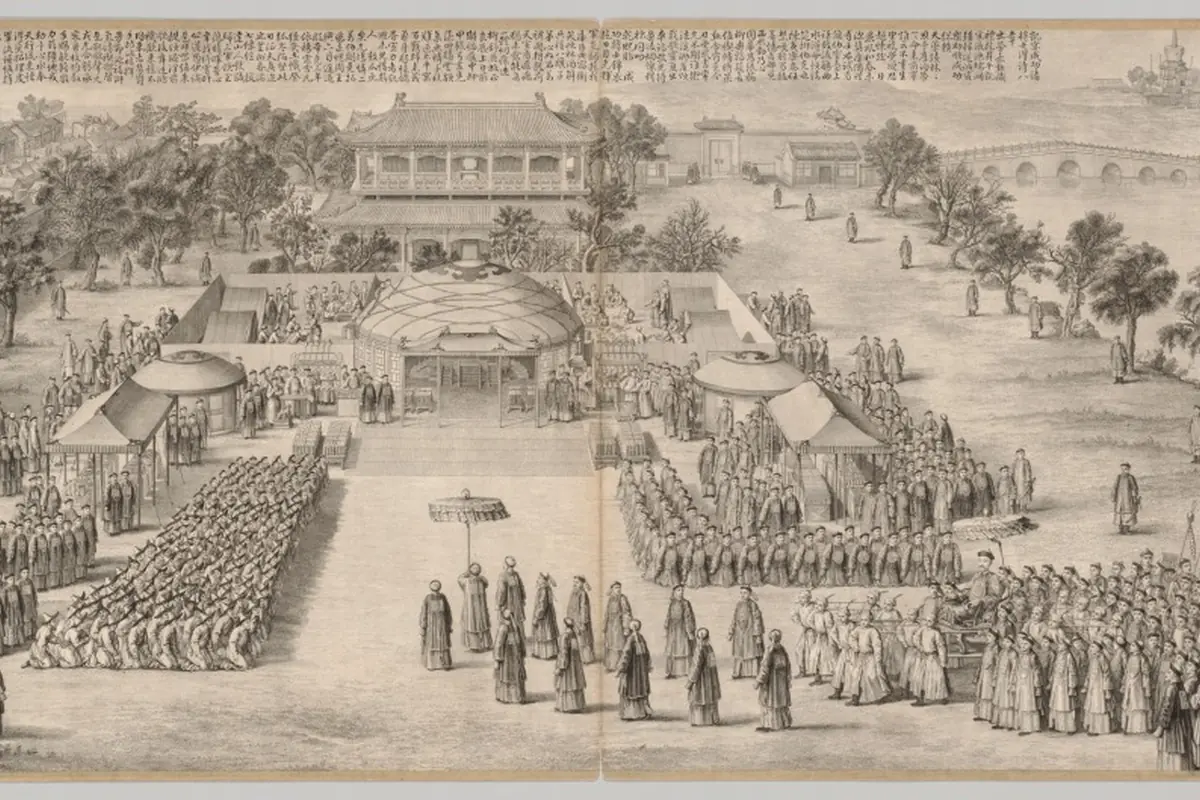
- The Victory Banquet: from Battle Scenes of the Quelling of Rebellions in the Western Regions, with Imperial Poems (c. 1765–74; poem dated 1760) — Cleveland Museum of Art, CC0 1.0
- The Calumny of Apelles, Giorgio Ghisi (1560) — Cleveland Museum of Art, CC0 1.0
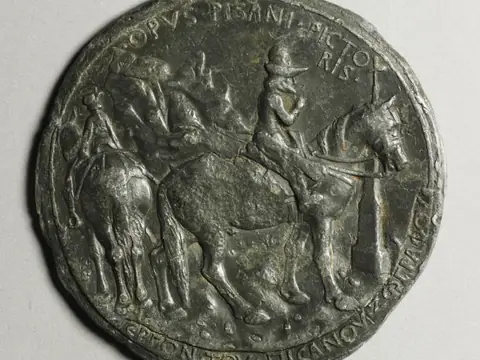
- Portrait of John VIII Palaoelogus, Emperor of Constantinople, 1424-1428 (reverse), Pisanello (c. 1438–1439) — Cleveland Museum of Art, CC0 1.0
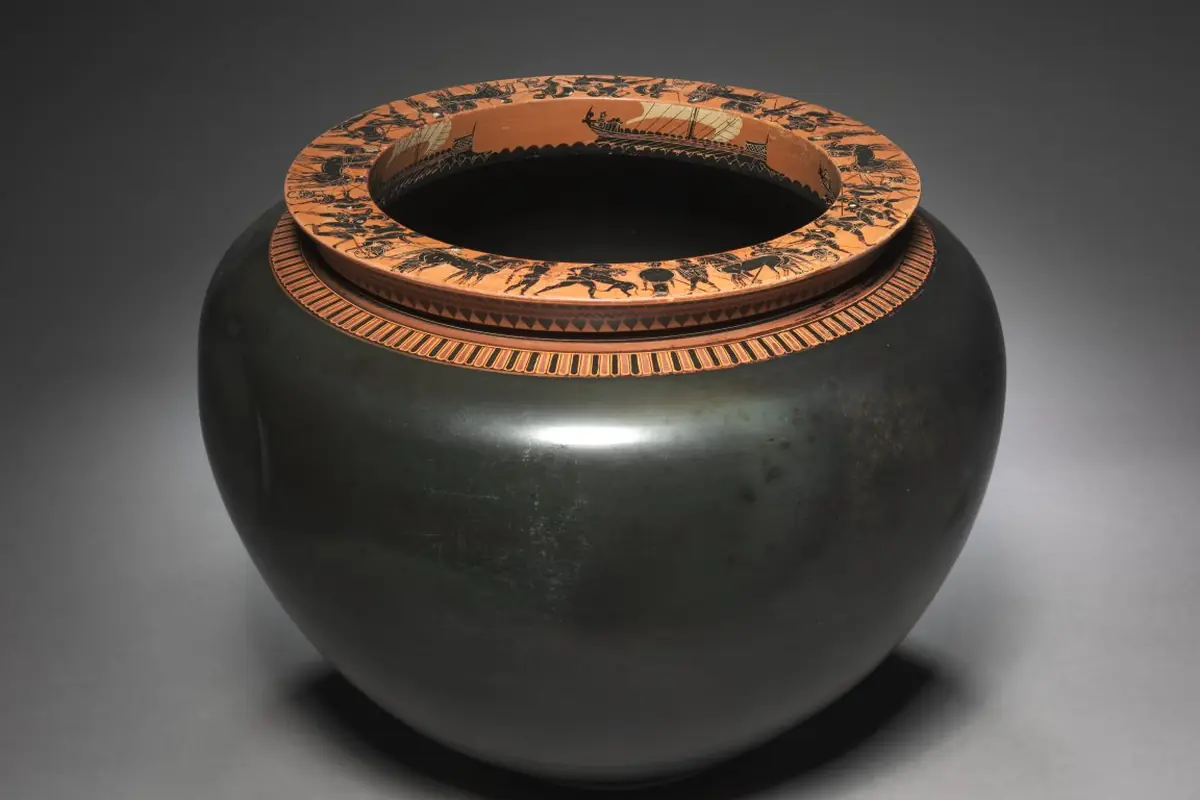
- Black-Figure Dinos (Mixing Vessel): Warships (Int.); Heroic Scenes (Top), Antimenes Painter (c. 520–515 BCE) — Cleveland Museum of Art, CC0 1.0
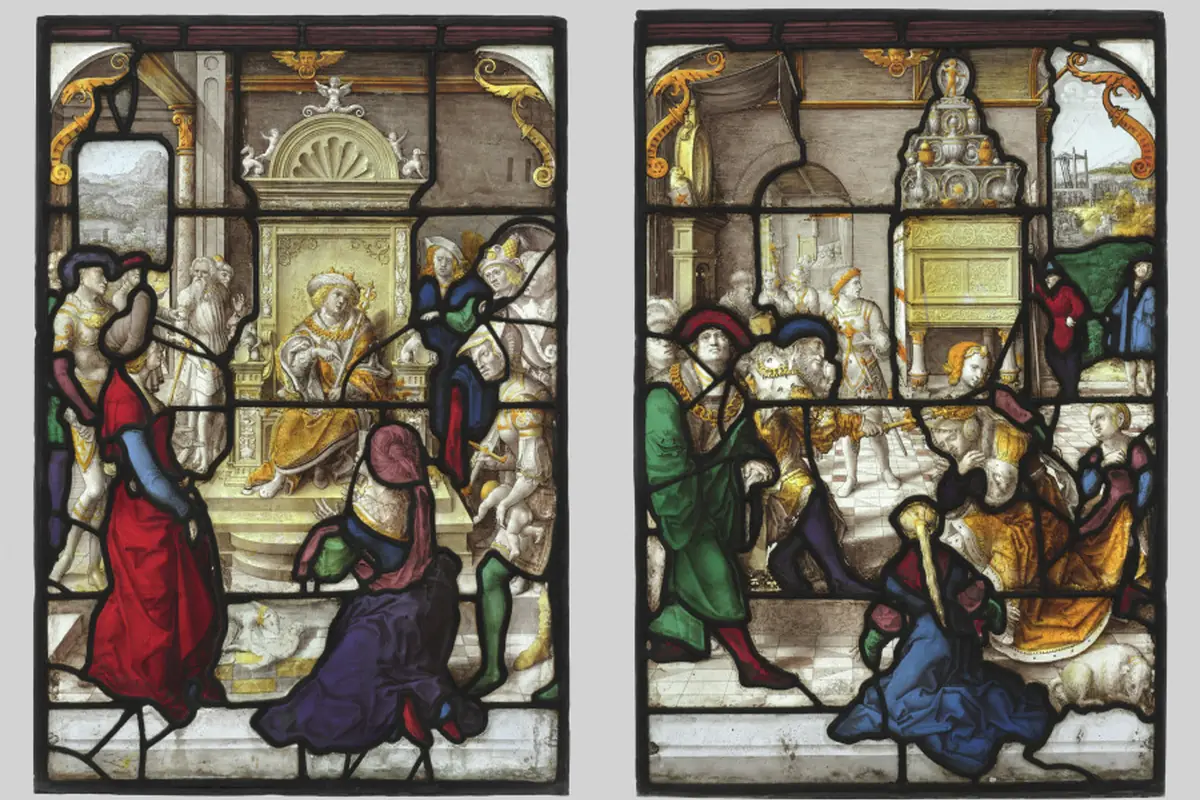
- The Judgment of Solomon and Esther before Ahasuerus (pair), Dirk Vellert (c. 1530) — Cleveland Museum of Art, CC0 1.0
- The Antechamber of the Palace of Justice, Paris, Charles Meryon (1855) — Cleveland Museum of Art, CC0 1.0
- Sketches in Belgium and Germany, Volume I: Hall of Justice of the Magistrates du Franc, Bruges, Louis Haghe (1840) — Cleveland Museum of Art, CC0 1.0
- Eighteen Views of Rome: The Piazza Farnese (recto); Cartouche (verso), Lievin Cruyl (1664) — Cleveland Museum of Art, CC0 1.0
- Two Boats with Female Mourners (c. 667–647 BCE) — Cleveland Museum of Art, CC0 1.0
- Red-Figure Column Krater (Mixing Vessel): Satyrs Pursuing Maenads, Naples Painter (440–430 BCE) — Cleveland Museum of Art, CC0 1.0
- Nuova pianta di Roma data in luce da Giambattista Nolli l’anno MDCCXLVII, known as La Pianta Grande di Roma, Giovanni Battista Nolli (1748) — Cleveland Museum of Art, CC0 1.0
- White-Ground Lekythos (Oil Vessel): Mourners at Tomb (c. 400s BCE, with modern painting) — Cleveland Museum of Art, CC0 1.0