
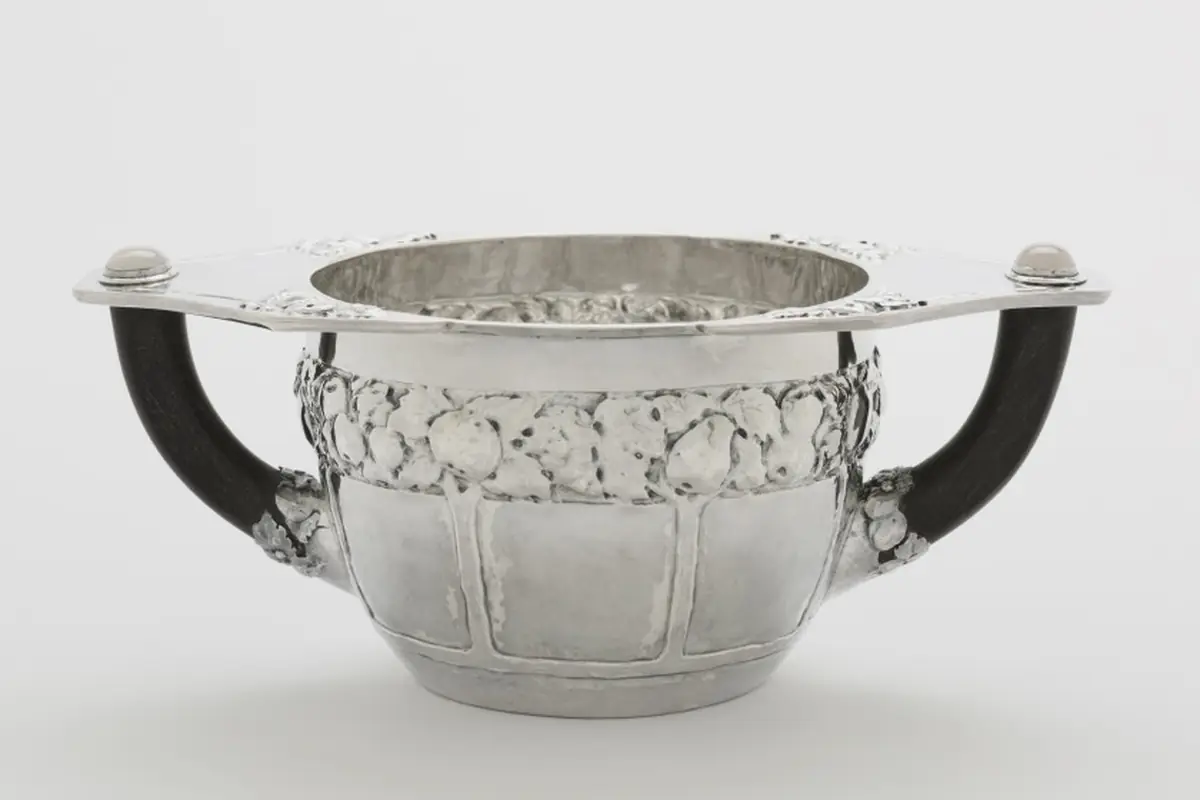
 Cleveland Museum of Art · CC0 1.0
A central player in the market
Auction houses are the first point of contact for most works that change hands. Their diligence is therefore decisive for market security, and OIMAP has made them a privileged partner.
A house may request approval of its lots, obtain the conformity label and appear in the public directory of approved houses. In return, it undertakes to comply with the OIMAP directives and to report any suspect work.
The interactive directory of auction houses can be consulted online, with filters by country, specialty and label.
The houses in figures
The obligations of an approved house
An approved house verifies the seller's identity and the source of funds, searches the BIOP before every sale, requires provenance documents according to the age and nature of the work, and keeps its files for at least ten years.
It reports to OIMAP any work it suspects of being stolen, looted or unlawfully exported. This report does not engage its liability if made in good faith.
The house's commitments
Approved house or label holder
| Level | Conditions | Benefits |
|---|---|---|
| Referenced house | Listing in the directory | Visibility |
| Approved house | Compliance with the OIMAP charter | Simplified approval of lots |
| Label holder | 12 criteria, audit on documents and on site | “OIMAP Label” mention, priority processing |
To go further
Public directory
Approved house or unreferenced house
Approved house
In the OIMAP directory- Check of lots
- Presumption of diligence
- Mention in the catalogue
Maximum security for the buyer.
Unreferenced house
Outside the directory- No systematic check
- No OIMAP mention
- Liability to be assessed case by case
To be approached with caution.
The partnership with the houses
- First approvals
Ten pilot houses.
- Due diligence charter
Shared verification commitments.
- Conformity label
Creation of the label.
- 24 referenced houses
Extension across the five regions.
Case study: a house that reports
A suspect lot
An auction house in Singapore receives a mask on consignment whose origin is uncertain.
- It searches the BIOP: no direct alert.
- It reports the work to OIMAP as suspect.
- The investigation establishes the unlawful origin.
The lot is withdrawn; the house is publicly thanked and no liability is retained.
A partnership of trust
« Auction houses are sentinels: they are the ones who see works pass through before anyone else. »
Vocabulary of the houses
- House approval
- Recognition of a house's commitment to the OIMAP charter.
- Conformity label
- Distinction awarded after an audit.
- Sentinel
- Professional who reports suspect works.
- Due diligence charter
- Commitments to verify sellers and works.
Frequently asked questions
How to become an approved house?
By joining the charter and submitting a referencing file to the Secretariat.
Is referencing paid?
It is free; approval of lots and the label are paid.
Can I consult the directory without an account?
Yes, the directory is public.
Can a house lose its approval?
Yes, in the event of a serious breach of the charter, after adversarial proceedings.
Useful documents
Contacts
Related pages
 Conformity labelThe OIMAP label distinguishes galleries, auction houses and collectors that respect the twelve criteria of due diligence.›
 Auction housesThe auction houses approved by OIMAP: directory, approval procedure and sales calendar.›
 ProcedureThe checks carried out, the documents to provide and the course of a sales approval request.›
Consult the directory
Image credits (19)
- Sugar Bowl, Louis Rorimer (c. 1910) — Cleveland Museum of Art, CC0 1.0
- Seal Color Box (1662–1722) — Cleveland Museum of Art, CC0 1.0
- Beaker (c. late 600s–early 700s) — Cleveland Museum of Art, CC0 1.0
- Corner Cabinet, René Dubois (c. 1765–1770) — Cleveland Museum of Art, CC0 1.0
- Scenes of Daily Life, Roads and Paths: Road to Market (Scènes de la vie quotidienne, Routes et Chemins: Route du Marché), Carle Vernet (1819) — Cleveland Museum of Art, CC0 1.0
- The Triumph of Mordecai, Lucas van Leyden (1515) — Cleveland Museum of Art, CC0 1.0
- Teapot, Louis Rorimer (c. 1910) — Cleveland Museum of Art, CC0 1.0
- Boy with Anchor, Winslow Homer (1873) — Cleveland Museum of Art, CC0 1.0
- The Four Markets: The Fruit Market, Richard Earlom (1775) — Cleveland Museum of Art, CC0 1.0
- Chemin de fer de Toulouse à Bayonne. Pont de l'Aran (en trois arches de 17m d'ouverture chacune). Situation des travaux au 21 juillet 1861, Édouard Baldus (1861) — Cleveland Museum of Art, CC0 1.0
- The Market Place, Wells, Muirhead Bone (1891–1953) — Cleveland Museum of Art, CC0 1.0
- Interior Drawer for Cabinet, André-Charles Boulle (c. 1690) — Cleveland Museum of Art, CC0 1.0
- Vanity Case (Nécessaire) (c. 1760) — Cleveland Museum of Art, CC0 1.0
- Mercury (Budha), from a Mandi Astrology Series, Sanju (c. 1810) — Cleveland Museum of Art, CC0 1.0
- Small Mosque in the Kaiserbagh, Felice A. Beato (1858) — Cleveland Museum of Art, CC0 1.0
- Solidus of Justinian I (c. 545–65) — Cleveland Museum of Art, CC0 1.0
- Creamer, Louis Rorimer (c. 1910) — Cleveland Museum of Art, CC0 1.0
- Carnet (1863–1865) — Cleveland Museum of Art, CC0 1.0
- Saucer with Scene in style of Watteau (c. 1750–60) — Cleveland Museum of Art, CC0 1.0