
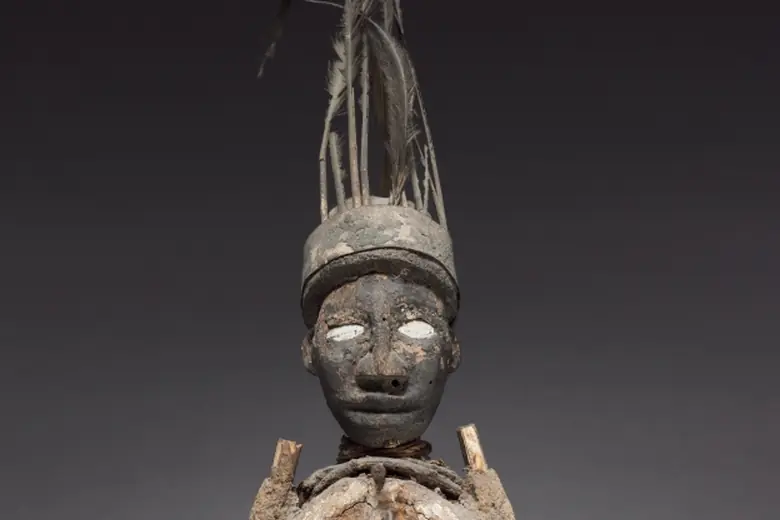
 Cleveland Museum of Art · CC0 1.0
The first group of tribal art
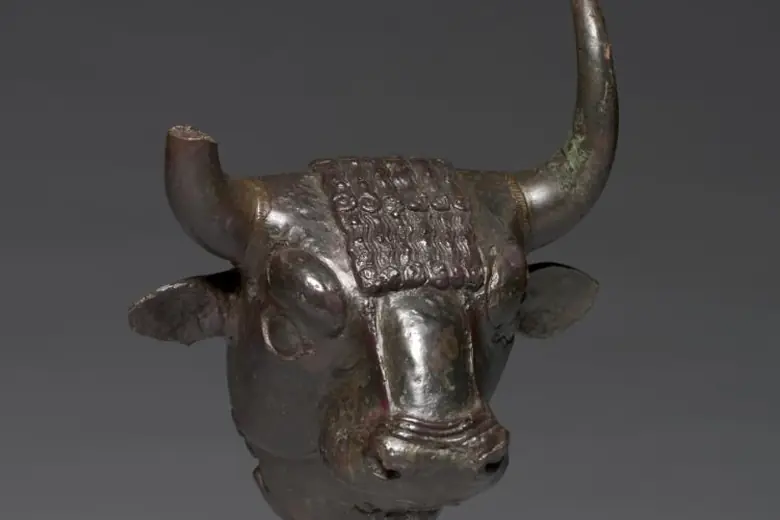
The arts of Africa account for €2.9 billion in 2024, i.e. 54% of the segment. The royal Songye Mask, sold for €38.7 million, is its emblem.
The continent has produced a great diversity of forms: ceremonial masks, ancestor statues, royal objects, textiles, jewellery, musical instruments. Each region has its styles, uses and market.
This page presents the market, its rules and its precautions.
Arts of Africa in figures
Source: OIMAP Observatory.
Authenticity and ritual use
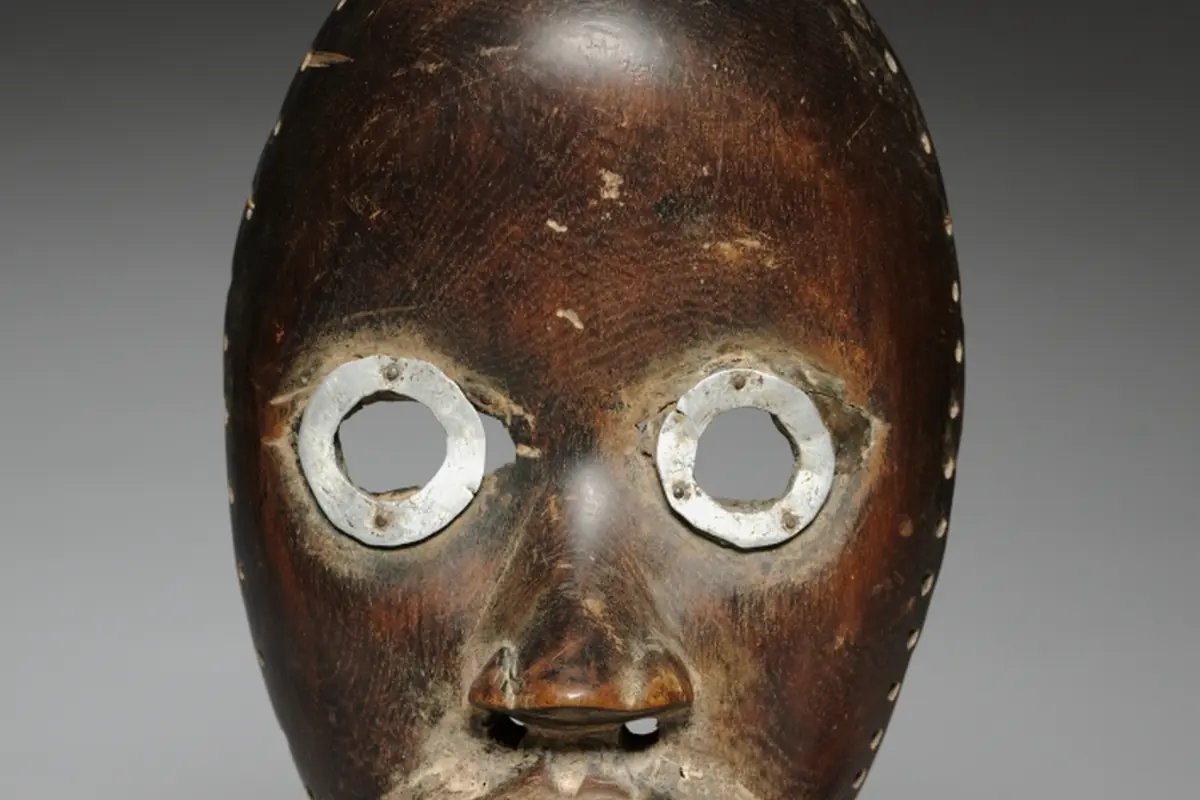
The central question is that of use: was a mask worn during ceremonies, or carved for the market? Signs of wear, ritual patinas and original repairs testify to long use; a uniform patina and modern tools often signal recent production.
Accredited experts combine material examination, analysis of the wood, stylistic study and archival research. Carbon-14 makes it possible to date organic materials, with a precision useful for distinguishing old pieces from recent copies.
Provenance and collection
Most African objects in circulation were collected between 1880 and 1960, by missionaries, administrators, dealers or ethnologists. Their notebooks, correspondence and inventories are essential sources.
In recent years, African countries have been publishing national inventories and demanding export documents. OIMAP helps Member States build these inventories and link them to the BIOP database.
African collectors
A new phenomenon is the arrival of African collectors on the international market. Entrepreneurs, bankers, doctors, they buy works from their heritage and lend them to local museums or foundations.
Their presence rebalances the market, pushes prices up for quality pieces and strengthens the demand for transparency.
Cultural areas and prices
| Area | Typical objects | Median price | 2024 change |
|---|---|---|---|
| Central Africa | Masks, statues | €7,800 | +11.4% |
| West Africa | Masks, bronzes | €6,200 | +9.7% |
| East Africa | Ceremonial objects | €3,100 | +8.5% |
| North Africa | Textiles, jewellery | €2,400 | +6.1% |
Landmarks
- Discovery by the avant-gardes
Interest of European artists.
- Independence
Restitution movements.
- Public debate
Reports on restitutions.
- €2.9bn
Up 10.2%.
False patinas
Colonial collection or family transmission
Colonial collection
1880–1960- Archives available
- Ethical question
- Restitutions possible
Provenance to document.
Family transmission
Objects acquired more recently- Provenance sometimes less well known
- Fewer claims
- Good faith to prove
Pieces to examine with care.
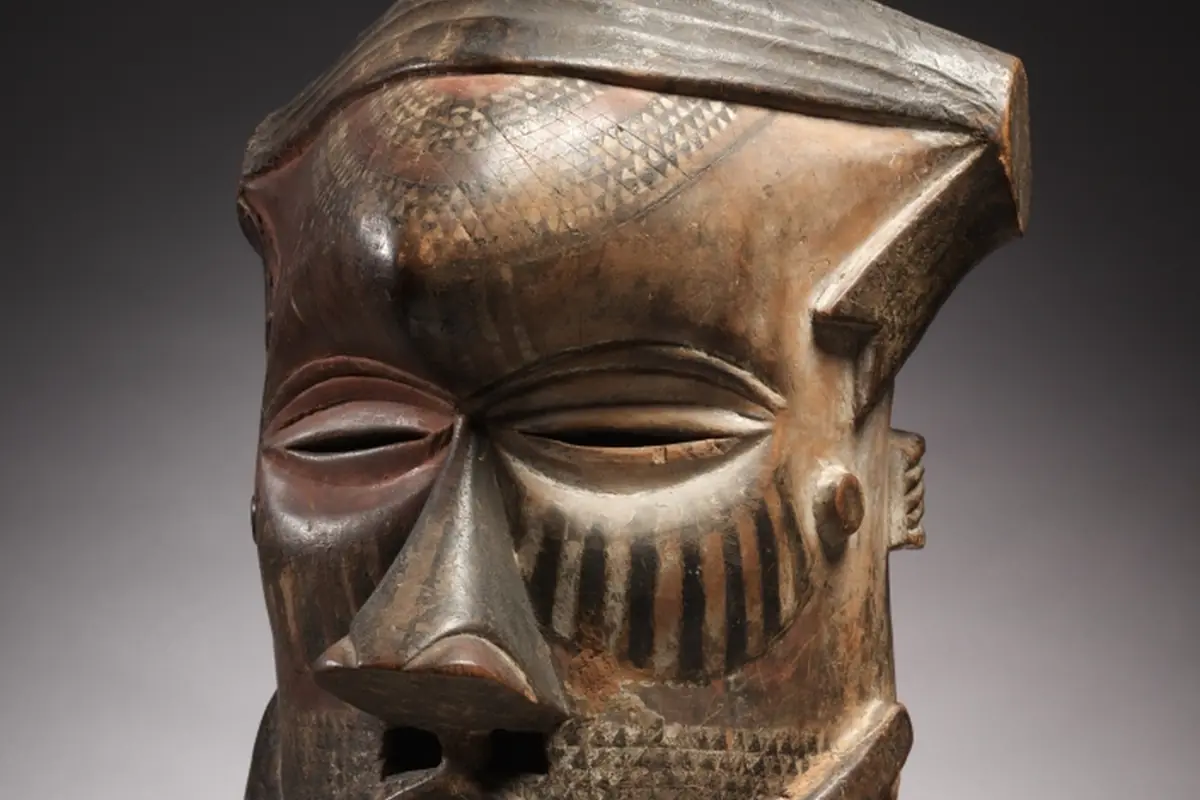

Acquiring an African object
- Document
Obtain the collection notebook and invoices.
- Examine
Have materials and patina examined.
- Date
Analyse the wood or metal.
- Check
Consult the BIOP and the country of origin.
- Certify
Obtain a certificate of authenticity.
File to require
An African curator
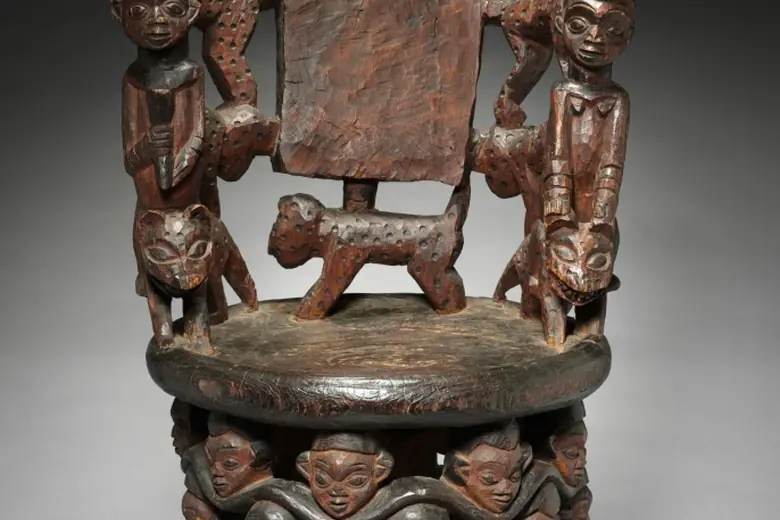
« We do not reject the market. We ask that it respect our histories and our laws. »
Vocabulary of the arts of Africa
- Patina
- Surface acquired through use or time.
- Songye
- People of Central Africa.
- Benin bronze
- Plaque or statue from the former kingdom.
- National inventory
- Official list of a country's property.
Frequently asked questions
Can old African objects be exported?
It depends on the country: consult the export licence.
How can a mask be dated?
By carbon-14 on the wood, see carbon-14 dating.
Are there lists of stolen objects?
Yes, in the BIOP database.
What should be done with an inherited object?
Have it examined and registered.
Useful documents
Contacts
Related pages
 Tribal artThe market for the arts of Africa, Oceania and the Americas: provenance, restitutions, ethics and growth of 9.4%.›
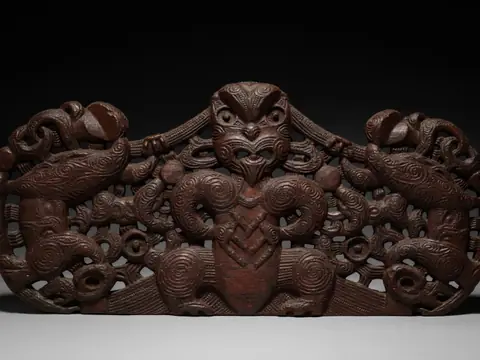 Arts of OceaniaThe market for the arts of Oceania: sculptures, adornments, ceremonial objects, provenance and precautions.›
 BIOP databaseThe international database of protected works: 48,200 stolen, lost or suspect works, searchable by all and enriched by police forces and museums.›
 Carbon 14 datingDating the organic materials of a work — wood, canvas, paper, ivory, textile — by accelerator mass spectrometry.›
See Oceania
Image credits (17)
- Power figure (nkisi) (late 1800s-early 1900s) — Cleveland Museum of Art, CC0 1.0
- Bull Head Attachment (c. 700–600 BCE) — Cleveland Museum of Art, CC0 1.0
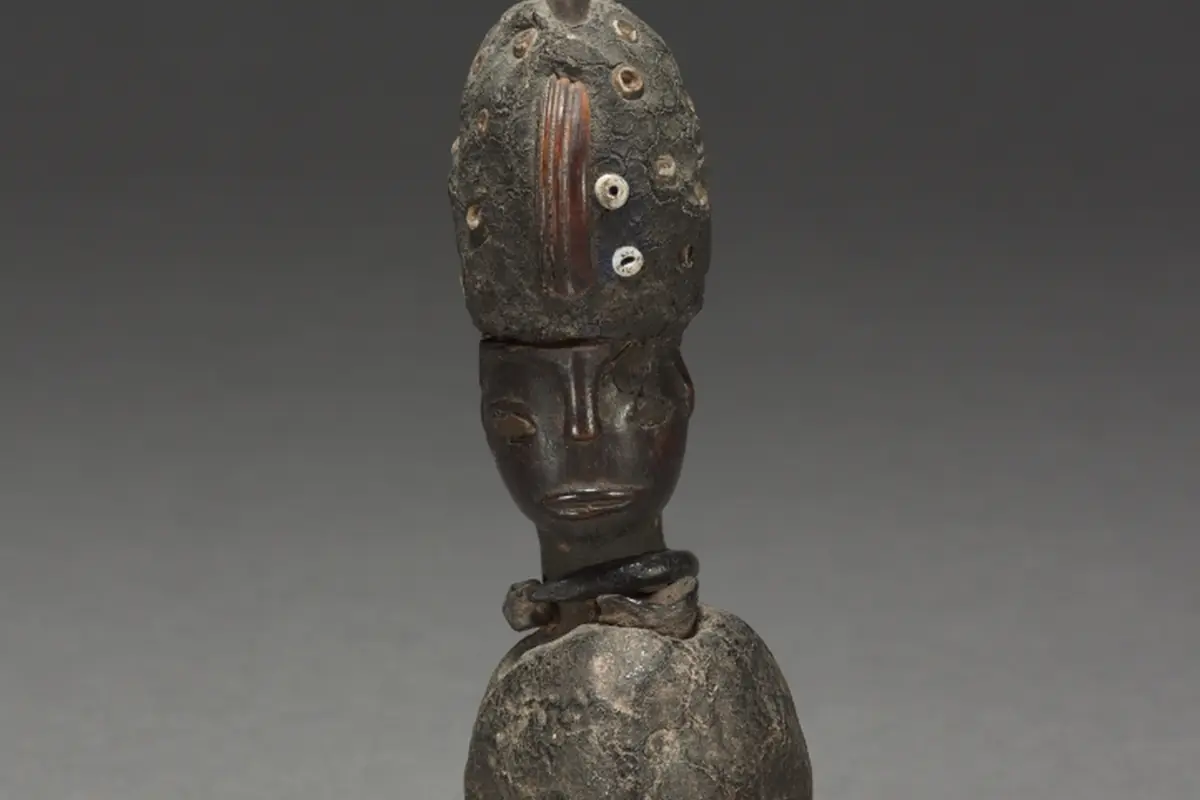
- Power figure (nkisi) (late 1800s-early 1900s) — Cleveland Museum of Art, CC0 1.0
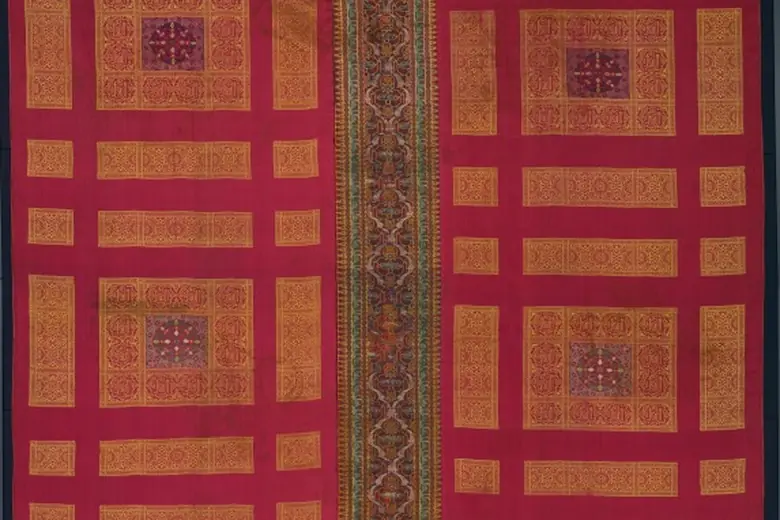
- Silk curtain from the Alhambra palace (1300s) — Cleveland Museum of Art, CC0 1.0
- Face Mask (possibly early 1900s) — Cleveland Museum of Art, CC0 1.0
- Figure from a Crèche: Standing Mountain Goat (1780–1830) — Cleveland Museum of Art, CC0 1.0
- Beaded Necklace (by 1942) — Cleveland Museum of Art, CC0 1.0
- Exotic Gold-patterned Silk (1360–1400) — Cleveland Museum of Art, CC0 1.0
- Mask (Bwoom) (mid- to late 1800s) — Cleveland Museum of Art, CC0 1.0
- Amitabha Triad (1400s) — Cleveland Museum of Art, CC0 1.0
- Prestige Chair (1800s) — Cleveland Museum of Art, CC0 1.0
- Architectural Conference (c. 1622) — Cleveland Museum of Art, CC0 1.0
- Buffalo Mask (early to mid-1900s) — Cleveland Museum of Art, CC0 1.0
- Door Lintel (Pare) (1800s) — Cleveland Museum of Art, CC0 1.0
- Seal with Two Qilin Playing (1849) — Cleveland Museum of Art, CC0 1.0
- Taj Mahal, Back View of the Rest-House, with Figure, Dr. John Murray (c. 1858–1862) — Cleveland Museum of Art, CC0 1.0
- Jacket with Octopus (c. 1800–1868) — Cleveland Museum of Art, CC0 1.0