
 Cleveland Museum of Art · CC0 1.0
Pages in this section
 Arbitral Tribunal (TAO)An arbitral jurisdiction specialised in the art market and heritage: mission, organisation, principles and figures of the TAO.›
 Referring a case to the tribunalAdmissibility conditions, fees and online request: everything you need to know to bring a case before the OIMAP Arbitral Tribunal.›
 Arbitration procedureFrom request to award: the stages, time limits and hearings of an arbitration before the TAO, with a typical eleven-month timetable.›
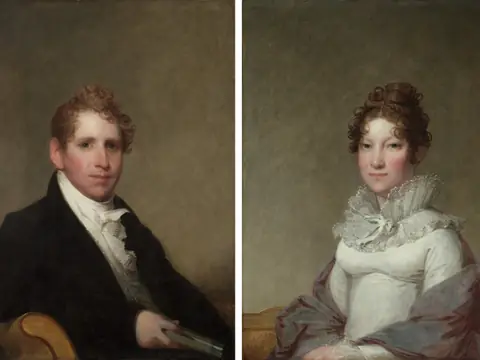 Tribunal rulesThe TAO arbitration rules: full text, model clauses and history of amendments, in French, English and Spanish.›
 List of arbitrators142 arbitrators of 48 nationalities: directory, specialisms and appointment procedure of the OIMAP Arbitral Tribunal.›
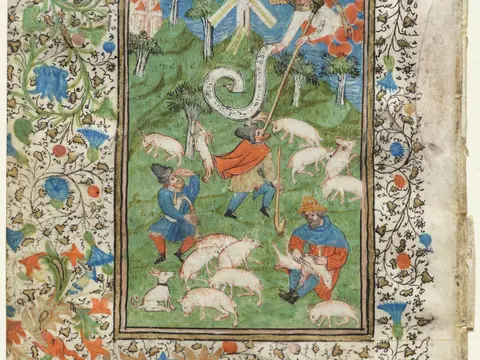 Authenticity disputesWhen the attribution of a work is contested: principles, appraisal and TAO decisions on authenticity.›
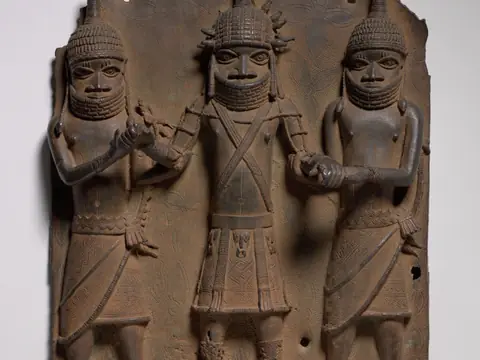 Provenance disputesWho is the rightful owner? Principles, evidence and TAO decisions when the origin of a work is contested.›
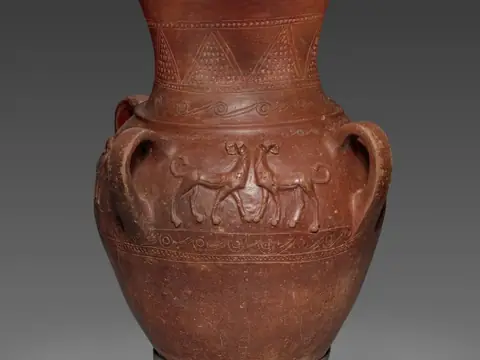 Restitution disputesStates, communities, museums and collectors: how the TAO handles claims for the return of cultural property.›
 Contract disputesSales, deposits, warranties: a third of the TAO's cases concern the performance of art-market contracts.›
 Arbitral case lawDecision database, search and commentaries: the TAO's anonymised case law, to anticipate the outcome of your own dispute.›
 MediationReaching an agreement in seven weeks: principle, mediators and request for mediation before the TAO, a confidential and inexpensive amicable route.›
 Enforcement of awardsAn award is worth something only if it is enforced: New York Convention, recognition and follow-up of TAO awards throughout the world.›
 OIMAP standard clauseA ready-to-use arbitration clause for your art contracts: official text, translations into three languages and advice on use.›
 TAO statisticsThe figures of art arbitration: cases per year, by region and by type of dispute, since the tribunal's creation in 2011.›
 Tribunal reportsAnnual report, thematic studies and archives: the public memory of the TAO's activity.›
Settling an art dispute without going through ten courts
A painting sold in New York, appraised in Paris, held in Dubai: when a dispute arises, which court should be seized, which law applies, which language is spoken? The OIMAP Arbitral Tribunal (TAO) answers with a single, specialised and confidential procedure.
Created in 2011, the TAO has handled 1,480 cases. It brings together a list of 142 arbitrators of 48 nationalities, all specialists in the art market, heritage law or international trade law. Its awards are enforceable in more than 170 States thanks to the New York Convention.
This section presents referral to the tribunal, the procedure, the rules, mediation, the list of arbitrators, case law, enforcement of awards and statistics.
Arbitration in figures
Source: Registry of the OIMAP Arbitral Tribunal.
Arbitration sections
 InstitutionArbitral Tribunal (TAO)
Presentation, composition, statistics.
› ProcedureReferring a case to the tribunal
Conditions, fees, online request.
› ProcedureArbitration procedure
Stages, time limits, hearings.
› AmicableMediation
Principle, mediators, request.
› DecisionsCase law
Decision database, commentaries.
› EnforcementEnforcement of awards
New York, recognition, follow-up.
›
Why arbitration
Arbitration offers the art world three advantages. First, confidentiality: no public hearing, no publication without the parties' agreement, which protects the reputation of collectors and houses. Second, specialisation: the arbitrators know the market, its customs and appraisal techniques. Finally, portability: an arbitral award is enforced abroad far more easily than a judgment.
The TAO also offers mediation, which is faster and less costly and leads to an agreement in nearly two cases out of three. The parties may use it before or during the arbitration.
A tribunal with four chambers
The TAO is organised into four chambers: authenticity, provenance, restitution and contracts. Each chamber brings together arbitrators experienced in the type of dispute concerned and relies on independent experts, including those accredited by OIMAP certification.
The Registry, based in Paris, receives requests, checks admissibility, constitutes the tribunal and ensures compliance with time limits. Hearings are held in Paris, Geneva, Singapore or Dubai, or by videoconference.
A link with OIMAP's other departments
The TAO is independent but fits in with the rest of the Organisation. Appeals against a refusal of certification come to it after review. Provenance disputes draw on the work of the Protection section, and the model contracts in the Market section refer to it through a standard clause.
This arrangement prevents the same dispute from being handled several times and gives arbitrators quick access to verified information, with the parties' consent.
Who may use the TAO
Any natural or legal person may bring a case before the tribunal: collector, gallery, auction house, museum, State, heir, expert. It is enough for the parties to have agreed to arbitration, in their contract or after the dispute arose.
States may also use it for restitution disputes, with their own counsel. In such cases the tribunal takes account of the applicable immunities and international conventions.
Section services
| Need | Page | Indicative time limit |
|---|---|---|
| File a request | Referring a case to the tribunal | Admissibility within 5 days |
| Understand how it works | Arbitration procedure | 11 months on average |
| Reach an agreement | Mediation | 7 weeks |
| Draft a clause | OIMAP standard clause | Immediate |
Milestones
- Creation of the TAO
First rules.
- Mediation
Creation of the list of mediators.
- Expedited procedure
Six months for small disputes.
- Online request
Fully digital filing.
A well-drafted clause prevents a dispute
Arbitration or State court
TAO arbitration
Private procedure- Confidentiality
- Specialised arbitrators
- International enforcement
Suited to cross-border disputes.
State court
Public procedure- Public hearings
- Multiple avenues of appeal
- Enforcement more difficult abroad
Suited to purely domestic disputes.
Resolving a dispute
- Try
Mediation or negotiation.
- Refer
File the request.
- Constitute
Appoint the arbitrators.
- Plead
Briefs and hearing.
- Enforce
Award and recognition.
Before bringing a case to the tribunal
A business lawyer
« In two years, my clients have saved time and gained peace of mind: the arbitrators immediately grasp what is at stake in an appraisal or a provenance. »
Arbitration vocabulary
- Arbitration
- Private way of settling a dispute through arbitrators.
- Award
- Decision handed down by the arbitral tribunal.
- Exequatur
- A judge's decision authorising enforcement.
- Arbitration clause
- Clause providing for arbitration in advance.
Frequently asked questions
Is the TAO a State court?
No, it is a private arbitral jurisdiction.
Which languages?
French, English and Spanish.
How long does it take?
Eleven months on average.
Where can I find the procedure?
Useful documents
Contacts
Related pages
- Referring a case to the tribunalAdmissibility conditions, fees and online request: everything you need to know to bring a case before the OIMAP Arbitral Tribunal.›
- Arbitration procedureFrom request to award: the stages, time limits and hearings of an arbitration before the TAO, with a typical eleven-month timetable.›
 MediationReaching an agreement in seven weeks: principle, mediators and request for mediation before the TAO, a confidential and inexpensive amicable route.›
- OIMAP standard clauseA ready-to-use arbitration clause for your art contracts: official text, translations into three languages and advice on use.›
Referring a case to the tribunal
File a request online.
Referring a case to the tribunalImage credits (29)
- Sketches in Belgium and Germany, Volume I: Hall of Justice of the Magistrates du Franc, Bruges, Louis Haghe (1840) — Cleveland Museum of Art, CC0 1.0
- The Antechamber of the Palace of Justice, Paris, Charles Meryon (1855) — Cleveland Museum of Art, CC0 1.0
- The Judgment of Solomon and Esther before Ahasuerus (pair), Dirk Vellert (c. 1530) — Cleveland Museum of Art, CC0 1.0
- Portrait of John VIII Palaoelogus, Emperor of Constantinople, 1424-1428 (reverse), Pisanello (c. 1438–1439) — Cleveland Museum of Art, CC0 1.0
- Dr. James Stuart; Mary Campbell Stuart, Gilbert Stuart (c. 1815) — Cleveland Museum of Art, CC0 1.0
- Portrait of Georges Arnold Fitzwilliam, Charles Balthazar Julien Fevret de Saint-Mémin (c. 1790–1852) — Cleveland Museum of Art, CC0 1.0
- Annunciation to the Shepherds: Leaf from a Book of Hours (1 of 6 Excised Leaves), Henri d'Orquevaulx (c. 1420–30) — Cleveland Museum of Art, CC0 1.0
- Plaque (1500s–1600s) — Cleveland Museum of Art, CC0 1.0
- Hittite Vessel with Four Scenes Molded and Carved in Relief (1400–1200 BCE) — Cleveland Museum of Art, CC0 1.0
- The Calumny of Apelles, Giorgio Ghisi (1560) — Cleveland Museum of Art, CC0 1.0
- Letter Box, Ogata Kōrin (1700s) — Cleveland Museum of Art, CC0 1.0
- Coronation of the Virgin, Christoffel Jegher (1632–36) — Cleveland Museum of Art, CC0 1.0
- The Victory Banquet: from Battle Scenes of the Quelling of Rebellions in the Western Regions, with Imperial Poems (c. 1765–74; poem dated 1760) — Cleveland Museum of Art, CC0 1.0
- The Dance at the Court of Herod, Israhel van Meckenem (c. 1500) — Cleveland Museum of Art, CC0 1.0
- The Triumph of Mordecai, Lucas van Leyden (1515) — Cleveland Museum of Art, CC0 1.0
- Sweet Melancholy, Joseph-Marie Vien (1756) — Cleveland Museum of Art, CC0 1.0
- Seal Color Box (1662–1722) — Cleveland Museum of Art, CC0 1.0
- Mercury (Budha), from a Mandi Astrology Series, Sanju (c. 1810) — Cleveland Museum of Art, CC0 1.0
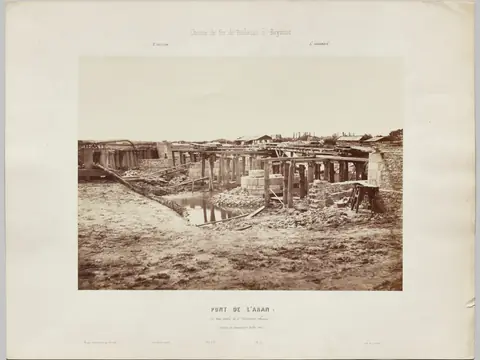
- Chemin de fer de Toulouse à Bayonne. Pont de l'Aran (en trois arches de 17m d'ouverture chacune). Situation des travaux au 21 juillet 1861, Édouard Baldus (1861) — Cleveland Museum of Art, CC0 1.0
- Seal Color Box (1662–1722) — Cleveland Museum of Art, CC0 1.0
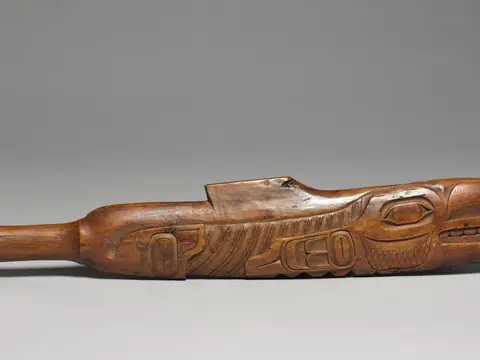
- Fish or Seal Club (X’ús’) (late 1800s–early 1900s) — Cleveland Museum of Art, CC0 1.0
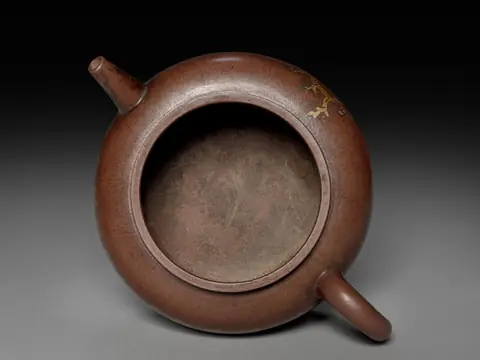
- Teapot with Landscape and Imperial Poem, Chen Hanwen (1762–95) — Cleveland Museum of Art, CC0 1.0
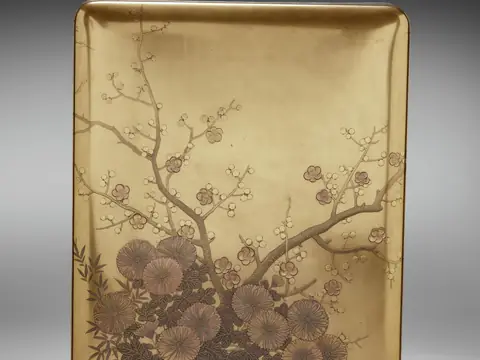
- Document Box (Ryōshibako) with Chrysanthemum and Plum (lid) (late 1800s-early 1900s) — Cleveland Museum of Art, CC0 1.0
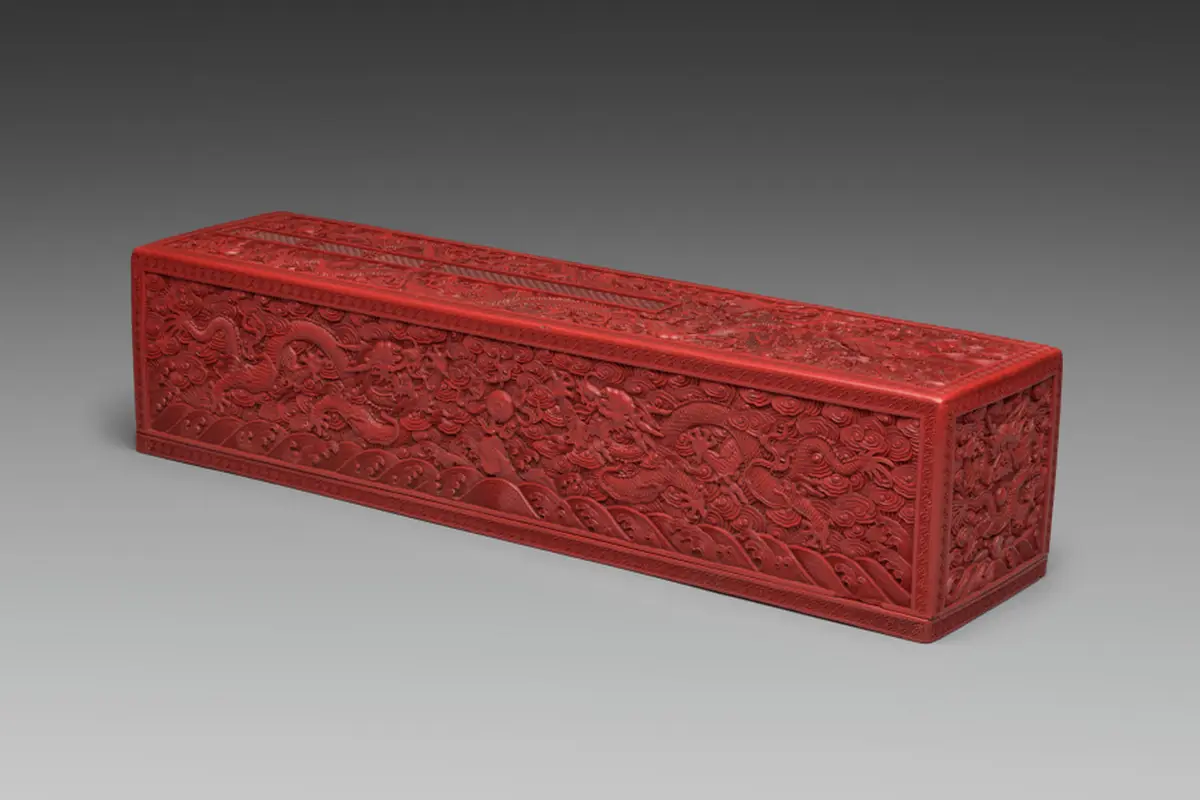
- Carved Lacquer Scroll Box (1736–95) — Cleveland Museum of Art, CC0 1.0
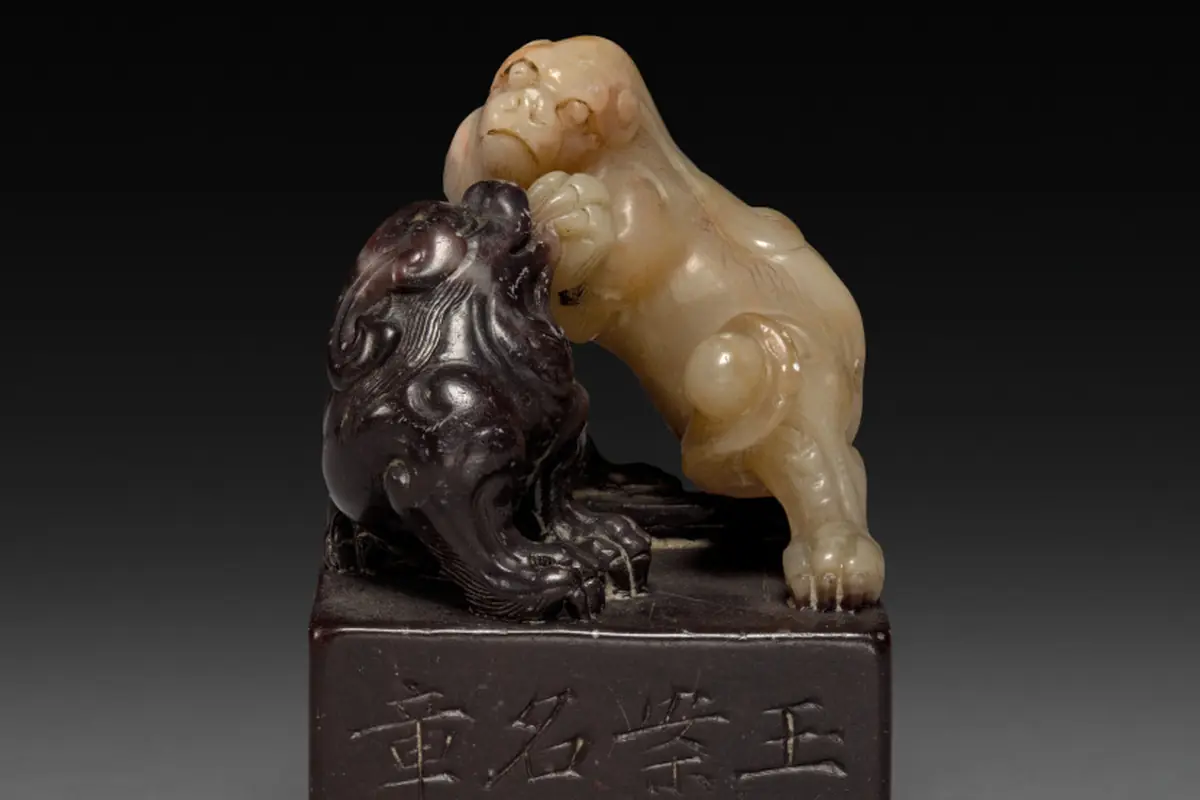
- Seal with Two Qilin Playing (1849) — Cleveland Museum of Art, CC0 1.0
- Carnet (1863–1865) — Cleveland Museum of Art, CC0 1.0
- Seal of Doge Michele Steno (reverse) (1400–1409) — Cleveland Museum of Art, CC0 1.0
- The Grotto of Posillipo, Hubert Robert (c. 1769) — Cleveland Museum of Art, CC0 1.0
- Portrait of Sandford Peacocke, William Wood (1801) — Cleveland Museum of Art, CC0 1.0