
 Cleveland Museum of Art · CC0 1.0
A map of restitutions
Thirty-one States have brought cases to the TAO or agreed to take part in a restitution procedure. They come from every region, some as claimants, others as holders, several in both roles. This page presents the breakdown and the lessons.
The figures are indicative and anonymised by region: the names of States party to a pending case are not published without their agreement.
They illustrate the diversity of situations and the growing role of arbitration in cultural relations between States.
States concerned by restitutions in figures
Source: Registry of the OIMAP Arbitral Tribunal.
Claimants and holders
Claimant States seek the return of objects that left their territory, often in colonial times, conflicts or looting. Holding States are those whose museums or public collections keep the objects. Several States occupy both positions.
Both increasingly recognise the value of a neutral procedure. National museums see it as a way of handling claims with rigour and discretion, far from controversy.
How a State takes part
A State may take part by signing a submission agreement, by joining a clause in a bilateral agreement or by accepting a proposal from the Registry. It appoints its counsel, its representatives and, if it wishes, an arbitrator. The waiver of immunity from jurisdiction is limited to the procedure.
OIMAP offers States, especially those with few resources, technical support: model documents, training, funding assistance. A national focal point may be designated to coordinate.
Bilateral cooperation agreements
Nine bilateral agreements between States provide for recourse to the TAO for restitution disputes. They define the procedure, the timetable and the cooperation commitments (loans, training, digitisation). Others are in preparation.
These agreements facilitate the settlement of future disputes and provide a framework of trust. They are filed with the Registry and accessible to other States, subject to confidentiality.
OIMAP support for States
OIMAP offers Member States a support programme: model submission agreement, training of legal counsel, help with provenance research, putting in touch with experts. Eligible States benefit from the Protection Fund to cover part of the costs.
Requests for support are addressed to the Protection department, which forwards them to the tribunal's Registry. Exchanges remain confidential.
Indicative breakdown
| Region | States concerned | Main role |
|---|---|---|
| Africa | 9 | Claimants |
| Asia-Pacific | 7 | Claimants and holders |
| Latin America | 6 | Claimants |
| Europe | 6 | Holders |
| Middle East | 3 | Claimants |
Milestones
- First referral by a State
Pilot.
- Ten States
Growing momentum.
- Bilateral agreements
First texts.
- 31 States
Widespread practice.
Confidentiality of States
Claimant State or holding State

Applicant
Claims property- Must establish its link
- May obtain technical support
- Interest in a quick solution
Active position.
Holder
Keeps the property- Must present its titles
- May propose a loan
- Interest in legal clarity
Defensive position.
Taking part as a State
- Decide
Policy.
- Appoint
Counsel.
- Sign
Compromise.
- Prepare
File.
- Plead
Hearing.
Preparations
A diplomat
« For our two countries, recourse to arbitration was a way of dealing with a sensitive subject without turning it into a crisis. »
Vocabulary of States
- Focal point
- Designated national contact.
- Bilateral agreement
- Text concluded between two States.
- Immunity from jurisdiction
- Protection against proceedings before a court.
- Holder
- Party that keeps the property.
Frequently asked questions
Are the names public?
No, unless agreed.
How can a State join?
By declaration or agreement.
Does OIMAP help?
Yes, with technical support.
Where can I see the decisions?
See Decisions.
Useful documents
Contacts
Related pages
 Restitution disputesStates, communities, museums and collectors: how the TAO handles claims for the return of cultural property.›
 Principles of restitution disputesInternational law, national law, museum ethics and equity: the principles that guide arbitrators on restitution.›
 Restitution decisionsA few anonymised TAO decisions on restitution: sacred objects, archaeological collections, manuscripts and cooperation solutions.›
See the decisions
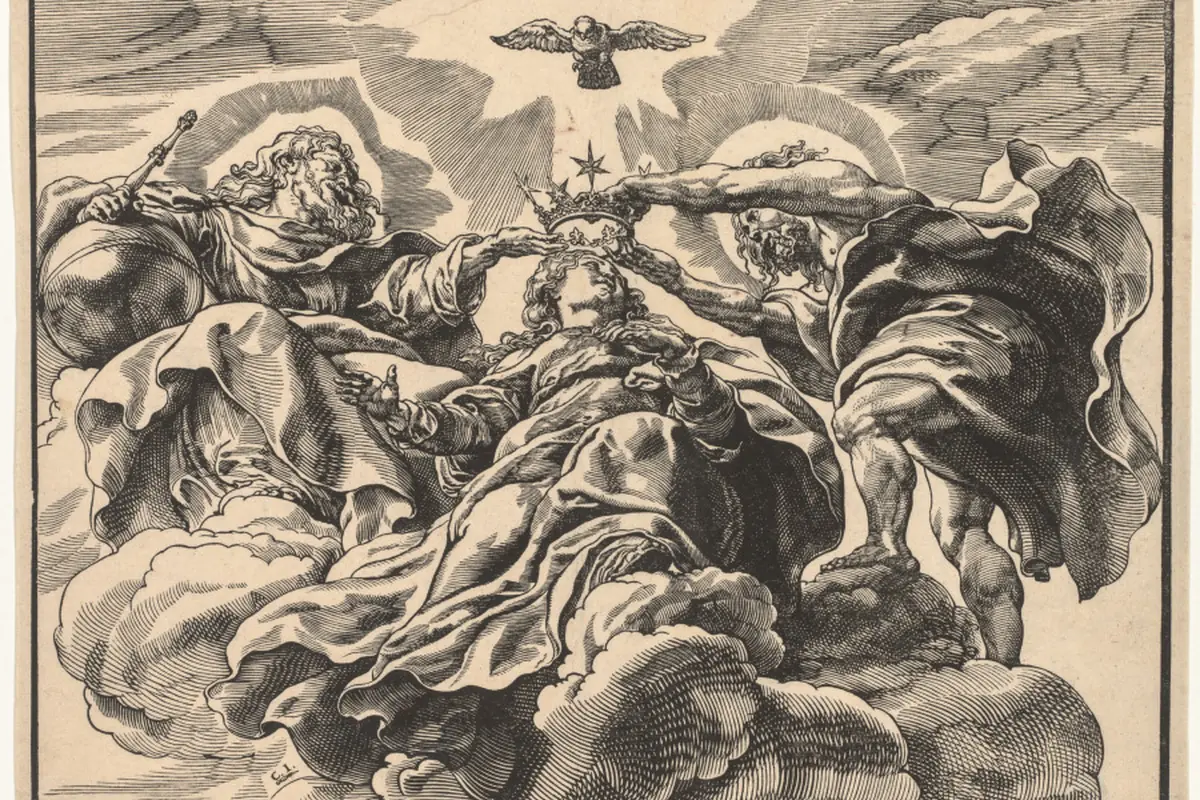
Image credits (16)
- The Antechamber of the Palace of Justice, Paris, Charles Meryon (1855) — Cleveland Museum of Art, CC0 1.0
- Figurine (300–100 BCE) — Cleveland Museum of Art, CC0 1.0
- Sketches in Belgium and Germany, Volume I: Hall of Justice of the Magistrates du Franc, Bruges, Louis Haghe (1840) — Cleveland Museum of Art, CC0 1.0
- Portrait of John VIII Palaoelogus, Emperor of Constantinople, 1424-1428 (reverse), Pisanello (c. 1438–1439) — Cleveland Museum of Art, CC0 1.0
- The Judgment of Solomon and Esther before Ahasuerus (pair), Dirk Vellert (c. 1530) — Cleveland Museum of Art, CC0 1.0
- A Philosopher, Pierre Puget (1662) — Cleveland Museum of Art, CC0 1.0
- Dr. James Stuart; Mary Campbell Stuart, Gilbert Stuart (c. 1815) — Cleveland Museum of Art, CC0 1.0
- The Victory Banquet: from Battle Scenes of the Quelling of Rebellions in the Western Regions, with Imperial Poems (c. 1765–74; poem dated 1760) — Cleveland Museum of Art, CC0 1.0
- The Calumny of Apelles, Giorgio Ghisi (1560) — Cleveland Museum of Art, CC0 1.0
- Fragment of a Wall Decoration from the Palace of Xerxes: "Guardsman" in Procession (486–465 BCE) — Cleveland Museum of Art, CC0 1.0
- Faience aryballos (perfume vase) (6th century BCE) — The Metropolitan Museum of Art, CC0 1.0
- Nowshera, Kashmir (number 1000), Samuel Bourne (1864) — Cleveland Museum of Art, CC0 1.0
- Hittite Vessel with Four Scenes Molded and Carved in Relief (1400–1200 BCE) — Cleveland Museum of Art, CC0 1.0
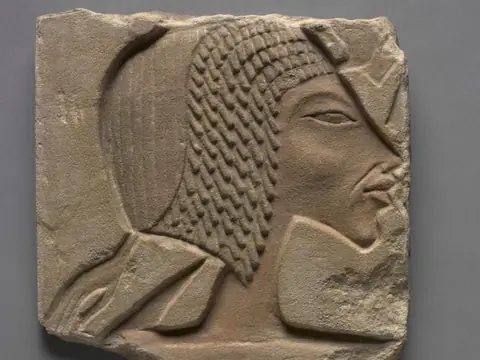
- Talatat: Portrait of Nefertiti (c. 1353–1347 BCE) — Cleveland Museum of Art, CC0 1.0
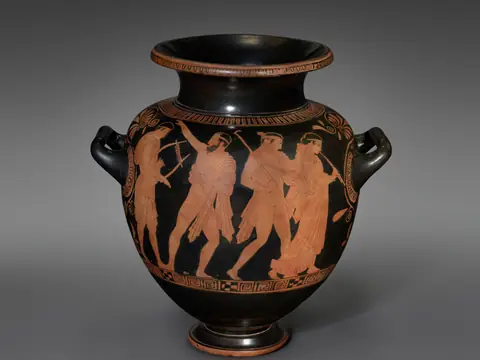
- Red-Figure Stamnos (Mixing/Storage Vessel): Komos (Musicians and Revelers), Kleophon Painter (c. 435–425 BCE) — Cleveland Museum of Art, CC0 1.0
- Coronation of the Virgin, Christoffel Jegher (1632–36) — Cleveland Museum of Art, CC0 1.0