
 Cleveland Museum of Art · CC0 1.0
What the seller's word is worth
A guarantee is a commitment by the seller on a specific point, which the buyer can invoke in case of a problem. In the art market, three guarantees are essential: authenticity, conformity to the description and provenance.
Operators approved by OIMAP undertake to provide them, on common terms. Other sellers may offer them, but the buyer must then read them carefully.
This page details each guarantee, its duration and its limits.
Buyer's guarantees in figures
Source: OIMAP Legal Affairs Department.
The authenticity guarantee
The seller guarantees that the work is indeed by the artist, workshop or period announced. If it proves inauthentic within five years, the buyer may obtain cancellation of the sale and reimbursement of the price, provided they return the work in the condition in which they received it.
The guarantee does not cover attributions with clearly stated reservations, nor cases where the state of knowledge at the time of the sale did not allow the defect to be detected. When the seller is approved, it is backed by an OIMAP certificate.
Conformity and provenance
The conformity guarantee ensures that the work matches its description: dimensions, technique, date, condition. A significant discrepancy gives the right to a price reduction or cancellation. Slight colour differences due to photography or the screen are not defects.
The provenance guarantee ensures that the seller has told the buyer everything they knew about the history of the work, including any disputes. If a claim proves well founded, the buyer is compensated, subject to their own diligence.
Guarantee insurance
Some operators take out insurance covering the authenticity risk. In the event of a proven fake, the insurer reimburses the buyer, then claims against the author of the fake. This arrangement, increasingly common among approved auction houses, speeds up the settlement of disputes.
Buyers can also take out title insurance themselves, which protects them against a later claim on the work. It is useful mainly for high-value works with complex provenance.
The three guarantees
| Guarantee | Purpose | Duration | Remedy |
|---|---|---|---|
| Authenticity | Work by the artist announced | 5 years | Cancellation and refund |
| Compliance | Exact description | 2 years | Reduction or cancellation |
| Provenance | Full information on the history | 10 years | Compensation |
Landmarks
- Principle
Directive 2019-06.
- Authenticity guarantee
Five years.
- Provenance guarantee
Ten years.
- Simplified procedure
Prior mediation.
Reservations must be legible
Statutory guarantee or contractual guarantee
Statutory
Imposed by law- Applies without being mentioned
- Minimum duration
- Cannot be modified to your detriment
Basis of protection.
Contractual
Offered by the seller- Can go further
- Must be read
- May contain exclusions
Supplement.
Implementing a guarantee
- Find
Identify the defect.
- Document
Gather evidence and expert opinion.
- Notify
Inform the seller in writing.
- Negotiate
Propose a solution.
- Refer
Use mediation.
Documents to keep
An expert
« The authenticity guarantee is not a matter of debate: it is a matter of proof. Hence the importance of certificates drawn up according to a common method. »
Vocabulary of guarantees
- Statutory guarantee
- Guarantee imposed by law.
- Reservation
- Wording limiting a statement.
- Cancellation
- Annulment of the contract.
- State of knowledge
- Knowledge available on the date of the sale.
Frequently asked questions
Does the guarantee run from the sale?
Yes, for authenticity: five years from delivery.
Can I combine guarantees and remedies?
Yes, to the extent compatible with the law.
Who bears the cost of the expert appraisal?
The buyer, unless mediation decides otherwise.
What to do after five years?
See Remedies.
Useful documents
Contacts
Related pages
 Consumer protectionThe rights of the buyer of a work of art: information, guarantees, withdrawal, remedies and mediation.›
 Buyer's rightsPre-contractual information, faithful description, distance withdrawal, time limits: what the buyer of a work is entitled to.›
 Certificates of authenticityThe OIMAP certificate of authenticity establishes, through independent expertise and scientific analysis, that the work is indeed the one claimed.›
See the remedies
Image credits (16)
- Plate: Diana and Acteon, Maestro Giorgio Andreoli (1522) — Cleveland Museum of Art, CC0 1.0
- Sketches in Belgium and Germany, Volume I: Hall of Justice of the Magistrates du Franc, Bruges, Louis Haghe (1840) — Cleveland Museum of Art, CC0 1.0
- Creamer, Louis Rorimer (c. 1910) — Cleveland Museum of Art, CC0 1.0
- Portrait Bust of a Man (27 BCE–14 CE) — Cleveland Museum of Art, CC0 1.0
- Yokkaichi: View of the Mie River, from the series The Fifty-Three Stations of the Tōkaidō, Utagawa Hiroshige (c. 1833–34) — Cleveland Museum of Art, CC0 1.0
- The Antechamber of the Palace of Justice, Paris, Charles Meryon (1855) — Cleveland Museum of Art, CC0 1.0
- Christ Driving the Money Changers from the Temple, Rembrandt van Rijn (1635) — Cleveland Museum of Art, CC0 1.0
- Self-Portrait, John I Smart (1802) — Cleveland Museum of Art, CC0 1.0
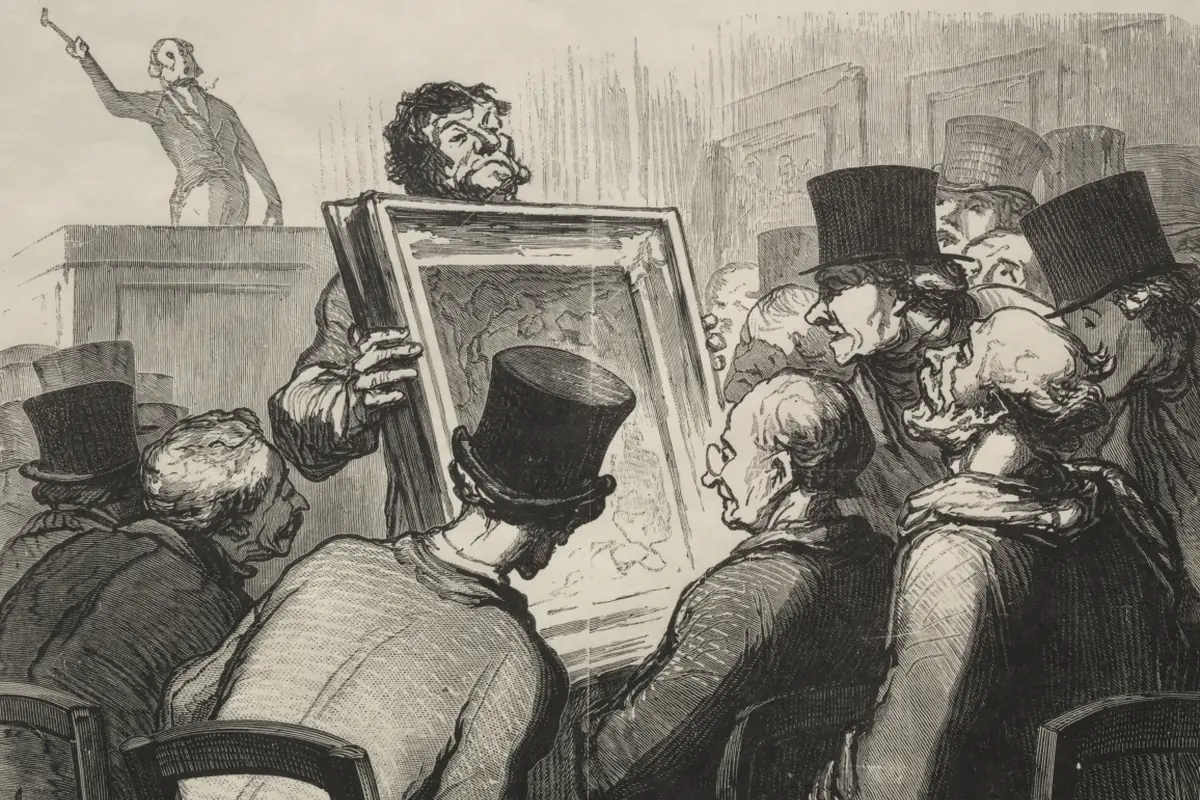
- Painting Enthusiasts at Auction House Bouillon, Honoré Daumier (1862, printed 1920) — Cleveland Museum of Art, CC0 1.0
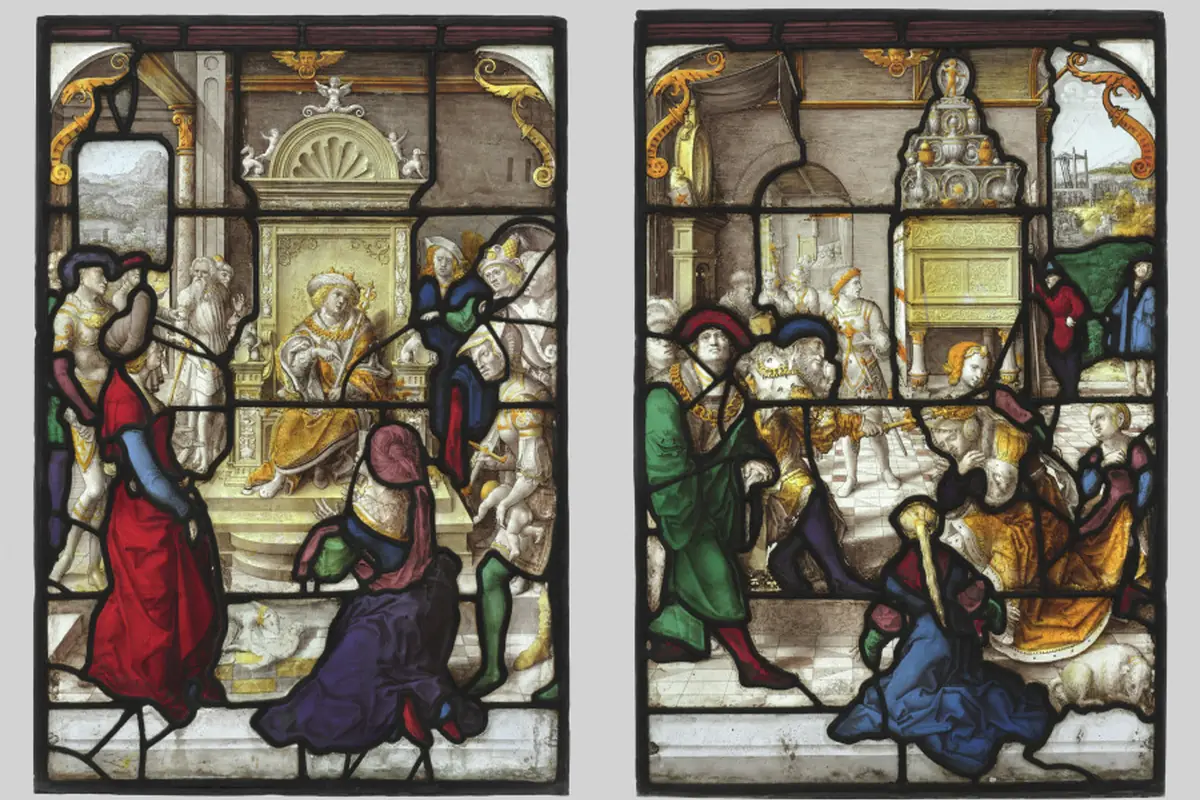
- The Judgment of Solomon and Esther before Ahasuerus (pair), Dirk Vellert (c. 1530) — Cleveland Museum of Art, CC0 1.0
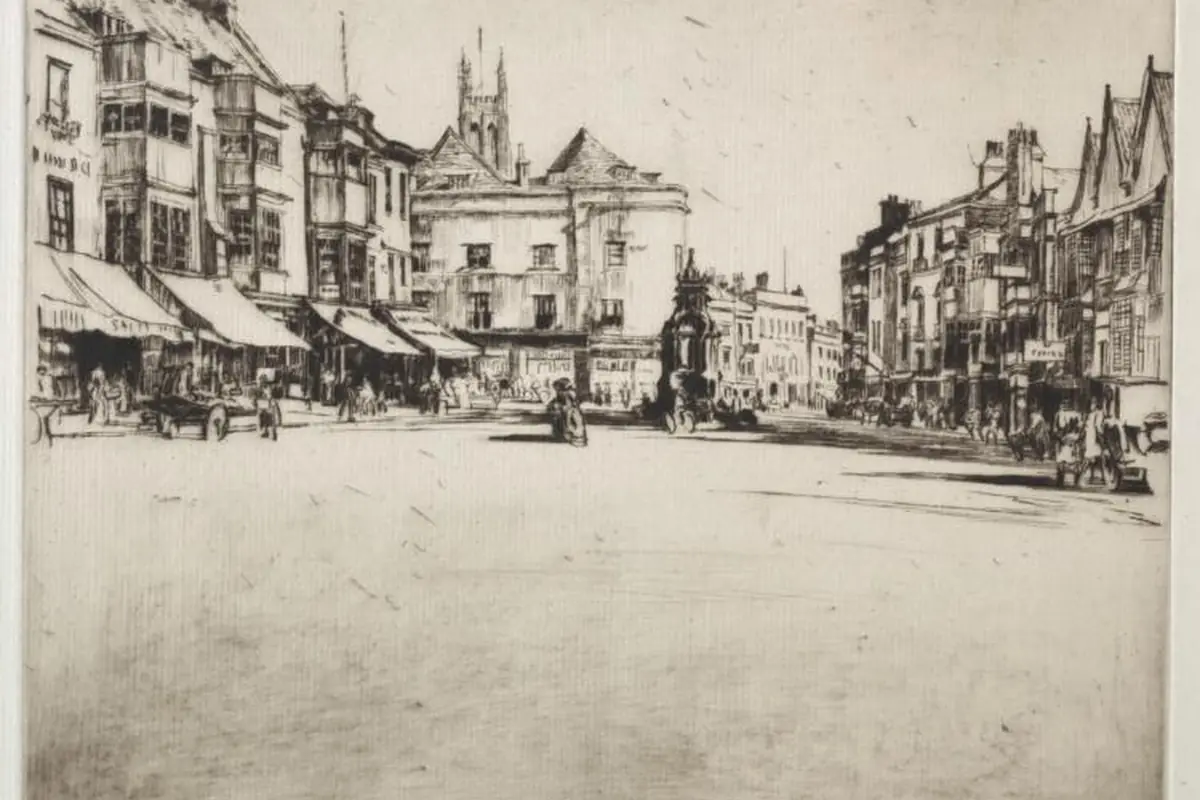
- The Market Place, Wells, Muirhead Bone (1891–1953) — Cleveland Museum of Art, CC0 1.0
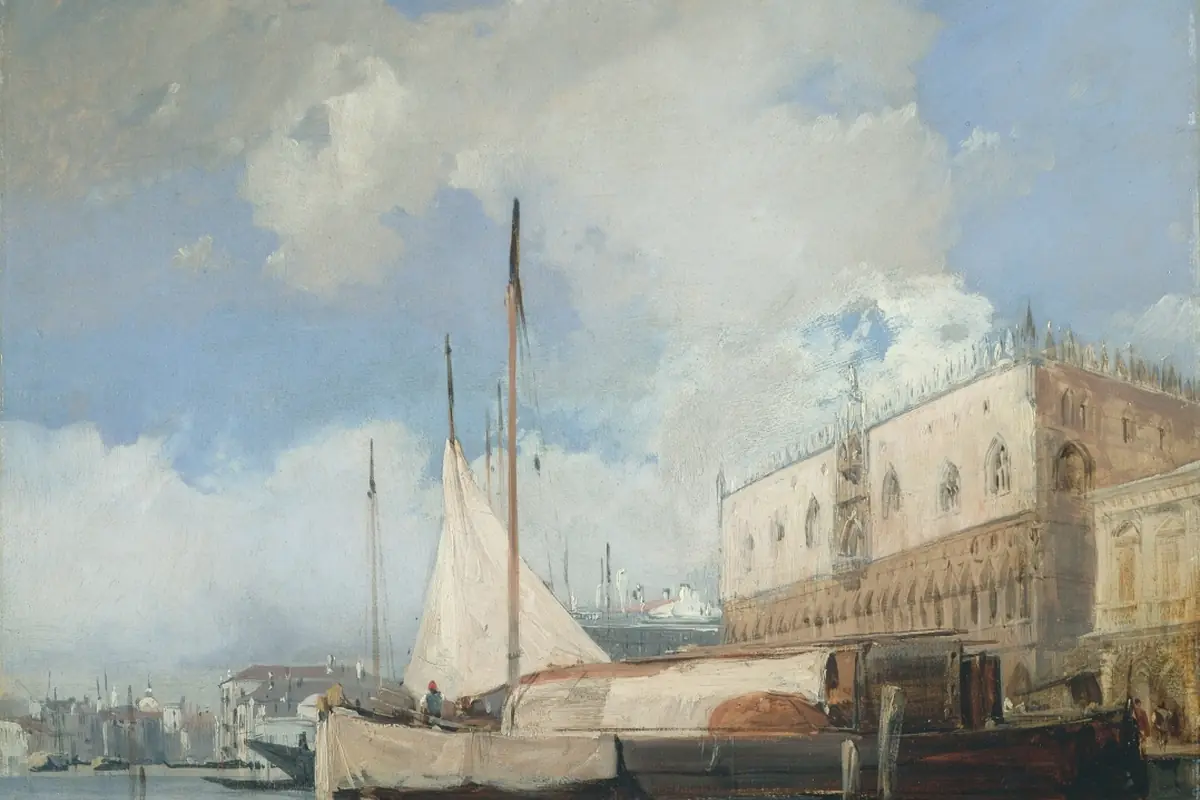
- The Doge's Palace, Venice, Richard Parkes Bonington (1826) — Cleveland Museum of Art, CC0 1.0
- The Calumny of Apelles, Giorgio Ghisi (1560) — Cleveland Museum of Art, CC0 1.0
- Portrait of a Woman, Anna Claypoole Peale (1820) — Cleveland Museum of Art, CC0 1.0
- Fish or Seal Club (X’ús’) (late 1800s–early 1900s) — Cleveland Museum of Art, CC0 1.0
- Portrait of a Man, Italian Painter — The Metropolitan Museum of Art, CC0 1.0