
 Cleveland Museum of Art · CC0 1.0
Pages in this section
 Text of the standard clauseThe official text of the TAO arbitration clause, its variants (mediation, expedited, authenticity) and a sentence-by-sentence commentary.›
 Translations of the standard clauseThe TAO standard clause in English and Spanish: official texts, terminology pitfalls and rules of consistency between languages.›
 Using the standard clauseWhere to insert the OIMAP arbitration clause: sale contracts, deposits, warranties, general conditions of auction sale and online contracts.›
Copy, paste, be protected
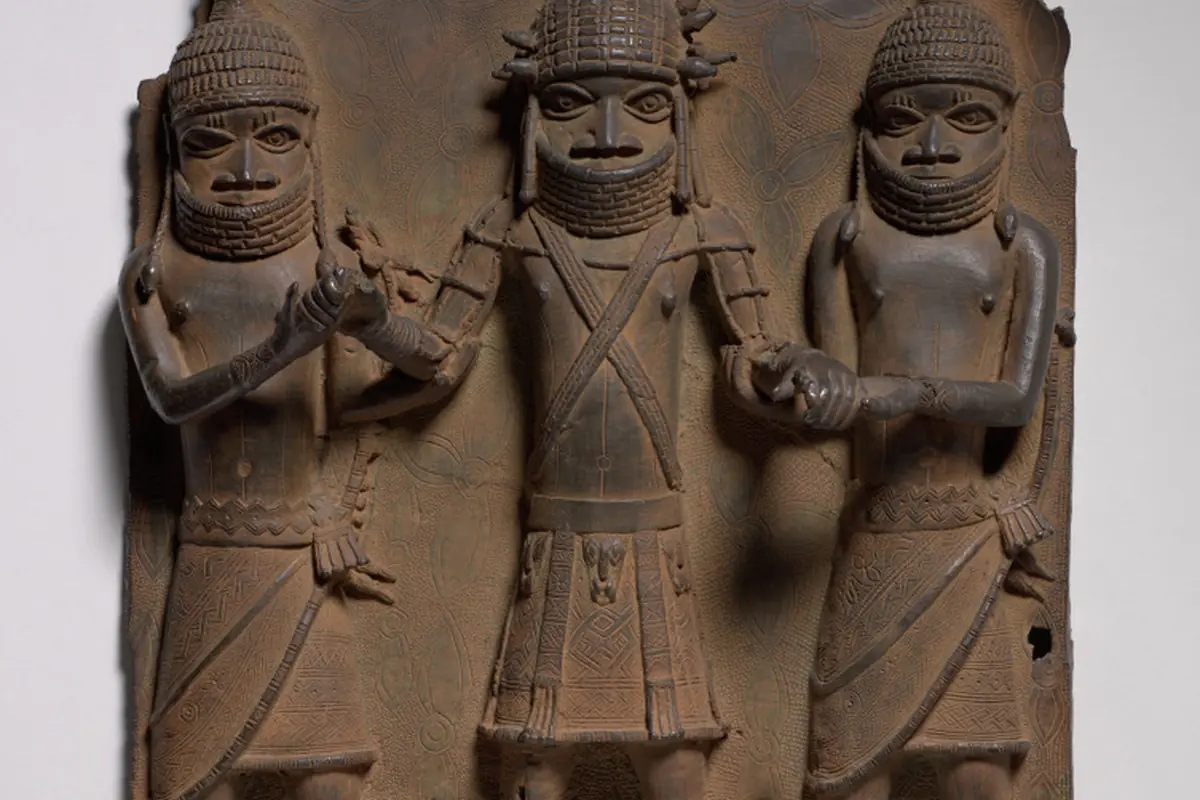
The OIMAP standard clause runs to just a few lines. Inserted in a sale, deposit or warranty contract, it designates the TAO as the competent jurisdiction and sets out its terms. It avoids preliminary debates on jurisdiction and speeds up the settlement of disputes.
It is used in more than 70% of contracts for works certified by OIMAP. Auction houses, galleries, museums and collectors may adopt it freely and at no cost.
This section presents the official text, its translations and advice on use.
The OIMAP standard clause in figures
Source: Registry of the OIMAP Arbitral Tribunal.
Three pages

Why a standard clause
A standard clause meets the need for legal certainty. Drafted by the tribunal's staff, approved by its council and applied for more than ten years, it limits the risks of ambiguity, contradiction or inapplicability. Arbitrators understand it at first reading.
It fits into all types of contract and has been tested in many legal systems. Local adaptations are flagged and explained.
A clause in three parts
The clause first designates the applicable tribunal and rules, then specifies the number of arbitrators, the seat and the language, and finally the law applicable to the merits. These four elements are enough to make the clause workable.
Variants make it possible to add prior mediation, the expedited procedure or a specific rule for authenticity disputes.
A tool of authority
OIMAP recommends the clause in its good-practice guides, mentions it in the certification conditions and offers it in its model contracts in the Market section. Approved houses undertake to offer it to the parties.
This harmonisation promotes predictability in the market: a dispute between parties from different countries is settled faster when the clause is the same everywhere.
Clause and certification
Works certified by OIMAP often move between countries. Inserting the clause in the contracts that concern them creates consistency between authentication and dispute settlement: the tribunal may draw on the certification file, with the parties' agreement.
Certificate holders receive the standard clause with their file. It also appears in the Registry, for works whose owner so wishes.
Content of the clause
| Element | Default value | Option |
|---|---|---|
| Rules | TAO Rules | Applicable version |
| Arbitrators | Three | A sole arbitrator |
| Seat | Paris | Another city |
| Language | French | English, Spanish |
Milestones
- First clause
Short text.
- Mediation-arbitration
Variant.
- Expedited clause
Variant.
- Three languages
Aligned.
- Generator
Online assistant.
A clause, not a contract
TAO clause or in-house clause
TAO clause
Approved text- No ambiguity
- Immediate understanding
- Quick agreement
Recommended.
In-house clause
Specific text- Fine-tuned adaptation
- Risk of inconsistency
- To be validated
For special cases.
Insert the clause
- Choose
Suitable variant.
- Copy
Official text.
- Fill in
Seat, language.
- Have it reviewed
Lawyer.
- Sign
In the contract.
Drafting checklist
An auction house director
« Since we started using the standard clause, our disputes are settled without arguing about jurisdiction. »
Vocabulary of the clause
- Standard clause
- Ready-to-use model clause.
- Variant
- Adaptation of the model.
- Enforceability
- Ability to be enforced against a party.
- Seat
- Legal place of the arbitration.
Frequently asked questions
Is it free?
Yes.
May I translate it?
Use the official translations.
May I amend it?
With caution.
Where can I see the text?
See Text.
Useful documents
Contacts
Related pages
 Text of the standard clauseThe official text of the TAO arbitration clause, its variants (mediation, expedited, authenticity) and a sentence-by-sentence commentary.›
 Translations of the standard clauseThe TAO standard clause in English and Spanish: official texts, terminology pitfalls and rules of consistency between languages.›
 Using the standard clauseWhere to insert the OIMAP arbitration clause: sale contracts, deposits, warranties, general conditions of auction sale and online contracts.›
Read the official text
Image credits (22)
- The Judgment of Solomon and Esther before Ahasuerus (pair), Dirk Vellert (c. 1530) — Cleveland Museum of Art, CC0 1.0
- The Antechamber of the Palace of Justice, Paris, Charles Meryon (1855) — Cleveland Museum of Art, CC0 1.0
- Coronation of the Virgin, Christoffel Jegher (1632–36) — Cleveland Museum of Art, CC0 1.0
- The Dance at the Court of Herod, Israhel van Meckenem (c. 1500) — Cleveland Museum of Art, CC0 1.0
- Plaque (1500s–1600s) — Cleveland Museum of Art, CC0 1.0
- Sketches in Belgium and Germany, Volume I: Hall of Justice of the Magistrates du Franc, Bruges, Louis Haghe (1840) — Cleveland Museum of Art, CC0 1.0
- The Calumny of Apelles, Giorgio Ghisi (1560) — Cleveland Museum of Art, CC0 1.0
- Seal Color Box (1662–1722) — Cleveland Museum of Art, CC0 1.0
- Dr. James Stuart; Mary Campbell Stuart, Gilbert Stuart (c. 1815) — Cleveland Museum of Art, CC0 1.0
- Portrait of John VIII Palaoelogus, Emperor of Constantinople, 1424-1428 (reverse), Pisanello (c. 1438–1439) — Cleveland Museum of Art, CC0 1.0
- The Victory Banquet: from Battle Scenes of the Quelling of Rebellions in the Western Regions, with Imperial Poems (c. 1765–74; poem dated 1760) — Cleveland Museum of Art, CC0 1.0
- The Triumph of Mordecai, Lucas van Leyden (1515) — Cleveland Museum of Art, CC0 1.0
- Seal Color Box (1662–1722) — Cleveland Museum of Art, CC0 1.0
- Mercury (Budha), from a Mandi Astrology Series, Sanju (c. 1810) — Cleveland Museum of Art, CC0 1.0
- Chemin de fer de Toulouse à Bayonne. Pont de l'Aran (en trois arches de 17m d'ouverture chacune). Situation des travaux au 21 juillet 1861, Édouard Baldus (1861) — Cleveland Museum of Art, CC0 1.0
- Sweet Melancholy, Joseph-Marie Vien (1756) — Cleveland Museum of Art, CC0 1.0
- Letter Box, Ogata Kōrin (1700s) — Cleveland Museum of Art, CC0 1.0
- A Palace with an Arched Bridge (A Roman Villa), Hubert Robert (1760) — Cleveland Museum of Art, CC0 1.0
- Carnet (1863–1865) — Cleveland Museum of Art, CC0 1.0
- Fish or Seal Club (X’ús’) (late 1800s–early 1900s) — Cleveland Museum of Art, CC0 1.0
- Seal of Doge Michele Steno (reverse) (1400–1409) — Cleveland Museum of Art, CC0 1.0
- Teapot with Landscape and Imperial Poem, Chen Hanwen (1762–95) — Cleveland Museum of Art, CC0 1.0