
 Cleveland Museum of Art · CC0 1.0
The cradle of heritage
Europe records €21 billion in transactions in 2024 (31% of the market), with growth of 3.9%. It remains the leading region for old masters, furniture and decorative arts.
The continent concentrates a considerable heritage and a dense network of museums, auction houses, experts and galleries. London, Paris and Geneva form a triangle of major marketplaces, completed by Milan, Vienna, Brussels and Munich.
This page presents the region's profile, its legal framework and its main issues.
Europe in 2024
Source: OIMAP Observatory.
A heritage market
Europe is the leading region for old masters, with 48% of the global volume of this segment, and for furniture and decorative arts. It is also the most tightly regulated: States control the export of cultural property, which is often listed or entered on an inventory.
This control protects heritage but complicates circulation. A listed painting cannot leave the territory without authorisation, and procedures vary from one country to another, which lengthens timeframes.
Circulation and regulation
Free movement within the European area does not remove the controls specific to cultural property. OIMAP eases the task by providing a single document, recognised by all Member States in the region: the import and export licence.
European operators are also subject to reinforced vigilance obligations, particularly for property of archaeological origin and works liable to have been looted. The BIOP database has become a reflex check before each sale.
European buyers
The European buyer favours heritage value: they look for provenance, the history of the work, its pedigree. Sales distinguished by a documented history often reach prices above estimate.
Public institutions play an important role, and not only as buyers: their loans, exhibitions and catalogues raisonnés help fix the attribution of works, and therefore their market value.
Dominant segments
| Segment | Share of regional volume | Change |
|---|---|---|
| Old masters and the 19th century | 34% | +3.5% |
| Furniture and decorative arts | 26% | +2.4% |
| Modern painting | 19% | +4.6% |
| Contemporary art | 13% | +6.1% |
| Other | 8% | +3.0% |
Landmarks of the region
- 38% of the market
Leading region worldwide.
- Loses first place
North America takes the lead.
- Contraction
Closure of sale rooms.
- €21bn
Return to the 2019 level.
A heritage to protect
European marketplaces
London and Paris
Two global marketplaces- Largest volumes
- Many experts
- High fees
For major works.
Regional marketplaces
Milan, Vienna, Brussels, Munich- Specialised markets
- Less competition
- Lower fees
For specific segments.

Exporting a work from Europe
- Check
Check whether the work is listed.
- Ask
File the licence application.
- Wait
Respect the processing times.
- Insure
Cover nail-to-nail transport.
- Declare
Inform customs in the country of arrival.
Before selling in Europe
A conservator
« In Europe, the question is never just "what is this work worth?", but "can it travel?". »
Regional vocabulary
- Listing
- Legal protection of cultural property.
- Looting
- Illegitimate dispossession of property.
- VAT
- Value added tax.
- Export licence
- Authorisation to take a work out of the territory.
Frequently asked questions
Can listed works be sold?
Yes, within the country, often under conditions.
How do I obtain an export licence?
See the export licence.
Why is growth lower?
The market is mature and the supply of major pieces is limited.
Where can I see Asia-Pacific?
On the Asia-Pacific page.
Useful documents
Contacts
Related pages
 Geographic breakdownWhere sales are concluded: North America, Europe, Asia-Pacific, Middle East, Africa and Latin America.›
 Asia-PacificThe most dynamic region of the established market: €14.9 billion in 2024, +9.6% over a year.›
 BIOP databaseThe international database of protected works: 48,200 stolen, lost or suspect works, searchable by all and enriched by police forces and museums.›
See Asia-Pacific
Image credits (16)
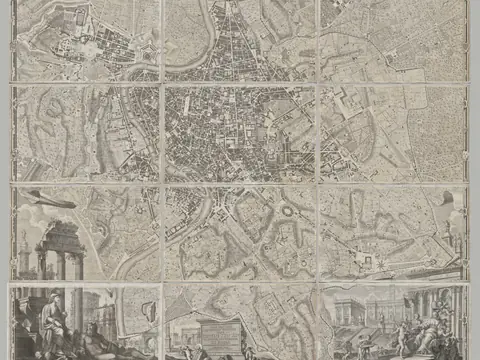
- Nuova pianta di Roma data in luce da Giambattista Nolli l’anno MDCCXLVII, known as La Pianta Grande di Roma, Giovanni Battista Nolli (1748) — Cleveland Museum of Art, CC0 1.0
- A Rocky Cove with Fishing Boats, Allart van Everdingen (late 1650s) — Cleveland Museum of Art, CC0 1.0
- Nuova pianta di Roma data in luce da Giambattista Nolli l’anno MDCCXLVII, known as La Pianta Grande di Roma, Giovanni Battista Nolli (1748) — Cleveland Museum of Art, CC0 1.0
- Leftmost Print from Pleasure Boats on the Sumida River beneath Shin-Ōhashi Bridge, Chōbunsai Eishi (c. 1792) — Cleveland Museum of Art, CC0 1.0
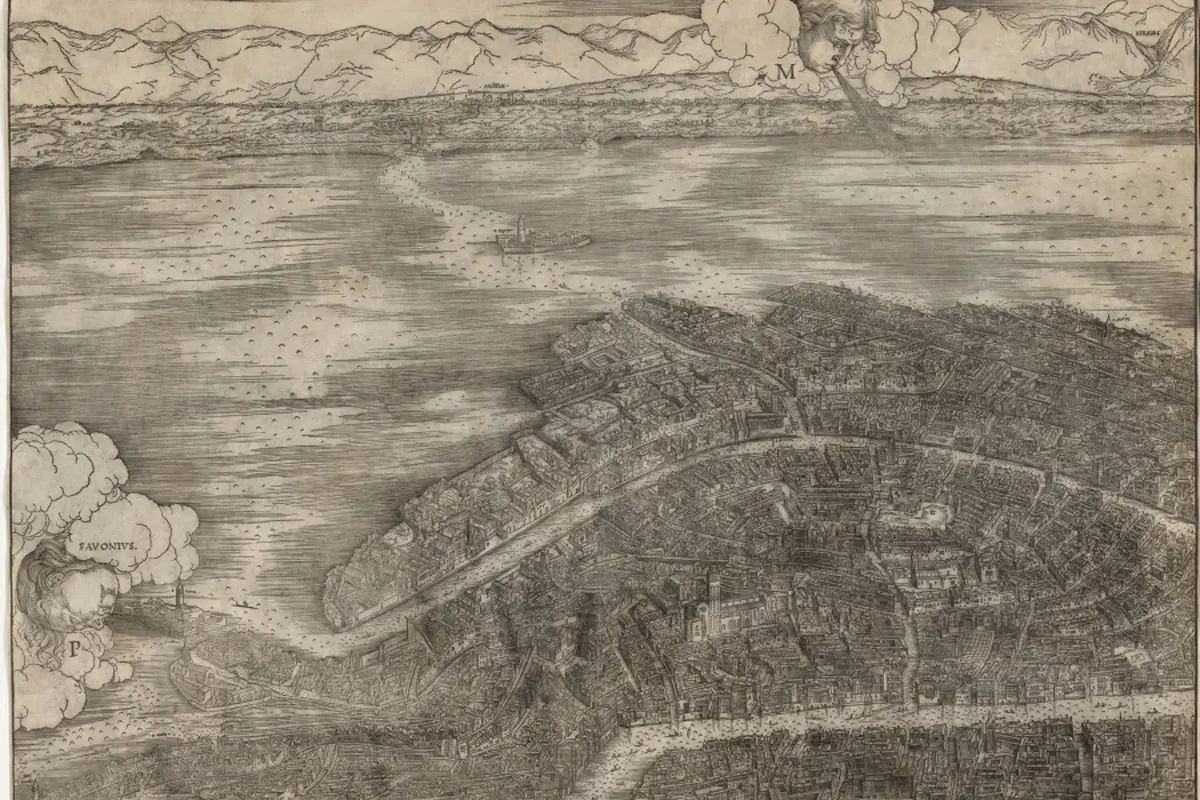
- View of Venice, Jacopo de' Barbari (1500) — Cleveland Museum of Art, CC0 1.0
- Net Fishing at Night on the Sumida River, Kitagawa Utamaro (c. 1800) — Cleveland Museum of Art, CC0 1.0
- Seven Jeweled Mountain (late 1800s) — Cleveland Museum of Art, CC0 1.0
- Akshobhya: the Buddha of the East (late 800s) — Cleveland Museum of Art, CC0 1.0
- Arrival of the "Southern Barbarians" (c. 1600) — Cleveland Museum of Art, CC0 1.0
- Enjoying the Evening Cool Along the Sumida River, Kitagawa Utamaro (c. 1797–98) — Cleveland Museum of Art, CC0 1.0
- Nuova pianta di Roma data in luce da Giambattista Nolli l’anno MDCCXLVII, known as La Pianta Grande di Roma, Giovanni Battista Nolli (1748) — Cleveland Museum of Art, CC0 1.0
- The Grotto of Posillipo, Hubert Robert (c. 1769) — Cleveland Museum of Art, CC0 1.0
- Nuova pianta di Roma data in luce da Giambattista Nolli l’anno MDCCXLVII, known as La Pianta Grande di Roma, Giovanni Battista Nolli (1748) — Cleveland Museum of Art, CC0 1.0
- Nuova pianta di Roma data in luce da Giambattista Nolli l’anno MDCCXLVII, known as La Pianta Grande di Roma, Giovanni Battista Nolli (1748) — Cleveland Museum of Art, CC0 1.0
- Seal with Two Qilin Playing (1849) — Cleveland Museum of Art, CC0 1.0
- Wine Ewer with Incised Scroll Design (1100s) — Cleveland Museum of Art, CC0 1.0