
 Cleveland Museum of Art · CC0 1.0
Procedure put to the test by works
A work of art is not a good like any other: fragile, sometimes irreplaceable, often mobile. The four-day module prepares magistrates for procedural challenges: how to preserve evidence, appoint an expert, order seizure, cooperate with a foreign judge.
It covers both civil and criminal procedure, with a chapter on how state justice and arbitration fit together.
This page details the content, methods and resources.
Procedure and evidence in figures
Source: OIMAP Academy.
Evidence and expertise
The module shows how to conduct an expert appraisal: choosing the expert, drafting the mission, non-destructive or destructive analyses, adversarial debate, discussion of the report. It addresses the value of certificates, catalogues raisonnés and databases as evidence.
A workshop simulates the appointment of an expert for a contested painting, with the questions to ask and the pitfalls to avoid.
Protective measures and seizures
Urgency is frequent: a work is about to be sold or moved. Magistrates see how to order a ban on sale, sequestration, deposit with a trusted third party or a protective seizure, and how to organise the custody and conservation of a seized work.
Visits to specialised storage facilities show the conditions of good conservation.
Assistance and cooperation
Art cases are often cross-border. The module explains the request for judicial assistance, obtaining evidence abroad, cooperation with INTERPOL and customs, and recognition of foreign decisions. One chapter covers cooperation with the arbitral tribunal.
Participants practise drafting a letter of request and anticipating obstacles.
Criminal procedure
Handling stolen goods, smuggling, money laundering and destruction of heritage are addressed from the angle of evidence and legal characterisation. Magistrates see how to link criminal procedure and civil restitution, protect the victim and ensure seizure of the property.
A simulation covers a criminal hearing for trafficking in archaeological objects.
Programme of the module
| Day | Theme | Format |
|---|---|---|
| 1 | Evidence, expertise | Workshop |
| 2 | Protective measures | Case |
| 3 | Assistance, criminal | Simulation |
| 4 | Arbitration, review | Debate |
Milestones
- Expertise
Workshop.
- Seizures
Visit.
- Hearing
Simulation.
- Review
Assessment.
Preserve the work
Civil or criminal court
Civil
Private dispute- Compensation
- Evidence by the parties
- Interim measures
Sale, warranty.
Criminal
Offence- Penalty
- Investigation
- Criminal seizure
Trafficking, handling.
Handling an art case
- Characterise
Nature.
- Preserve
Evidence.
- Appoint an expert
Mission.
- Cooperate
Abroad.
- Decide
Motivation.
Procedural reflexes
A prosecutor
« The hearing simulation made me understand the difficulties of a trafficking case. I now draft my submissions differently. »
Vocabulary of procedure
- Letter of request
- Request to a foreign judge.
- Sequestration
- Deposit of property with a third party.
- Adversarial principle
- Principle of hearing each party.
- Judicial assistance
- Judicial cooperation.
Justice and arbitration
One chapter presents the relations between the state judge and the arbitral tribunal: jurisdiction, interim measures, actions to set aside, exequatur. It helps magistrates handle arbitration-related applications accurately.
The programme also shows how the courts can draw on the tribunal's database of decisions as a source of comparison.
To go further
The Academy's reception service answers practical questions Monday to Friday, in French, English and Spanish, and can direct each visitor to the programme, scholarship or free resource that fits their situation. A guidance counsellor also offers a thirty-minute individual meeting, by appointment, to build a realistic training pathway.
Trainees' feedback is valuable: each session gives rise to a questionnaire, and the most useful suggestions are examined each quarter by the teaching committee. Do not hesitate to write to report a difficulty, propose a subject or tell us what the training has changed in your practice.
Frequently asked questions
Is there a criminal component?
Yes.
Does one learn to draft an expert's mission?
Yes.
How do the simulations work?
In roles.
Where to see restitution?
See Restitution.
Useful documents
Contacts
Related pages
 Training of magistratesArt market law, procedure and restitution: a two-week training for judges and prosecutors dealing with cultural property.›
 Art market lawSales contract, warranty, authenticity, provenance and liability of intermediaries: the legal foundation of the programme.›
 Restitution of cultural propertyInternational conventions, State requests, mediation: the module devoted to the return of cultural property.›
See restitution
Image credits (16)
- Dr. James Stuart; Mary Campbell Stuart, Gilbert Stuart (c. 1815) — Cleveland Museum of Art, CC0 1.0
- A Lady Reading, Francis Seymour Haden (1833–1910) — Cleveland Museum of Art, CC0 1.0
- The Calumny of Apelles, Giorgio Ghisi (1560) — Cleveland Museum of Art, CC0 1.0
- Illuminated Opening Page Titled Laila and Majnun from a Khamsa (Quintet) of Nizami of Ganja, Ja'far Baisunghuri (835 AH/1431–32 CE) — The Metropolitan Museum of Art, CC0 1.0
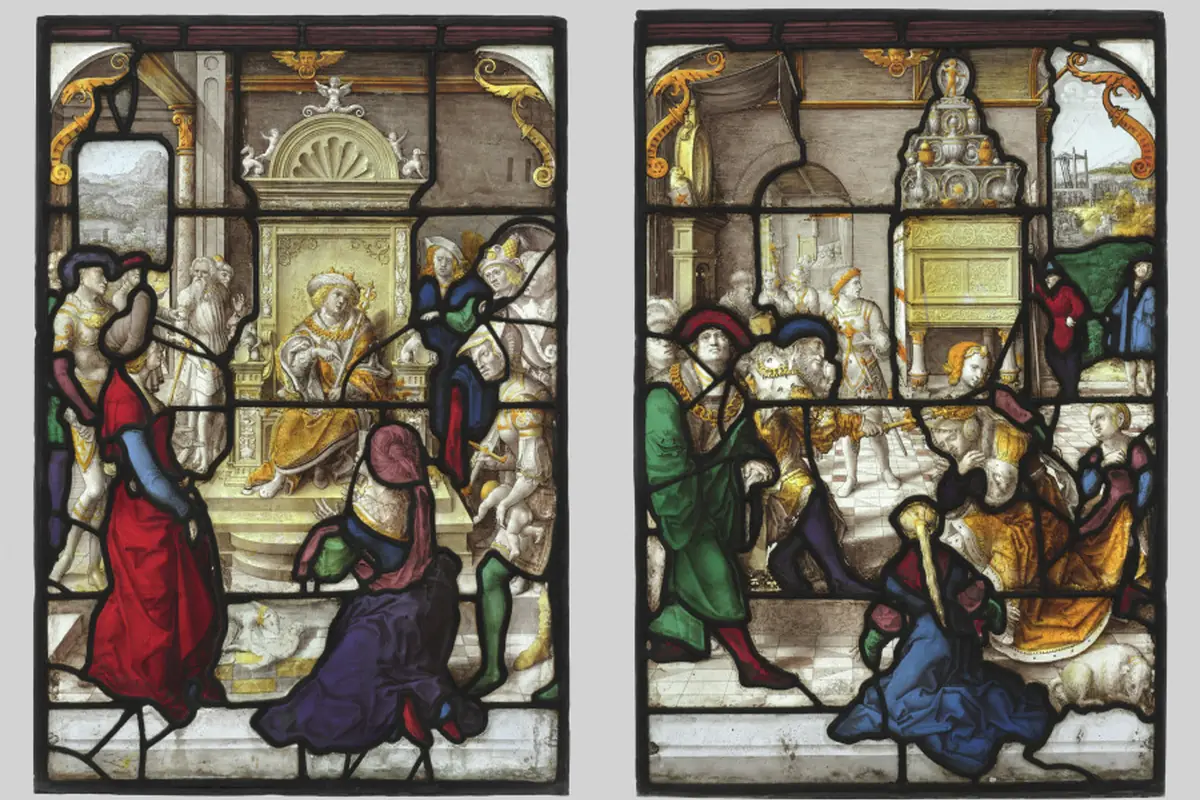
- The Judgment of Solomon and Esther before Ahasuerus (pair), Dirk Vellert (c. 1530) — Cleveland Museum of Art, CC0 1.0
- Bookplate: Boylston Medical Library, George Girdler Smith (1806–39) — Cleveland Museum of Art, CC0 1.0
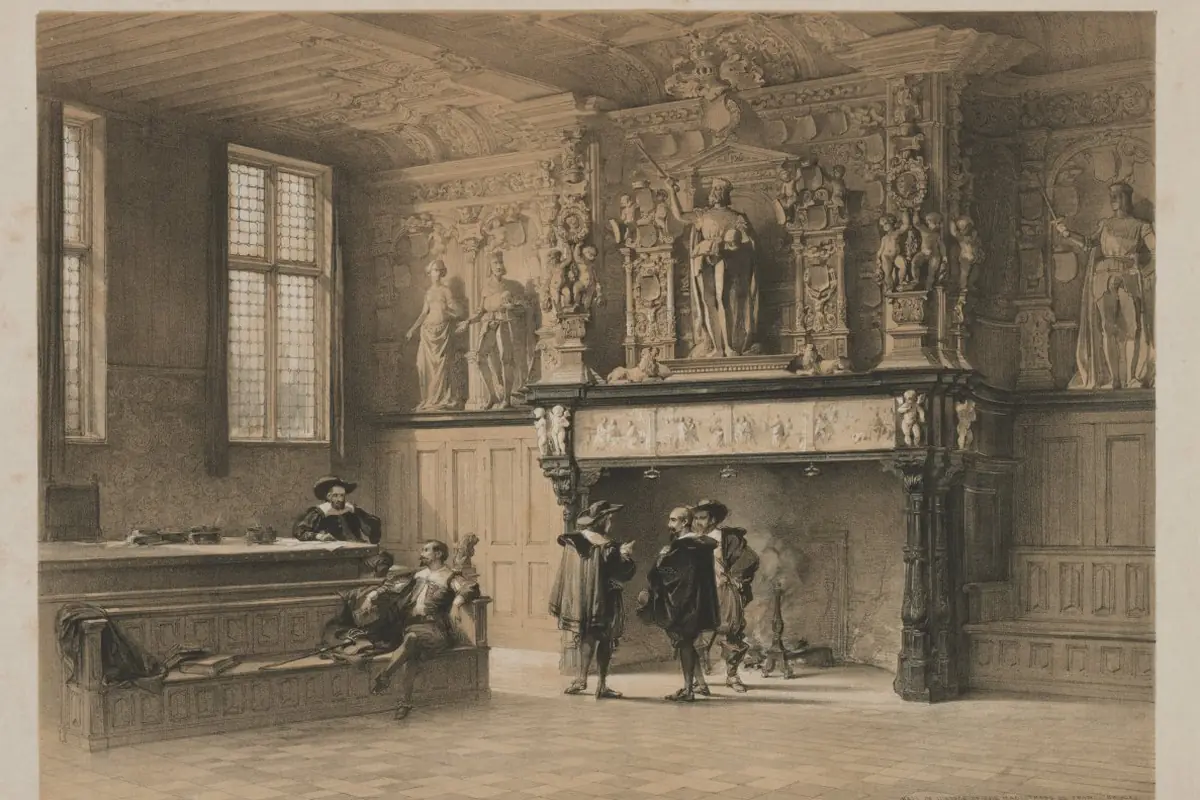
- Sketches in Belgium and Germany, Volume I: Hall of Justice of the Magistrates du Franc, Bruges, Louis Haghe (1840) — Cleveland Museum of Art, CC0 1.0
- Bifolium from a Bible: Initial E[t factum est] with Ezekiel (c. 1290) — Cleveland Museum of Art, CC0 1.0
- The Antechamber of the Palace of Justice, Paris, Charles Meryon (1855) — Cleveland Museum of Art, CC0 1.0
- Woman Sitting Reading , Georges Lemmen (1905) — Cleveland Museum of Art, CC0 1.0
- High Class Students and Teachers at Bishop Cotton School, Shimla (verso), Raja Deen Dayal (c. 1882–87) — Cleveland Museum of Art, CC0 1.0
- The Doge's Palace, Venice, Richard Parkes Bonington (1826) — Cleveland Museum of Art, CC0 1.0
- Leaf from a Lectionary with St. Luke (1057–1063) — Cleveland Museum of Art, CC0 1.0
- St. Anthony Reading, Albrecht Dürer (1519) — Cleveland Museum of Art, CC0 1.0
- A Manuscript of Five Sections of a Qur'an (18th century) — The Metropolitan Museum of Art, CC0 1.0
- Left side of a double-page album folio: Outside a Royal Encampment (recto) and Calligraphy, Persian Verses (verso), Bihzad (c. 1485) — Cleveland Museum of Art, CC0 1.0