
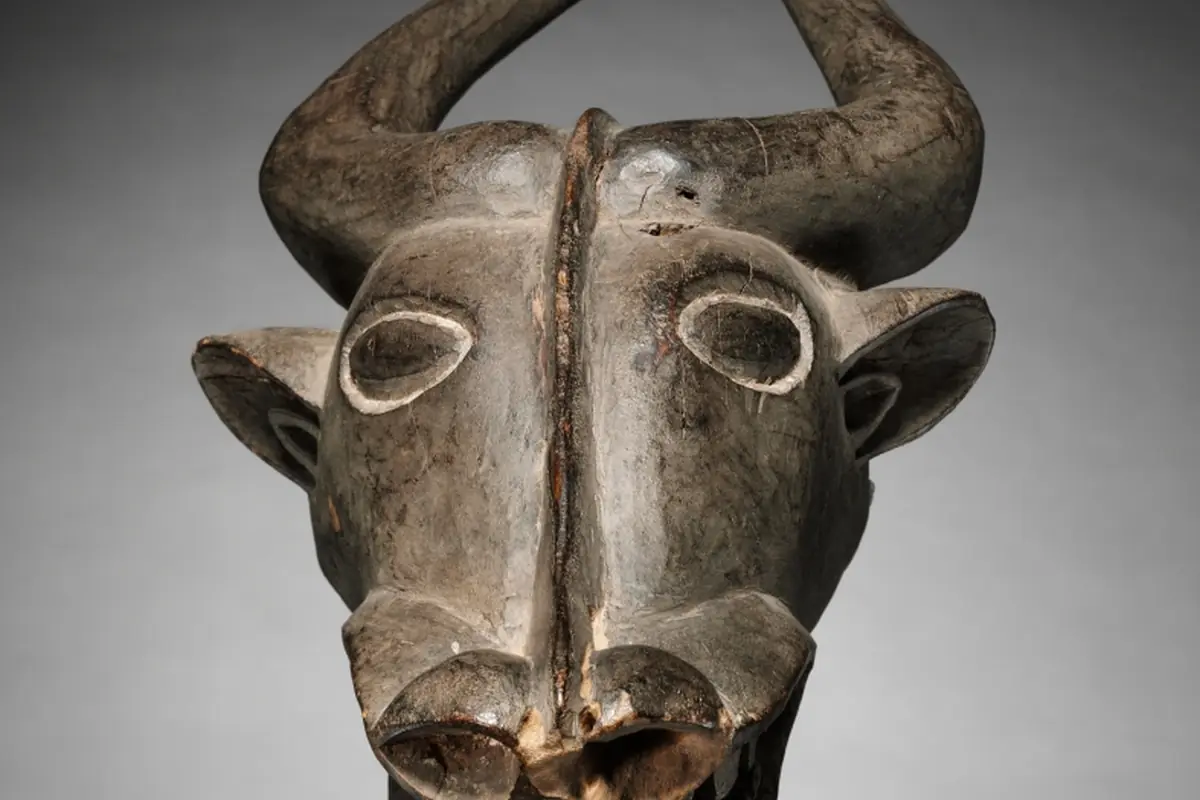
 Cleveland Museum of Art · CC0 1.0
Four priorities for Africa
Nairobi office missions in figures
Source: OIMAP General Secretariat.
Protecting sites and collections
The office helps States to inventory their collections, secure their storerooms and document their archaeological sites. A precise inventory is the best defence: without a description or a photograph, it is almost impossible to prove that an object has been stolen.
It provides record templates, trains teams in their use and links national inventories to the BIOP databases.
Supporting restitutions
When a State requests the return of an item, the office helps it build the file: proof of ownership, export documents, expert reports. It facilitates dialogue with the current holders, whether collectors, museums or auction houses.
It relies on the restitution agreements concluded between Member States, and reports to the competent commission.
Assisting States
National focal points find in Nairobi a relay for their legal and technical questions. The team helps them to transpose the OIMAP Guidelines 2019, to prepare their contribution and to take part in the work of the General Assembly.
It also encourages exchanges between neighbouring States: a successful experience in one country can inspire its partners.
Training front-line staff
Customs officers, police officers and site guardians are the first witnesses of trafficking. With the OIMAP Academy, the office organises workshops on recognising objects, reading documents and managing seizures.
These training sessions take place in the States, as close as possible to the staff, and end with the handing over of a checklist adapted to national circumstances.
Missions and examples of action
| Mission | Main audience | Example of action |
|---|---|---|
| Protection | Ministries, museums | Inventory of a storeroom |
| Restitutions | States, holders | Building a case file |
| Support to States | Focal points | Transposition of a directive |
| Training | Customs officers, police officers | Identification workshop |
| Communities | Heritage guardians | Local consultation |
Milestones
- Annual programme
Priorities agreed with the States.
- Regional workshops
Training cycle (indicative).
- General Assembly
Report on African actions.
- Meeting of focal points
Regional meeting (indicative).
Supervised restitutions
Paper or digital inventory
Paper
Simplicity- Printed record sheets
- Little equipment
- Risk of loss
Starting solution.
Digital
Durability- Centralised photographs
- Backups
- Interconnection with the BIOP
Target solution.
Documenting a collection
- Choose a batch
Room or storeroom.
- Photograph
Several views per object.
- Describe
Dimensions, material, condition.
- Number
Unique reference.
- Back up
Off-site copy.
- Transmit
To the focal point.
For a reliable inventory
An archaeologist from an antiquities service
« The inventory we drew up with the office team enabled us to prove the ownership of a piece found abroad. »
Vocabulary
- Inventory
- Descriptive list of the objects in a collection.
- Seizure
- Taking of an item into custody by the authorities.
- Mediation
- Dialogue facilitated by a third party.
- Heritage guardian
- Person in charge of a site or an object.
Involving communities of origin
The communities that created or preserved the objects hold knowledge that neither documents nor catalogues can replace. The office organises consultations to gather their views before certain conservation or return decisions.
This approach helps ensure that restitutions and protection actions are understood and accepted locally.
Frequently Asked Questions
Does the office decide on restitutions?
No, it prepares and supports them.
Is the training free of charge?
The terms are set with each State (indicative).
How do I report a theft?
See BIOP Alerts.
Whom should I contact?
See Contacts.
Useful Documents
Contacts
Related Pages
 Nairobi OfficeThe OIMAP regional office for Africa: missions, contacts and access.›
 Nairobi office contactsContact details, opening hours and contact persons of the Nairobi office.›
 Protect: BIOP, alerts and restitutionsOIMAP's protection mission: database of stolen works, alerts, coordinated operations and restitutions.›
 Restitution AgreementsThe bilateral framework for the return of cultural property: principles, stages, evidence and results, with 847 works returned.›
Write to the office
Image credits (17)
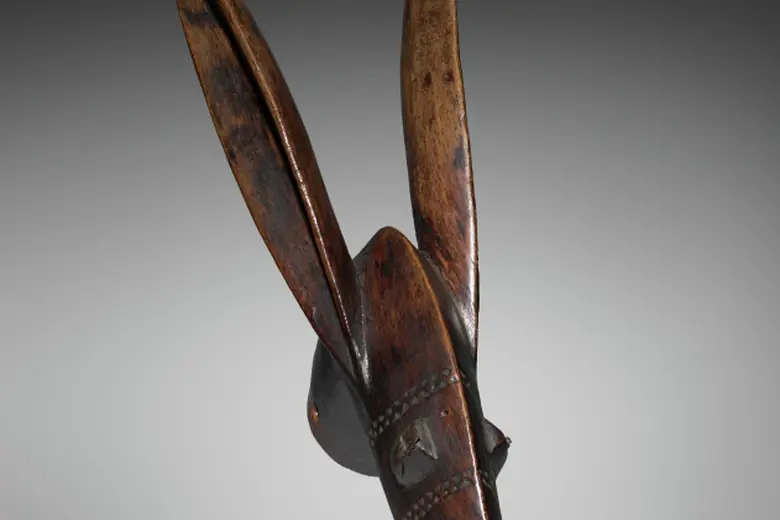
- Headdress Mask: Buffalo (c. 1910) — Cleveland Museum of Art, CC0 1.0
- A Palace with an Arched Bridge (A Roman Villa), Hubert Robert (1760) — Cleveland Museum of Art, CC0 1.0
- Royal Belt (yet) (possibly early 1900s) — Cleveland Museum of Art, CC0 1.0
- The Rocky Seashore, Maurice Prendergast (c. 1907–10) — Cleveland Museum of Art, CC0 1.0
- Head of a Hobbyhorse (korèdugaso) (late 1800s–early 1900s) — Cleveland Museum of Art, CC0 1.0
- Roman Ruins, Villa Pamfili, Hubert Robert (1774) — Cleveland Museum of Art, CC0 1.0
- Pendant (1900s) — Cleveland Museum of Art, CC0 1.0
- Landscape Ink-Play, Fang Congyi (1300s) — Cleveland Museum of Art, CC0 1.0
- Man's Bwami Prestige Cap (sawamazembe) (early to mid-1900s) — Cleveland Museum of Art, CC0 1.0
- Eighteen Views of Rome: The Piazza Farnese (recto); Cartouche (verso), Lievin Cruyl (1664) — Cleveland Museum of Art, CC0 1.0
- Knife Handle Cover (1800s) — Cleveland Museum of Art, CC0 1.0
- Egypt and Nubia, Volume I: Pyramids of Geezeh, from the Nile, Louis Haghe (1846) — Cleveland Museum of Art, CC0 1.0
- Power figure (nkisi) (late 1800s-early 1900s) — Cleveland Museum of Art, CC0 1.0
- Sandal (mtalawanda / mtawanda) or Clog (kiatu cha mti) (c 1800s) — Cleveland Museum of Art, CC0 1.0
- Farmhouse on the Slope of a Hill, Fra Bartolommeo (c. 1508) — Cleveland Museum of Art, CC0 1.0
- Portrait of John VIII Palaoelogus, Emperor of Constantinople, 1424-1428 (reverse), Pisanello (c. 1438–1439) — Cleveland Museum of Art, CC0 1.0
- Landscape with a Road to a Castle on an Island in a River, Hanns Lautensack (1554) — Cleveland Museum of Art, CC0 1.0