
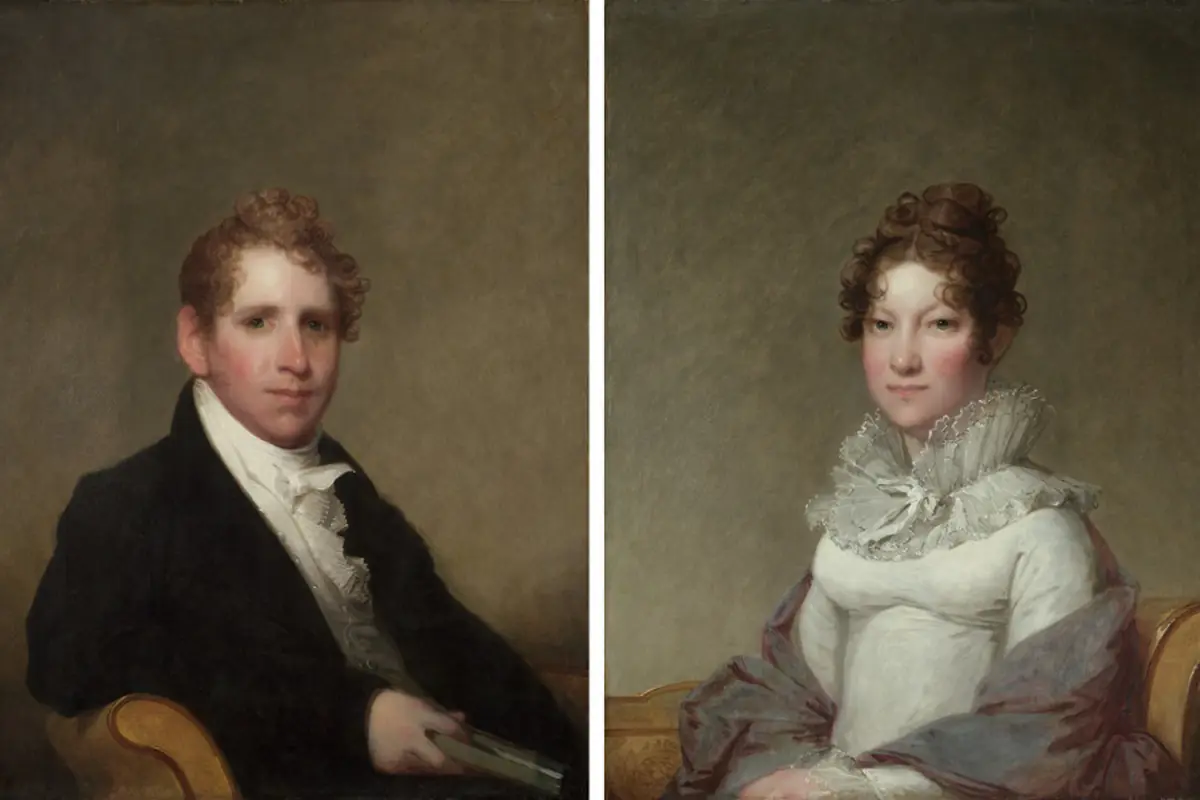
 Cleveland Museum of Art · CC0 1.0
Pages in this section
 Code of conductThe rules of behavior applicable to all OIMAP staff, experts and members of the bodies.›
 Confidential reportingHow to alert the Organization to a breach, in complete confidentiality and with whistleblower protection.›
 Conflicts of interestAnnual declarations, recusal and handling of situations where a private interest may impair independence.›
An Organization held to exemplary standards
OIMAP arbitrates, certifies and protects. Its credibility rests on the independence and integrity of its staff, its experts and its bodies. Three mechanisms guarantee it.
The code of conduct sets the rules, reporting makes it possible to raise alerts in confidence, and the page on conflicts of interest describes the annual declarations.
Ethics and integrity in figures
Source: OIMAP General Secretariat.
Three Pages

Why a dedicated ethics framework
An organization that certifies works, issues titles of ownership and arbitrates disputes directly influences the value of property. A mere suspicion of partiality is enough to undermine the confidence of the market and of States.
Ethics is therefore not an add-on but a condition of action. It applies to staff, accredited experts, members of the bodies and service providers.
The reference values
Five values guide decisions: integrity, scientific independence, cooperation, transparency and respect for communities of origin. They are set out on the Values page.
Each rule of conduct is tied to one of these values, which makes it possible to interpret situations not provided for by the text.
Who oversees their application
The Arbitration and Ethics Committee, one of the five standing committees, supervises the system. An ethics officer, attached to the Secretary-General, advises staff, receives reports and investigates cases.
Member States are informed each year of the activity of the system, in anonymized form, in the ethics report presented to the General Assembly.
Training and awareness
Every new staff member undergoes ethics training within the first three months. A refresher is held every two years. Accredited experts receive a module adapted to their responsibilities.
Practical cases, drawn from anonymized real situations, illustrate the most common dilemmas: gifts, invitations, relations with dealers and collectors.
Overview of the system
| Mechanism | Subject | Entry point |
|---|---|---|
| Code of conduct | Rules of behavior | Dedicated page |
| Report | Raising an alert about a breach | ethique@oimap.example |
| Declaration of interests | Preventing conflicts | Every year |
| Ethics officer | Advice and investigation | General Secretariat |
Milestones
- Statutes
First affirmation of the values.
- Code of conduct
Adoption of the first code.
- Directives
Strengthening of professional ethics.
- Declarations
Update of interests.
In doubt?
Prevention or enforcement
Prevention
Before the breach- Training
- Declarations
- Officer's advice
Preferred by the Organization.
Enforcement
After the breach- Investigation
- Rights of the defense
- Proportionate sanction
Last resort.
Responding to a situation
- Identify
The risk.
- View
The code of conduct.
- Request
Advice to the officer.
- Report
If necessary.
- Document
The decision taken.
Integrity reflexes
The Chair of the Arbitration and Ethics Committee
« An ethics system is effective only if everyone knows they can speak without fear. »
Vocabulary
- Professional ethics
- All the duties of a profession.
- Whistleblower
- Person who reports a breach.
- Ethics officer
- Advising staff on integrity.
- Conflict of interest
- Situation in which a private interest impairs independence.
Sanctions and appeals
An established breach may result in a warning, suspension, withdrawal of accreditation or dismissal, depending on its seriousness. Anyone accused is heard and may be assisted.
Disciplinary decisions may be appealed before an independent body, provided for by the staff regulations.
Frequently Asked Questions
Useful Documents
Contacts
Related Pages
 Code of conductThe rules of behavior applicable to all OIMAP staff, experts and members of the bodies.›
 Confidential reportingHow to alert the Organization to a breach, in complete confidentiality and with whistleblower protection.›
 Conflicts of interestAnnual declarations, recusal and handling of situations where a private interest may impair independence.›
 The standing committeesFive specialised committees that examine technical files and advise the Executive Council.›
Read the code
Image credits (23)
- Dr. James Stuart; Mary Campbell Stuart, Gilbert Stuart (c. 1815) — Cleveland Museum of Art, CC0 1.0
- The Calumny of Apelles, Giorgio Ghisi (1560) — Cleveland Museum of Art, CC0 1.0
- Illuminated Opening Page Titled Laila and Majnun from a Khamsa (Quintet) of Nizami of Ganja, Ja'far Baisunghuri (835 AH/1431–32 CE) — The Metropolitan Museum of Art, CC0 1.0
- Bifolium from a Bible: Initial E[t factum est] with Ezekiel (c. 1290) — Cleveland Museum of Art, CC0 1.0
- Qur'an Manuscript Folio (800s) — Cleveland Museum of Art, CC0 1.0
- Portrait of Georges Arnold Fitzwilliam, Charles Balthazar Julien Fevret de Saint-Mémin (c. 1790–1852) — Cleveland Museum of Art, CC0 1.0
- The Antechamber of the Palace of Justice, Paris, Charles Meryon (1855) — Cleveland Museum of Art, CC0 1.0
- Qur'an Manuscript Folio (recto; verso); Left side of Bifolio (800s) — Cleveland Museum of Art, CC0 1.0
- Sketches in Belgium and Germany, Volume I: Hall of Justice of the Magistrates du Franc, Bruges, Louis Haghe (1840) — Cleveland Museum of Art, CC0 1.0
- Portrait Head of a Noble or Official (175–200 CE) — Cleveland Museum of Art, CC0 1.0
- The Judgment of Solomon and Esther before Ahasuerus (pair), Dirk Vellert (c. 1530) — Cleveland Museum of Art, CC0 1.0
- Missale: Fol. 185v: Crucifixion with borders (full page), Bartolommeo Caporali (1469) — Cleveland Museum of Art, CC0 1.0
- Hours of Queen Isabella the Catholic, Queen of Spain, Master of the First Prayerbook of Maximillian (c. 1500) — Cleveland Museum of Art, CC0 1.0
- Portrait of Sandford Peacocke, William Wood (1801) — Cleveland Museum of Art, CC0 1.0
- Leaf from a Psalter and Prayerbook: Calendar Page with Labors (recto) and Calendar Page with Peasant (verso) (c. 1524) — Cleveland Museum of Art, CC0 1.0
- St. Catherine of Siena and the Beggar, Giovanni di Paolo (1460s) — Cleveland Museum of Art, CC0 1.0
- Miniature from a Manuscript of the Apocalypse: The War in Heaven (c. 1295) — Cleveland Museum of Art, CC0 1.0
- Eighteen Views of Rome: The Piazza Farnese (recto); Cartouche (verso), Lievin Cruyl (1664) — Cleveland Museum of Art, CC0 1.0
- A Manuscript of Five Sections of a Qur'an (18th century) — The Metropolitan Museum of Art, CC0 1.0
- Portrait of a Woman, Corneille de Lyon (c. 1540) — Cleveland Museum of Art, CC0 1.0
- Portrait of a Man, Louis Lafitte (1793) — The Metropolitan Museum of Art, CC0 1.0
- Coronation of the Virgin, Christoffel Jegher (1632–36) — Cleveland Museum of Art, CC0 1.0
- Portrait of a Man, Nicholas Freese (c. 1795–1800) — Cleveland Museum of Art, CC0 1.0