
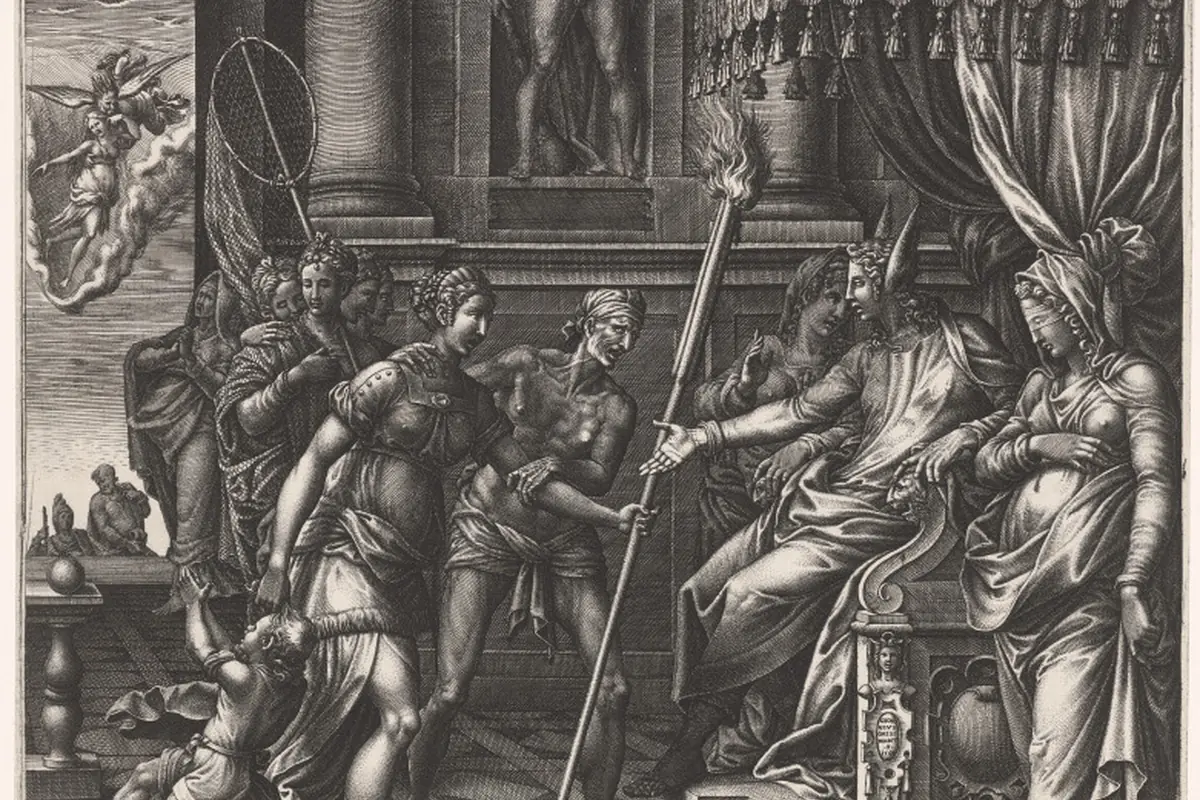
 Cleveland Museum of Art · CC0 1.0
A sensitive area of litigation
Restitution requests involve law, history, diplomacy and the sensitivities of communities. The three-day module prepares magistrates to handle these cases with rigour and finesse.
It draws on the arbitral tribunal's decisions, on state case law and on the work of OIMAP's protection department.
This page details the content and methods.
Restitution of cultural property in figures
Source: OIMAP Academy.
Conventions and applicable law
The module presents the UNESCO (1970), UNIDROIT (1995) and Hague (1954) conventions, their contributions and their limits, notably non-retroactivity. It shows how national law, usages and ethical principles complete the framework.
Magistrates learn to determine the law applicable to an old transfer of ownership.
Evidence and title
Who was the owner? How did the property leave the territory? Is the current holder in good faith? The module teaches how to reconstruct the chain of ownership, assess the buyer's due diligence and handle archive evidence that is sometimes old or incomplete.
A workshop is devoted to analysing a complex provenance file.
States, communities and immunities
Requests come from States, communities, museums or individuals. The module explains immunities from jurisdiction and enforcement, the representation of communities, managing divergent interests and the requirements of neutrality.
A round table brings together magistrates, State representatives and curators to debate concrete cases.
Mediation and creative solutions
Restitution is not always an either/or choice between "everything" and "nothing": long-term loans, co-ownership, shared custody, restitution with a right of study. The module shows how the judge can encourage mediation and approve the agreement.
A simulation puts participants in the position of a mediator in a restitution case.
Programme of the module
| Day | Themes | Format |
|---|---|---|
| 1 | Conventions, applicable law | Talks |
| 2 | Evidence, States, immunities | Workshops, round table |
| 3 | Mediation, enforcement | Simulation |
Milestones
- The Hague
Armed conflict.
- UNESCO
Illicit trafficking.
- UNIDROIT
Stolen property.
- Module
Restitution.
Sensitivity
Legal decision or agreement
Decision
Judgment- Legal certainty
- Authority
- Can divide
When the law is clear.
Agreement
Mediation- Creative solution
- Relationship preserved
- Depends on the parties' will
When positions are open.
Handling a request
- Characterise
Request.
- Prove
Title.
- Hear
Parties.
- Propose
Mediation.
- Decide
If necessary.
Points of attention
A judge
« This module opened me up to other ways of settling a dispute. The judge is not always the one who decides, but sometimes the one who facilitates. »
Vocabulary of restitution
- Title
- Right of ownership.
- Immunity
- A State's protection against proceedings.
- Long-term loan
- Making available for several years.
- Co-ownership
- Shared ownership.
Enforcement and follow-up
A restitution ends with a physical transfer: packing, transport, insurance, conservation, ceremony. Magistrates learn to provide for these arrangements in their decision and to ask for follow-up.
Cooperation with the protection department and the registry of the arbitral tribunal is presented as a way to organise enforcement.
To go further
The Academy's reception service answers practical questions Monday to Friday, in French, English and Spanish, and can direct each visitor to the programme, scholarship or free resource that fits their situation. A guidance counsellor also offers a thirty-minute individual meeting, by appointment, to build a realistic training pathway.
Trainees' feedback is valuable: each session gives rise to a questionnaire, and the most useful suggestions are examined each quarter by the teaching committee. Do not hesitate to write to report a difficulty, propose a subject or tell us what the training has changed in your practice.
Frequently asked questions
Is the module online?
In part.
Are arbitral decisions studied?
Yes, anonymised.
Do States take part?
Yes, as interveners.
Where to see the arbitral tribunal?
See Restitution disputes.
Useful documents
Contacts
Related pages
 Training of magistratesArt market law, procedure and restitution: a two-week training for judges and prosecutors dealing with cultural property.›
 Procedure and evidenceManaging an expert appraisal, ordering protective measures, cooperating with foreign courts: the procedural module.›
 Restitution disputesStates, communities, museums and collectors: how the TAO handles claims for the return of cultural property.›
See restitution disputes
Image credits (16)
- The Calumny of Apelles, Giorgio Ghisi (1560) — Cleveland Museum of Art, CC0 1.0
- St. Anthony Reading, Albrecht Dürer (1519) — Cleveland Museum of Art, CC0 1.0
- Dr. James Stuart; Mary Campbell Stuart, Gilbert Stuart (c. 1815) — Cleveland Museum of Art, CC0 1.0
- A Manuscript of Five Sections of a Qur'an (18th century) — The Metropolitan Museum of Art, CC0 1.0
- The Judgment of Solomon and Esther before Ahasuerus (pair), Dirk Vellert (c. 1530) — Cleveland Museum of Art, CC0 1.0
- Woman Sitting Reading , Georges Lemmen (1905) — Cleveland Museum of Art, CC0 1.0
- Sketches in Belgium and Germany, Volume I: Hall of Justice of the Magistrates du Franc, Bruges, Louis Haghe (1840) — Cleveland Museum of Art, CC0 1.0
- Left side of a double-page album folio: Outside a Royal Encampment (recto) and Calligraphy, Persian Verses (verso), Bihzad (c. 1485) — Cleveland Museum of Art, CC0 1.0
- The Antechamber of the Palace of Justice, Paris, Charles Meryon (1855) — Cleveland Museum of Art, CC0 1.0
- High Class Students and Teachers at Bishop Cotton School, Shimla (verso), Raja Deen Dayal (c. 1882–87) — Cleveland Museum of Art, CC0 1.0
- Bookplate: Boylston Medical Library, George Girdler Smith (1806–39) — Cleveland Museum of Art, CC0 1.0
- The Doge's Palace, Venice, Richard Parkes Bonington (1826) — Cleveland Museum of Art, CC0 1.0
- Leaf from a Lectionary with St. Luke (1057–1063) — Cleveland Museum of Art, CC0 1.0
- A Lady Reading, Francis Seymour Haden (1833–1910) — Cleveland Museum of Art, CC0 1.0
- Hittite Vessel with Four Scenes Molded and Carved in Relief (1400–1200 BCE) — Cleveland Museum of Art, CC0 1.0
- Bifolium from a Bible: Initial E[t factum est] with Ezekiel (c. 1290) — Cleveland Museum of Art, CC0 1.0