
 Cleveland Museum of Art · CC0 1.0
Pages in this section
 Principles of restitution disputesInternational law, national law, museum ethics and equity: the principles that guide arbitrators on restitution.›
 States concerned by restitutions31 States have referred cases to the TAO: regions, types of claims, role of holding States and cooperation with OIMAP.›
 Restitution decisionsA few anonymised TAO decisions on restitution: sacred objects, archaeological collections, manuscripts and cooperation solutions.›
When cultural property must go home
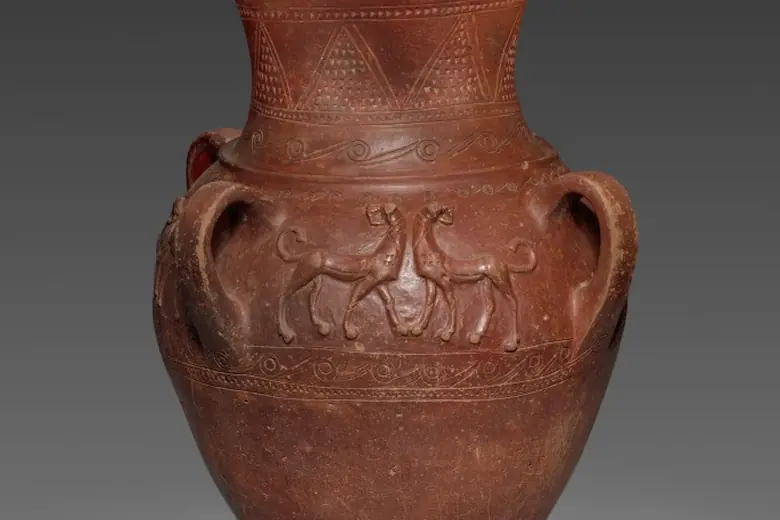
Masks, manuscripts, temple fragments, sacred objects: claims for the return of cultural property are multiplying. They pit States, communities, museums, collectors and auction houses against one another. The TAO offers a neutral framework in which these claims can be examined and settled.
Restitution disputes account for 14% of requests, but they are among the most complex and most closely followed. They are handled by the restitution chamber, made up of lawyers in international law and heritage law.
This section presents the principles, the States concerned and the decisions.
Restitution disputes in figures
Source: Registry of the OIMAP Arbitral Tribunal.
Three pages
A framework suited to the stakes
The TAO may be seised by a State, a community or an institution, provided that all the parties have consented to arbitration. This consent may be given by a submission agreement concluded after the claim. Many museums now use it as an alternative to costly, public trials.
The tribunal pays attention to immunities, international conventions and political and cultural sensitivities. It may call on heritage experts and representatives of the communities concerned.
Bases of claims
Claims are based on international law (1970 UNESCO and 1995 UNIDROIT conventions, customary law), on national law (heritage protection laws, property regimes) and on ethical principles (museum codes of ethics, international declarations).
The arbitrators examine the origin of the property, the conditions of its leaving the territory, the good faith of successive holders and the cultural importance of the object. They look for varied solutions: restitution, loan, co-ownership, shared custody.
Tailor-made solutions
For many objects, the solution consists of a transfer of ownership coupled with cooperation commitments: loan to the former holder, scientific partnership, staff training, joint exhibition. These agreements preserve relations between institutions and encourage exchanges.
The tribunal may also recommend measures of symbolic reparation: recognition, publication of the history of the object, a ceremony of return. These aspects, which matter to communities, are written into the award or agreement.
Link with heritage protection
OIMAP's Protection department handles amicable restitutions, outside arbitration, through diplomatic and police channels. The TAO steps in when the parties fail to agree and want a legal settlement. The two routes complement each other.
An exchange of information, with the parties' agreement, avoids duplication and makes use of the provenance research already carried out by the department's analysts.
Typology of claims
| Type | Example | Frequent solution |
|---|---|---|
| Archaeological property | Fragments illicitly exported | Restitution |
| Sacred object | Ritual mask | Restitution or loan |
| Manuscript | Ancient collection | Copy and loan |
| Work acquired in a colonial context | Work of art | Partnership |
Milestones
- UNESCO
Founding convention.
- UNIDROIT
Stolen property.
- Creation of the TAO
Restitution chamber.
- More than 200 cases
Established practice.
Immunities and conventions
Arbitration or diplomatic negotiation
Arbitration
Legal procedure- Enforceable decision
- Neutrality
- Confidentiality
When positions are entrenched.
Diplomacy
Negotiation between States- Flexibility
- Political dimension
- No binding decision
When the stakes are political.
Handling a restitution claim
- Document
Origin and removal.
- Dialogue
Mediation.
- Consent
Submission agreement.
- Investigate
Experts.
- Enforce
Transfer.
Elements of the file
A curator
« We had never seen anything like it: a museum and a State sitting at the same table to decide, together, the future of a mask. »
Vocabulary of restitution
- Restitution
- Return of property to its origin.
- Cultural property
- Object of cultural importance.
- Immunity
- A State's protection against proceedings.
- Submission agreement
- Arbitration agreement made after the dispute arose.
Frequently asked questions
Can a State refer a case to the TAO?
Yes, with the parties' consent.
Can a community act?
Yes.
Are the objects exhibited during the procedure?
According to the measures decided.
Where can I see the principles?
See Principles.
Useful documents
Contacts
Related pages
 Principles of restitution disputesInternational law, national law, museum ethics and equity: the principles that guide arbitrators on restitution.›
 States concerned by restitutions31 States have referred cases to the TAO: regions, types of claims, role of holding States and cooperation with OIMAP.›
 Restitution decisionsA few anonymised TAO decisions on restitution: sacred objects, archaeological collections, manuscripts and cooperation solutions.›
Read the principles
Image credits (22)
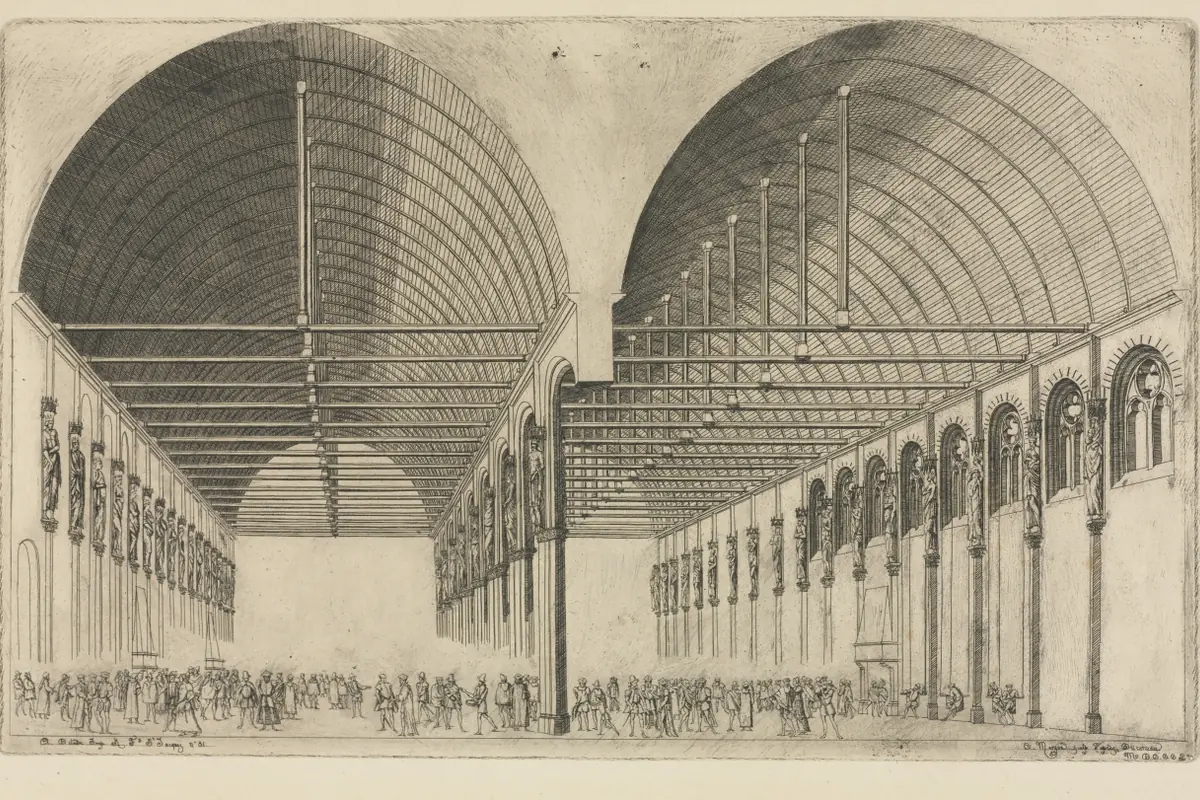
- The Antechamber of the Palace of Justice, Paris, Charles Meryon (1855) — Cleveland Museum of Art, CC0 1.0
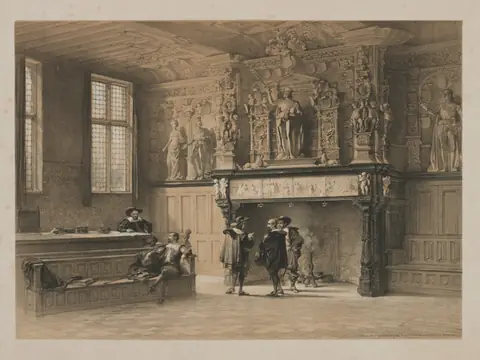
- Sketches in Belgium and Germany, Volume I: Hall of Justice of the Magistrates du Franc, Bruges, Louis Haghe (1840) — Cleveland Museum of Art, CC0 1.0
- Figurine (300–100 BCE) — Cleveland Museum of Art, CC0 1.0
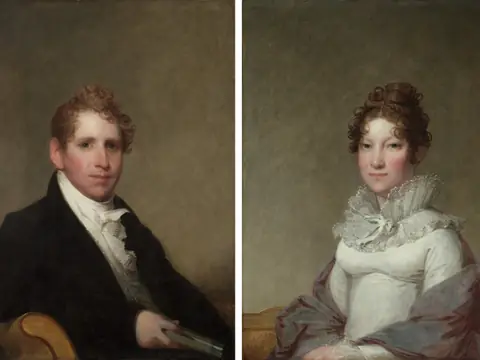
- Dr. James Stuart; Mary Campbell Stuart, Gilbert Stuart (c. 1815) — Cleveland Museum of Art, CC0 1.0
- Hittite Vessel with Four Scenes Molded and Carved in Relief (1400–1200 BCE) — Cleveland Museum of Art, CC0 1.0
- Coronation of the Virgin, Christoffel Jegher (1632–36) — Cleveland Museum of Art, CC0 1.0
- The Judgment of Solomon and Esther before Ahasuerus (pair), Dirk Vellert (c. 1530) — Cleveland Museum of Art, CC0 1.0
- Red-Figure Stamnos (Mixing/Storage Vessel): Komos (Musicians and Revelers), Kleophon Painter (c. 435–425 BCE) — Cleveland Museum of Art, CC0 1.0
- The Dance at the Court of Herod, Israhel van Meckenem (c. 1500) — Cleveland Museum of Art, CC0 1.0
- The Calumny of Apelles, Giorgio Ghisi (1560) — Cleveland Museum of Art, CC0 1.0
- Black-Figure Neck-Amphora of Panathenaic Shape (Storage Vessel) (525–500 BCE) — Cleveland Museum of Art, CC0 1.0
- Fragment of a Reclining Male Figure (450–350 BCE) — Cleveland Museum of Art, CC0 1.0
- Portrait of John VIII Palaoelogus, Emperor of Constantinople, 1424-1428 (reverse), Pisanello (c. 1438–1439) — Cleveland Museum of Art, CC0 1.0
- White-Ground Lekythos (Oil Vessel): Mourners at Tomb (c. 400s BCE, with modern painting) — Cleveland Museum of Art, CC0 1.0
- Two Offering Bearers (c. 667–647 BCE) — Cleveland Museum of Art, CC0 1.0
- Double-Sided Votive Relief (305–30 BCE) — Cleveland Museum of Art, CC0 1.0
- The Victory Banquet: from Battle Scenes of the Quelling of Rebellions in the Western Regions, with Imperial Poems (c. 1765–74; poem dated 1760) — Cleveland Museum of Art, CC0 1.0
- Small Mosque in the Kaiserbagh, Felice A. Beato (1858) — Cleveland Museum of Art, CC0 1.0
- Talatat: Portrait of Nefertiti (c. 1353–1347 BCE) — Cleveland Museum of Art, CC0 1.0
- A Philosopher, Pierre Puget (1662) — Cleveland Museum of Art, CC0 1.0
- Red-Figure Column Krater (Mixing Vessel): Satyrs Pursuing Maenads, Naples Painter (440–430 BCE) — Cleveland Museum of Art, CC0 1.0
- Head of Bearded Banqueter (525–500 BCE) — Cleveland Museum of Art, CC0 1.0