
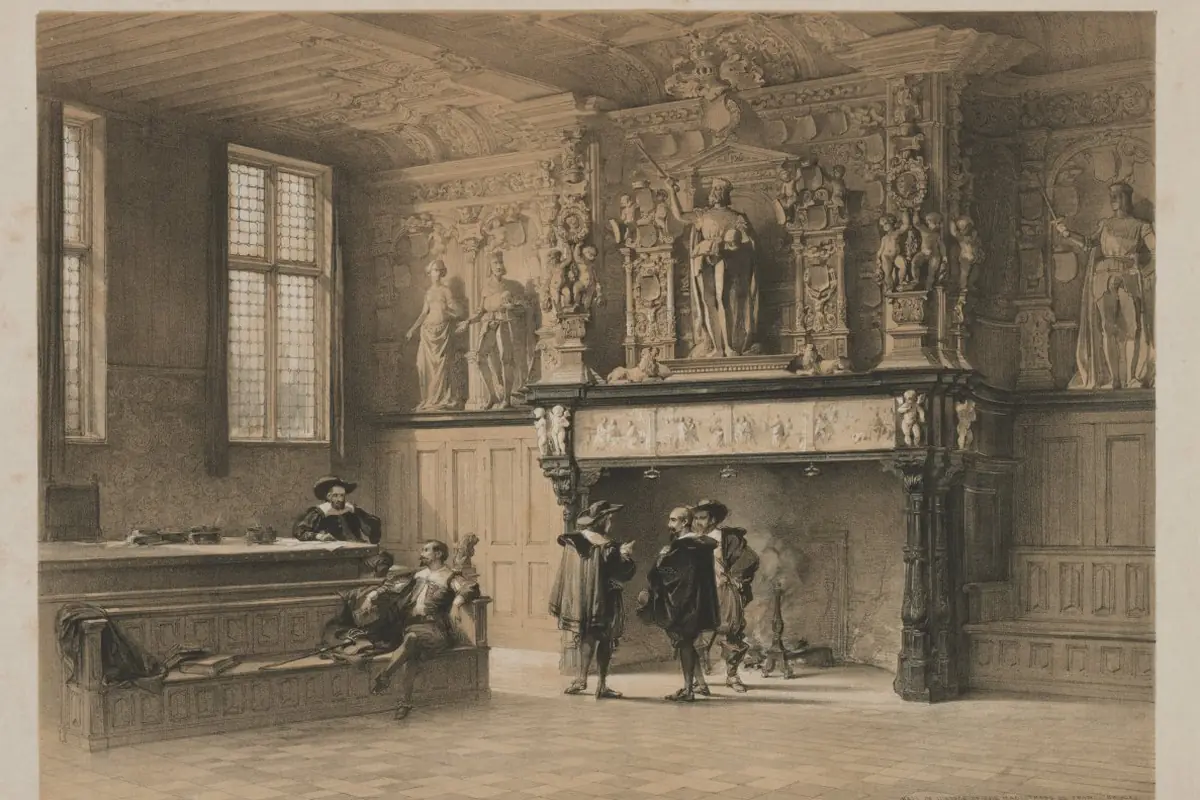
 Cleveland Museum of Art · CC0 1.0
Law, history and ethics
Restitution claims arise in a shifting legal context. No convention alone settles every case, and many objects left their territory before the entry into force of the current texts. The tribunal must therefore combine law, history and ethics.
It applies first the law chosen by the parties or designated by the Rules, then refers to international principles and the customs of the profession.
This page presents the sources, the method and the criteria of assessment.
Principles of restitution disputes in figures
Source: Registry of the OIMAP Arbitral Tribunal.
Sources of law
The 1970 (UNESCO) and 1995 (UNIDROIT) conventions lay down rules on illicit trafficking and the restitution of stolen or illicitly exported property. They are not retroactive and apply only between States parties, but inspire arbitral solutions.
National laws on the ownership of archaeological property, export regimes and restitutions of spoliated property complete the framework. In the absence of a clear rule, the arbitrators apply general principles and customs.
Four criteria of assessment
The tribunal considers the cultural link between the object and the claimant (ritual use, identity value, continuity of the community), the circumstances of the removal (theft, looting, forced sale, authorised export), the good faith of successive holders and the importance of the object for understanding the heritage.
These criteria are weighted according to the case. A sacred object illicitly removed will weigh more than an everyday object regularly exported two centuries ago.
Diversified remedies
The tribunal is not limited to the alternative of restitution or refusal. It may order a transfer of ownership, co-ownership, a long-term loan, shared custody, restitution coupled with a right of study for the current holder, or compensation.
Most agreements provide for cooperation measures: training, digitisation, joint exhibitions, research. These provisions ensure a lasting relationship between the parties.
Role of heritage experts
To understand the importance of an object, the tribunal may appoint an expert in anthropology, art history or archaeology. It may also hear representatives of the community concerned, with the parties' agreement.
Such insights help to appreciate the cultural and spiritual value of the object, which goes beyond the logic of property law alone.
Sources and scope
| Source | Scope | Limit |
|---|---|---|
| 1970 UNESCO Convention | Illicit trafficking | Not retroactive |
| 1995 UNIDROIT Convention | Stolen property | States parties |
| National law | Property regime | Variable |
| Codes of ethics | Museum ethics | Not binding |
Milestones
- UNESCO
Convention.
- UNIDROIT
Restitution.
- TAO
Chamber.
- Case law
First principles.
- Practical
Sixty decisions.
No automatic retroactivity
Strict law or equity
Strict law
Application of the texts- Predictability
- May exclude historical cases
- Depends on States parties
Basis of the decision.
Equity
Fair solution- Takes history into account
- Flexibility
- Less predictable
Necessary complement.
Building a claim
- Establish
Cultural link.
- Prove
Circumstances of the removal.
- Identify
Holders.
- Propose
Solution.
- Negotiate
Agreement.
Frequent arguments
An arbitrator
« The law provides a framework, but a successful restitution is always an act of mutual recognition. »
Vocabulary of principles
- Cultural link
- Relationship between an object and a community.
- Retroactivity
- Application of a rule to past facts.
- Co-ownership
- Shared ownership.
- Shared custody
- Conservation divided between two institutions.
Frequently asked questions
Do the conventions apply?
Depending on the date and the States.
Can the tribunal propose a loan?
Yes.
Are the communities heard?
Yes.
Where can I see the States?
See States concerned.
Useful documents
Contacts
Related pages
 Restitution disputesStates, communities, museums and collectors: how the TAO handles claims for the return of cultural property.›
 States concerned by restitutions31 States have referred cases to the TAO: regions, types of claims, role of holding States and cooperation with OIMAP.›
 Restitution decisionsA few anonymised TAO decisions on restitution: sacred objects, archaeological collections, manuscripts and cooperation solutions.›
See the States concerned
Image credits (16)
- Sketches in Belgium and Germany, Volume I: Hall of Justice of the Magistrates du Franc, Bruges, Louis Haghe (1840) — Cleveland Museum of Art, CC0 1.0
- Talatat: Portrait of Nefertiti (c. 1353–1347 BCE) — Cleveland Museum of Art, CC0 1.0
- The Antechamber of the Palace of Justice, Paris, Charles Meryon (1855) — Cleveland Museum of Art, CC0 1.0
- The Dance at the Court of Herod, Israhel van Meckenem (c. 1500) — Cleveland Museum of Art, CC0 1.0
- The Judgment of Solomon and Esther before Ahasuerus (pair), Dirk Vellert (c. 1530) — Cleveland Museum of Art, CC0 1.0
- Black-Figure Dinos (Mixing Vessel): Warships (Int.); Heroic Scenes (Top), Antimenes Painter (c. 520–515 BCE) — Cleveland Museum of Art, CC0 1.0
- The Calumny of Apelles, Giorgio Ghisi (1560) — Cleveland Museum of Art, CC0 1.0
- Coronation of the Virgin, Christoffel Jegher (1632–36) — Cleveland Museum of Art, CC0 1.0
- Dr. James Stuart; Mary Campbell Stuart, Gilbert Stuart (c. 1815) — Cleveland Museum of Art, CC0 1.0
- Hittite Vessel with Four Scenes Molded and Carved in Relief (1400–1200 BCE) — Cleveland Museum of Art, CC0 1.0
- Red-Figure Stamnos (Mixing/Storage Vessel): Komos (Musicians and Revelers), Kleophon Painter (c. 435–425 BCE) — Cleveland Museum of Art, CC0 1.0
- Maharaja of Kotah Listening to Music and Watching Dancers (c. 1820) — Cleveland Museum of Art, CC0 1.0
- Black-Figure Neck-Amphora of Panathenaic Shape (Storage Vessel) (525–500 BCE) — Cleveland Museum of Art, CC0 1.0
- Figurine (300–100 BCE) — Cleveland Museum of Art, CC0 1.0
- The Victory Banquet: from Battle Scenes of the Quelling of Rebellions in the Western Regions, with Imperial Poems (c. 1765–74; poem dated 1760) — Cleveland Museum of Art, CC0 1.0
- Fragment of a Reclining Male Figure (450–350 BCE) — Cleveland Museum of Art, CC0 1.0