
 Cleveland Museum of Art · CC0 1.0
Three regimes depending on the destination
The 67 Member States recognise the OIMAP licence, but not all in the same way. Depending on their legislation, they accept it directly, require prior notification or ask for an additional national authorisation.
Knowing the regime of the country of departure and the country of arrival lets you anticipate timeframes and documents. This page presents the three regimes and shows how to identify the one that applies to your operation.
The detailed list of States, with their region, year of accession and focal point, can be consulted in the directory of Member States.
The regimes in figures
Indicative regimes, to be confirmed with the national focal point.
The three regimes
| Regime | Principle | Additional timeframe |
|---|---|---|
| A — Direct recognition | The OIMAP licence suffices to cross the border | None |
| B — Prior notification | The national administration is informed 5 days before the crossing | 5 days |
| C — Additional national authorisation | The State issues an authorisation in addition to the licence | 10 to 30 days |
How to find out a State's regime
The regime appears in the country sheet of each Member State, with the name of the competent department and its contact details. The national focal point, shown in the directory, can confirm the rules applicable to your operation.
In case of doubt, the Desk checks the regime at the time of processing and informs you, before any payment, of the additional steps to expect.
By region
 Regime AEurope
25 States, mostly under direct recognition.
› Regime BAmericas
14 States, frequent prior notification.
 A / BAsia-Pacific
13 States, mixed regimes.
 B / CAfrica
11 States, additional authorisations more frequent.
 Regime BMiddle East
4 States, prior notification.
Preparing a multi-country operation
- List the countries
Departure, transit, arrival.
- Identify the regimes
Consult the sheet for each State.
- Anticipate the timeframes
Add the notification or authorisation timeframes.
- Submit the application
State the regimes in the case.
- Monitor developments
Regimes may change; the Desk will warn you.
Regimes change
Direct recognition or additional authorisation
Regime A
Simplest procedure- OIMAP licence alone
- No additional timeframe
- Customs check by QR
Ideal for works that circulate often.
Regime C
Reinforced procedure- Double authorisation
- Timeframe of 10 to 30 days
- National file to put together
To be anticipated several weeks ahead.
Case study: a Paris – Nairobi – Singapore route
Three States, three regimes
A touring exhibition crosses France (A), Kenya (C) and Singapore (B).
- Submission of three temporary licences.
- Request for national authorisation in Kenya, four weeks beforehand.
- Prior notification in Singapore, five days beforehand.
The calendar is met thanks to six weeks' anticipation.
Development of recognition
- First agreements
Recognition in ten founding States.
- Directive No. 2019-07
Extension to new members.
- Electronic notification
Online notification procedure.
- Country sheets
Publication of the regimes by State.
Advice from the field
« Most customs delays come from a forgotten notification, rarely from a real problem. »
Vocabulary of the regimes
- Direct recognition
- Acceptance of the licence without national formality.
- Prior notification
- Information given to the State before the crossing.
- Additional authorisation
- Document issued by the State in addition to the licence.
- National focal point
- OIMAP's correspondent in a Member State.
Frequently asked questions
Where can I find a State's regime?
In the directory of Member States and on the country sheet.
Do the regimes apply to transit?
Yes, for States whose territory is crossed with a stop.
Can I challenge a national requirement?
No, but the Secretariat can intervene with the focal point.
Do non-member States recognise the licence?
Not automatically; a specific procedure is described under special cases.
Useful documents
Contacts
Related pages
 List of the 67 StatesThe 67 OIMAP Member States, presented in alphabetical order, by date of accession and on an interactive map.›
 RequestDocuments, course and conditions of issue of an import or export licence.›
 Special casesRecent works, archaeological objects, regulated materials, transit and loans: situations that fall outside the ordinary framework.›
Consult the Member States
Image credits (21)
- Bridge of Shops, Srinagar, Kashmir, Samuel Bourne (1864) — Cleveland Museum of Art, CC0 1.0
- Nuova pianta di Roma data in luce da Giambattista Nolli l’anno MDCCXLVII, known as La Pianta Grande di Roma, Giovanni Battista Nolli (1748) — Cleveland Museum of Art, CC0 1.0
- Net Fishing at Night on the Sumida River, Kitagawa Utamaro (c. 1800) — Cleveland Museum of Art, CC0 1.0
- Letter Box, Ogata Kōrin (1700s) — Cleveland Museum of Art, CC0 1.0
- The Fleet Off the Coast, Beachy Head, Samuel Atkins (c. 1790–1805) — Cleveland Museum of Art, CC0 1.0
- View of Venice, Jacopo de' Barbari (1500) — Cleveland Museum of Art, CC0 1.0
- The Storm, James McNeill Whistler (1861) — Cleveland Museum of Art, CC0 1.0
- Sweet Melancholy, Joseph-Marie Vien (1756) — Cleveland Museum of Art, CC0 1.0
- A Boat That Has for Sails the Wings of a Huge Bird, Filippo Morghen (about 1769) — Cleveland Museum of Art, CC0 1.0
- Nuova pianta di Roma data in luce da Giambattista Nolli l’anno MDCCXLVII, known as La Pianta Grande di Roma, Giovanni Battista Nolli (1748) — Cleveland Museum of Art, CC0 1.0
- Ferry Slip, Edwin Kaufman (1927) — Cleveland Museum of Art, CC0 1.0
- Seal of Doge Michele Steno (reverse) (1400–1409) — Cleveland Museum of Art, CC0 1.0
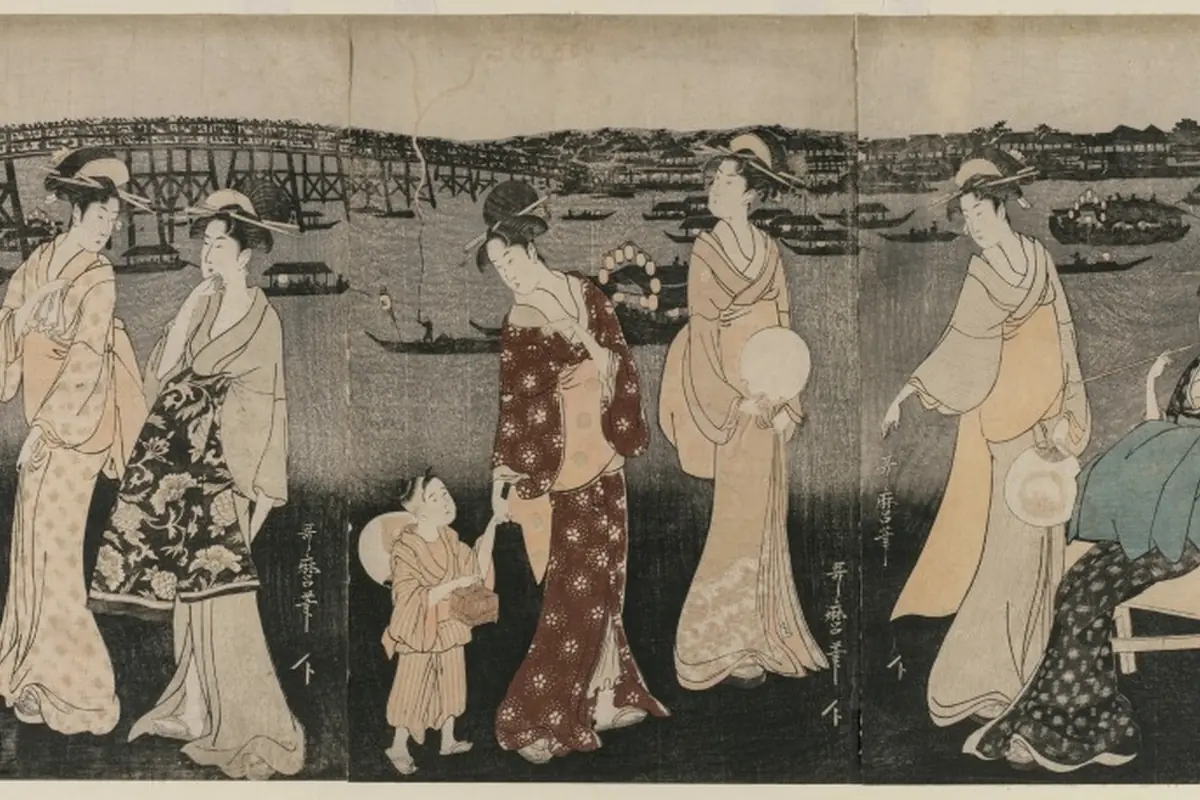
- Enjoying the Evening Cool Along the Sumida River, Kitagawa Utamaro (c. 1797–98) — Cleveland Museum of Art, CC0 1.0
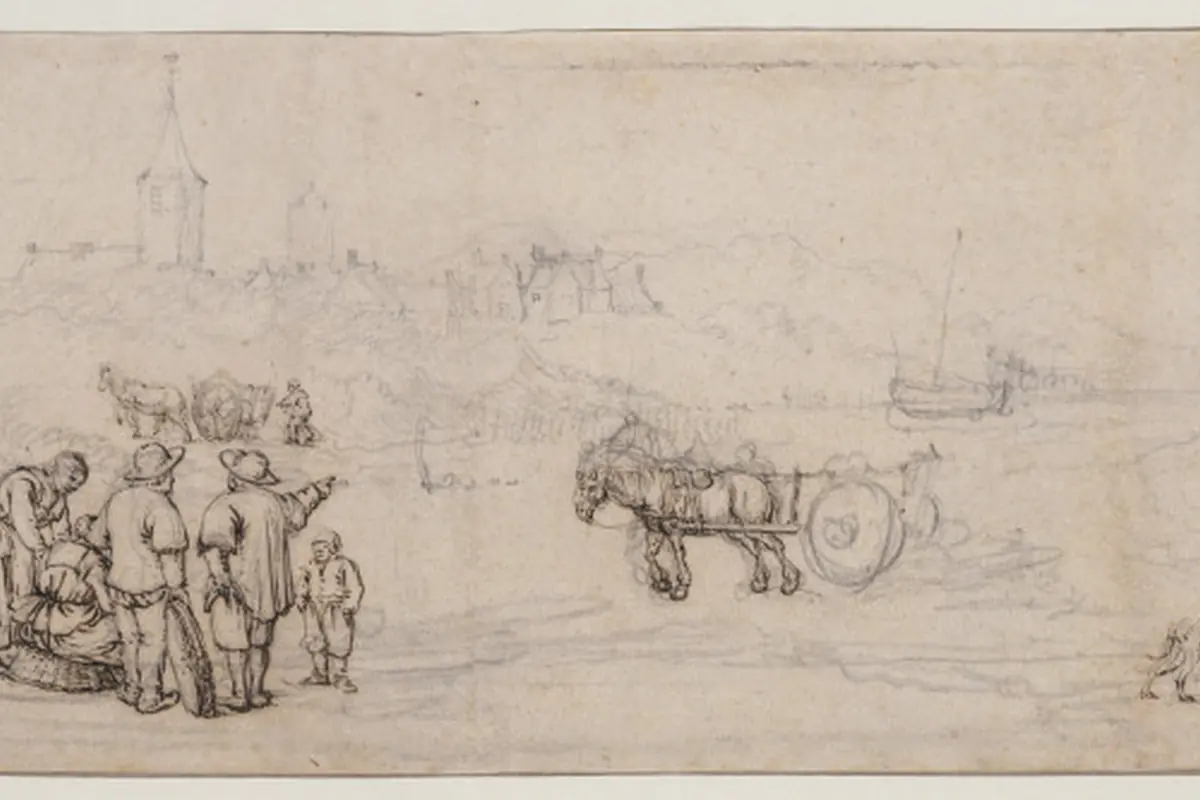
- Dune Scene with Peasant Figures, Willem van de Velde (mid-1650s) — Cleveland Museum of Art, CC0 1.0
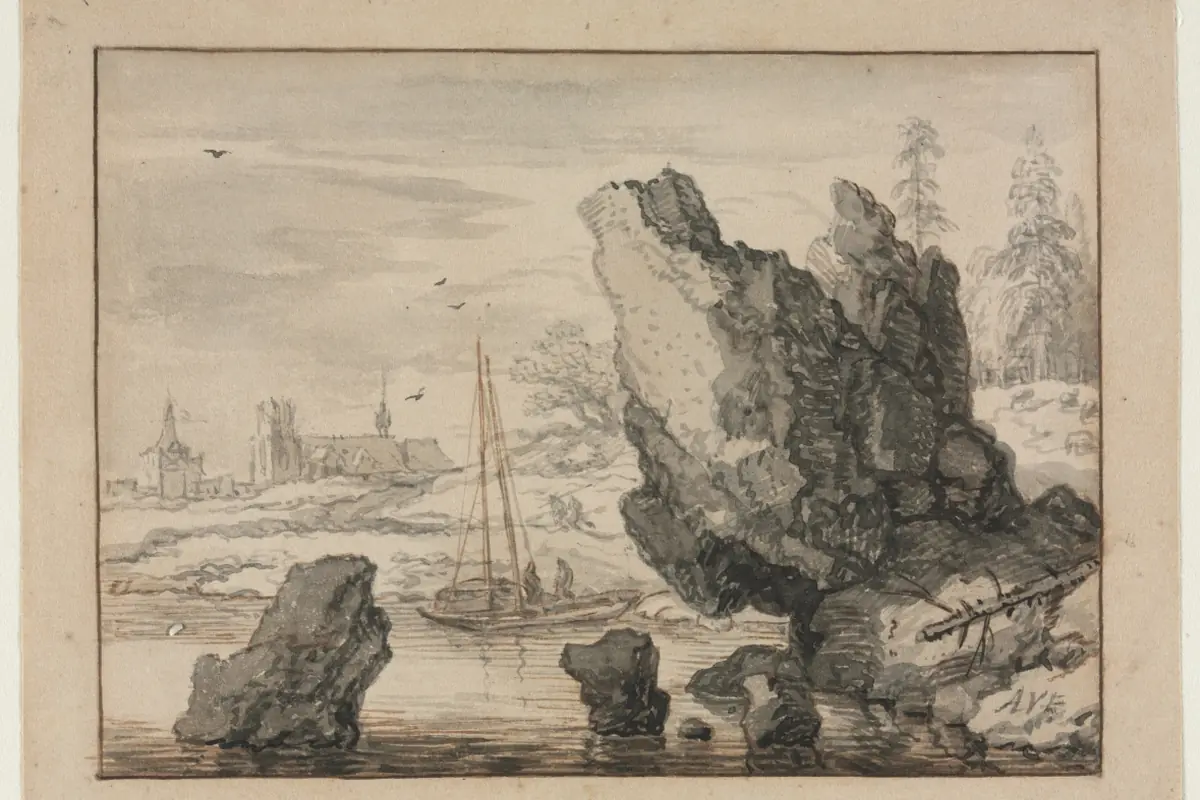
- A Rocky Cove with Fishing Boats, Allart van Everdingen (late 1650s) — Cleveland Museum of Art, CC0 1.0
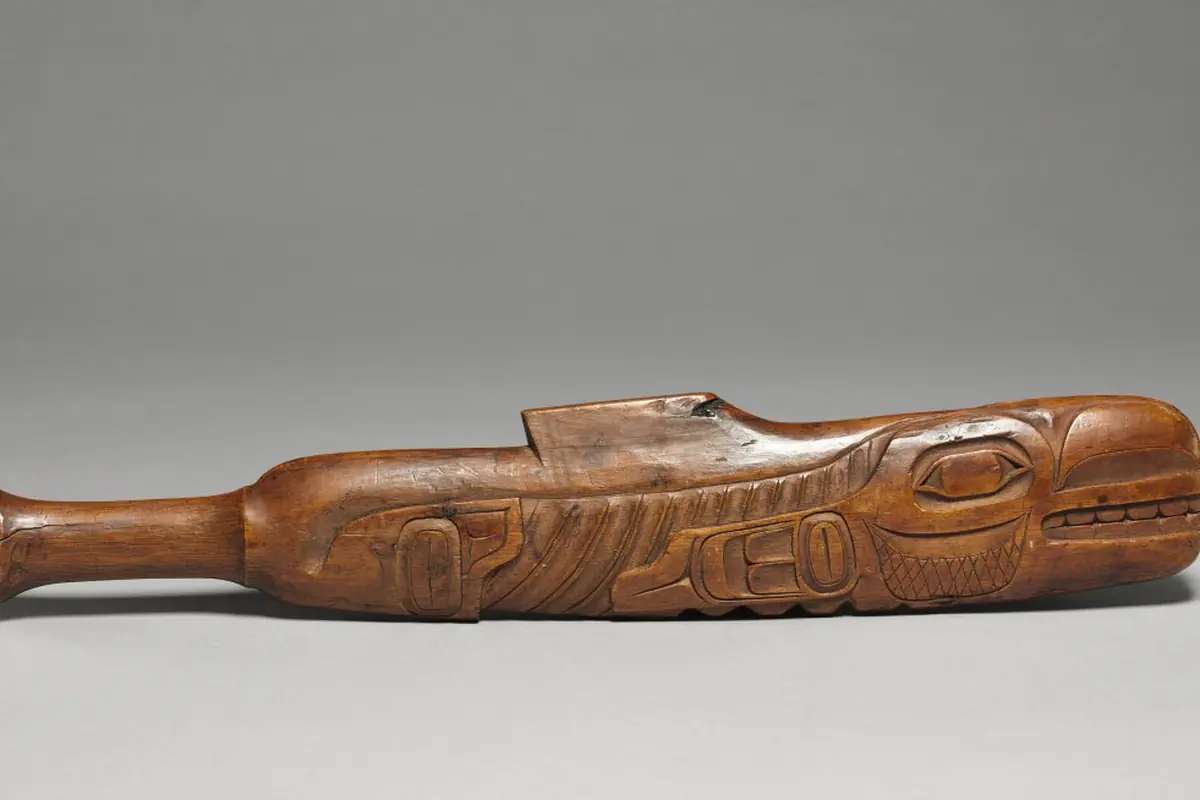
- Fish or Seal Club (X’ús’) (late 1800s–early 1900s) — Cleveland Museum of Art, CC0 1.0
- The Apotheosis of Romulus: Design for a Ceiling, Domenico Maria Canuti (c. 1675–76) — Cleveland Museum of Art, CC0 1.0
- Coronation of the Virgin, Christoffel Jegher (1632–36) — Cleveland Museum of Art, CC0 1.0
- Nuova pianta di Roma data in luce da Giambattista Nolli l’anno MDCCXLVII, known as La Pianta Grande di Roma, Giovanni Battista Nolli (1748) — Cleveland Museum of Art, CC0 1.0
- Landscape with Saint John the Baptist, Herri met de Bles (c. 1540) — Cleveland Museum of Art, CC0 1.0
- Boating in Moonlight (1600s) — Cleveland Museum of Art, CC0 1.0