
 Cleveland Museum of Art · CC0 1.0
Verify before buying, before lending, before believing
Any OIMAP digital certificate can be checked free of charge, without an account, in a few seconds. The verification answers two questions: does the document exist in the Registry, and is it intact?
Four methods are offered: the number, the QR code, the file and the token. They lead to the same result and can be combined.
Verification concerns the digital certificate. For a paper certificate, use the Verify a certificate page.
Verification in figures
Verify in four steps
- Choose the method
OIMAP number, QR code, file or token identifier.
- Enter or scan
Enter the number, scan the code or upload the file.
- Read the result
The page shows the status of the certificate and the date of issue.
- Check the work
Compare the information displayed with the work or the documents received.
The four methods
| Method | What you need | Ideal for |
|---|---|---|
| By number | OIMAP-YYYY-NNNNNN-N number | Quick check at a counter |
| By QR code | A phone equipped with a reader | Check on the paper certificate |
| By file | The digital certificate file | Check the integrity of a document received |
| By token | The identifier of the backed token | Check a transfer |
Read the result
| Result | Meaning | What to do |
|---|---|---|
| Authentic and intact | The document exists and has not been altered | None |
| Document altered | The fingerprint does not match | Do not rely on the document; report it |
| Unknown | No record found | Check your entry again; contact OIMAP |
| Suspended | An alert or appeal is under way | Wait for the decision before any transaction |
| Revoked | The certificate has been cancelled | Do not accept the document |
If in doubt
Public or professional verification
Public verification
Without an account- Existence of the document
- Integrity
- Date of issue
Sufficient for the general public.
Professional verification
With a verified account- File details (with consent)
- History of transfers
- Associated BIOP alerts
Reserved for professionals.
Case study: a sale in a gallery
A check at the foot of the work
A buyer receives a digital certificate before concluding the purchase of a bronze.
- He scans the QR code with his phone.
- The page displays “authentic and intact” and the date of issue.
- He compares the identity of the work with the photographs.
The purchase is concluded with confidence, in under a minute.
Development of the service
- Opening
Verification by number.
- QR code
Direct scan of the paper certificate.
- File and token
Verification of integrity and of transfer.
Good verification practices
A reflex to acquire
« Relying on a certificate without verifying it is buying a piece of paper, not a guarantee. »
Vocabulary of verification
- Intact
- Whose fingerprint matches the one recorded in the Registry.
- Suspended
- Put on hold by an alert or an appeal.
- Revoked
- Cancelled by decision of OIMAP.
- QR code
- Two-dimensional barcode readable by a phone.
Frequently asked questions
Is verification really free?
Yes, for everyone and without an account.
Are my searches recorded?
Consultations are logged anonymously, for statistical and security purposes.
Can I verify a work without a certificate?
Yes, by its OIMAP number, if it is registered.
What should I do about a proven forgery?
Use the Report a forgery page.
Contacts
Related pages
 Verify a certificateCheck the authenticity of an OIMAP certificate free of charge: by number, by QR code, or report a fake.›
 By QR codeScan the QR code of a certificate with a phone to check its authenticity in a few seconds.›
 Report a fakeWhat to do with a forged certificate or a doubtful work: the reflexes, the report form and the handling of alerts.›
Verify now
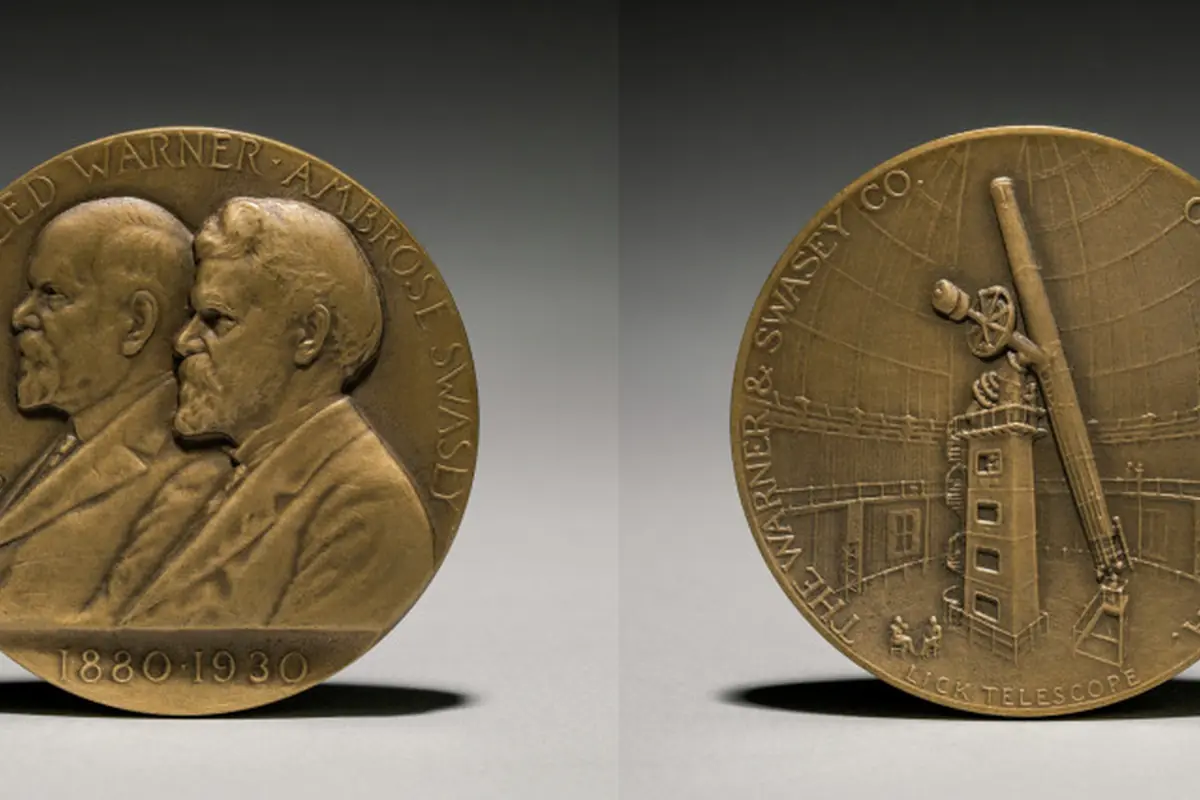
Image credits (16)
- Prayer Niche (Mihrab) (c. 1500s or mid-1900s) — Cleveland Museum of Art, CC0 1.0
- Document Box (Ryōshibako) with Chrysanthemum and Plum (lid) (late 1800s-early 1900s) — Cleveland Museum of Art, CC0 1.0
- Arion on a Sea Horse and Bacchante on a Panther (pair), William Adolphe Bouguereau (1855) — Cleveland Museum of Art, CC0 1.0
- An Indigo Factory, Allahabad, Louis-Théophile Marie Rousselet (1865–68, published 1869–70) — Cleveland Museum of Art, CC0 1.0
- TLV Mirror with Multiple Nipples (9–23 CE) — Cleveland Museum of Art, CC0 1.0
- Teapot with Landscape and Imperial Poem, Chen Hanwen (1762–95) — Cleveland Museum of Art, CC0 1.0
- Mirror with Concentric Circles, an Immortal, and Auspicious Animals (25–100 CE) — Cleveland Museum of Art, CC0 1.0
- Peregrine Falcons (Duck Hawks), John James Audubon (c. 1827) — Cleveland Museum of Art, CC0 1.0
- Jar with Design in Underglaze Iron (1800s–1900s) — Cleveland Museum of Art, CC0 1.0
- Fish or Seal Club (X’ús’) (late 1800s–early 1900s) — Cleveland Museum of Art, CC0 1.0
- Mirror with Concentric Circles, an Immortal, and Auspicious Animals (100 BCE–100 CE) — Cleveland Museum of Art, CC0 1.0
- Small Mosque in the Kaiserbagh, Felice A. Beato (1858) — Cleveland Museum of Art, CC0 1.0
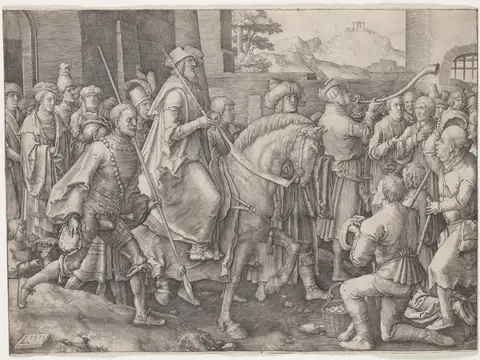
- The Triumph of Mordecai, Lucas van Leyden (1515) — Cleveland Museum of Art, CC0 1.0
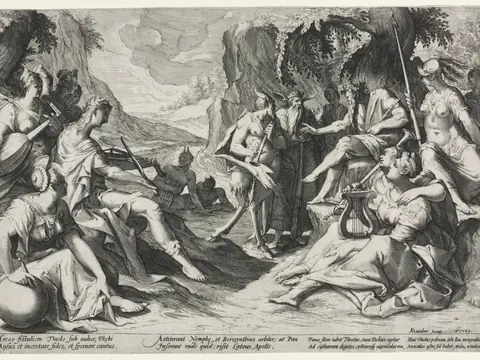
- The Judgment of Midas, Nicolaes Clock (1589) — Cleveland Museum of Art, CC0 1.0
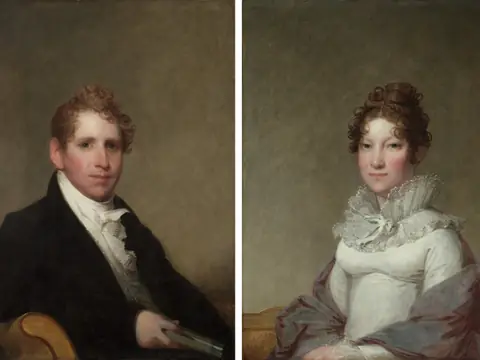
- Dr. James Stuart; Mary Campbell Stuart, Gilbert Stuart (c. 1815) — Cleveland Museum of Art, CC0 1.0
- Medal: In Commemoration of the Fiftieth Anniversary - The Warner and Swasey Company, Victor D. Brenner (1930) — Cleveland Museum of Art, CC0 1.0